George Miller’s supernatural comedy is worth seeing for its four leads, especially an unrestrained Jack Nicholson. The effects grow tiresome, and the women deserve more than a screenplay that too often settles for types.
George Miller’s The Witches of Eastwick is an entertaining, uneven supernatural comedy whose actors are considerably more engaging than its effects. It wants sex, laughter and horror to share the same space, and for a while that crowded arrangement is part of the pleasure. The trouble is that the spectacle becomes insistent before the characters become substantial. We would still give it an evening, provided the attraction is this cast being allowed to misbehave.
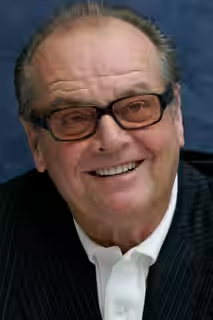
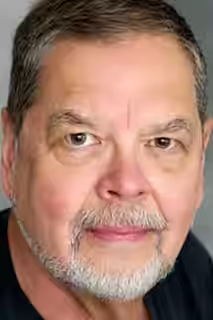
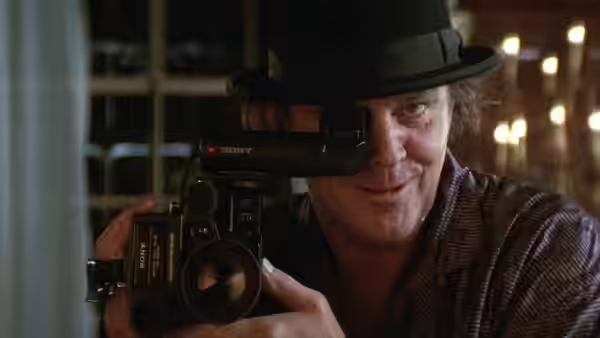
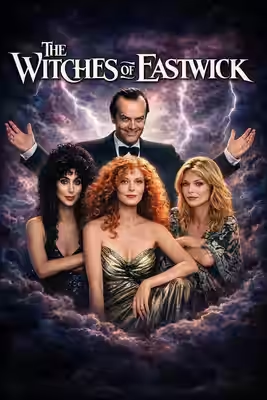
Jack Nicholson understands the invitation. As Daryl Van Horne, he makes excess itself funny, carrying on with a confidence that would be exhausting without such evident comic judgement. We laughed at his shameless self-importance, because he makes Daryl’s belief in his own appeal both ridiculous and oddly persuasive. There is a limit to how much of this a film can accommodate, but he is seldom the reason a scene feels overdone.
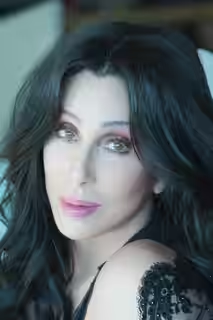
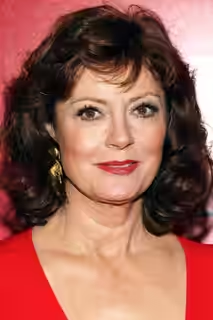
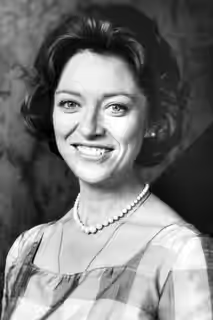
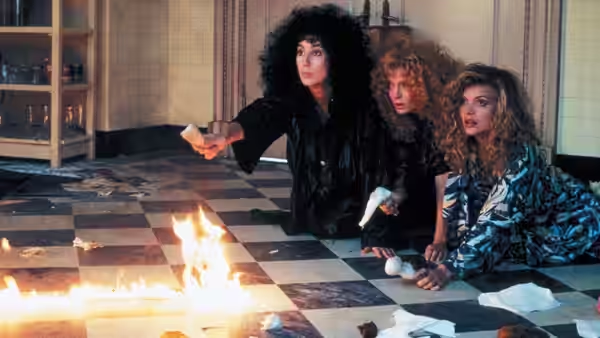
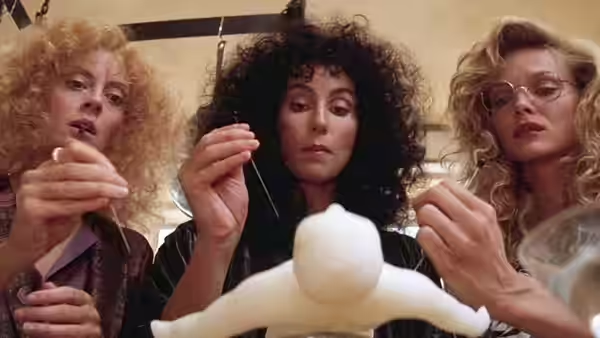
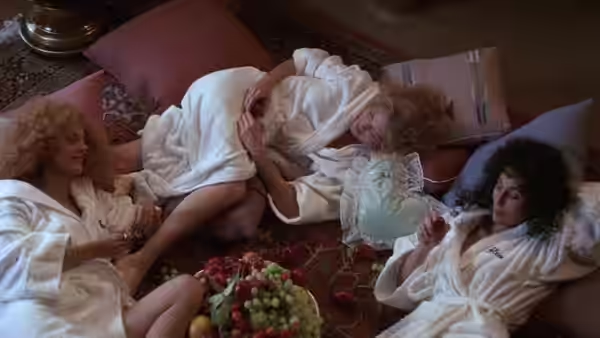
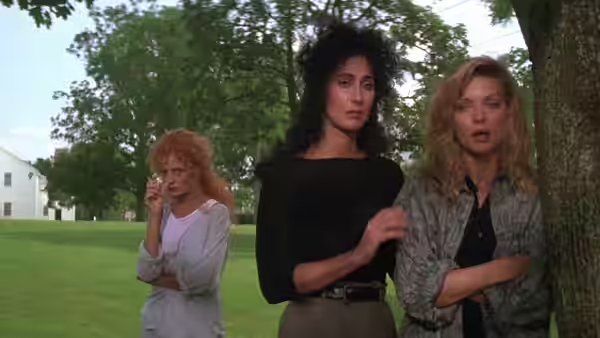
Cher, Susan Sarandon and Michelle Pfeiffer keep the film from becoming a prolonged solo turn. As Alexandra Medford, Jane Spofford and Sukie Ridgemont respectively, they bring enough assurance and comic intelligence to suggest women with more going on than the screenplay can be bothered to explore. We enjoy their company; we also keep wishing they had been given something equally interesting to do. Their performances make the shorthand bearable, but the difference between Daryl’s opportunities and theirs remains conspicuous.
Michael Cristofer’s screenplay, adapted from John Updike’s novel, has a workable comic subject in the negotiations between women and men. Its willingness to find something funny in sexual appetite gives the actors plenty of licence, and the film would be poorer without that untidiness. Yet too often it lets broad character types stand where individual women ought to be. When the writing stays this sketchy, the competition for our attention becomes more interesting than the relationships it is supposed to illuminate.
Vilmos Zsigmond’s cinematography gives the fantasy a sensual polish, and Polly Platt’s production design helps make its extravagance inviting. The film looks welcoming enough to make its lapses into coarseness more jarring. The care in the images is a considerable pleasure, although it also makes us notice when the comedy has settled for something easier. There is enough here to reward the eye during the weaker stretches, but the handsome surroundings cannot supply the detail missing from the women’s parts.
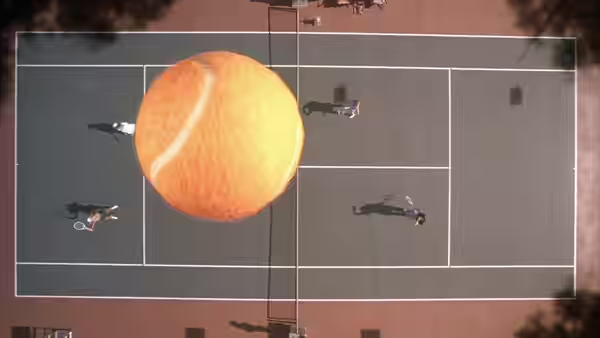
John Williams’s music is comfortable with this scale of mischief, though the film hardly needs further encouragement to make a fuss. Editors Hubert C. de la Bouillerie and Richard Francis-Bruce have a less enviable job: keeping the comedy moving while the effects demand more attention. The heavier the spectacle becomes, the less room there is to enjoy the performers’ timing. We grew impatient with that excess, especially when the cast had already shown how readily it could hold our attention without it.
For a comedy that flirts with horror, the imbalance is frustrating rather than fatal. A little ugliness belongs here, and George Miller is right not to make the whole thing polite; the mistake is in assuming that more effects will keep making it funnier. Anyone drawn chiefly by the supernatural business may find the comic performances more satisfying than the promised spectacle. Choose it for the company, and allow for the film’s tendency to outstay its funniest ideas.