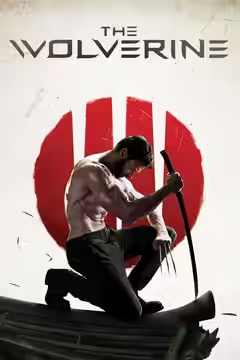
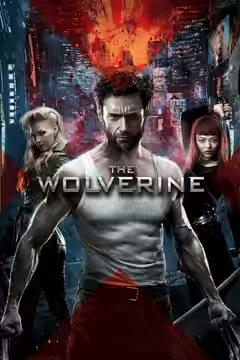
James Mangold takes Logan to Japan, takes away his healing and, for an hour and a half, makes the most interesting film this character has had. Then the finale arrives, all armour and explanation, and spends most of what it earned.
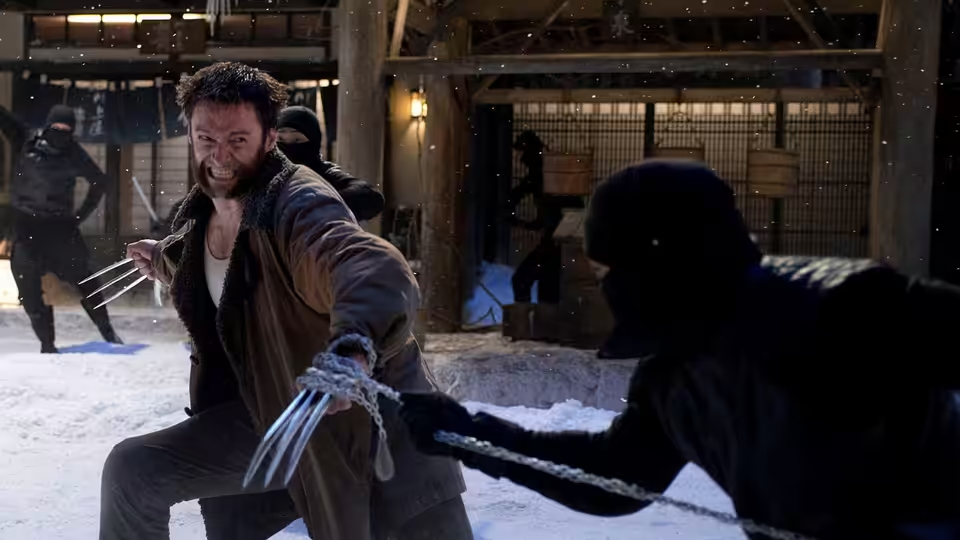
James Mangold’s film begins with a question superhero films rarely ask: what if the man who cannot die would rather not go on? Logan (Hugh Jackman) is found living rough in the Yukon, dreaming of Jean Grey (Famke Janssen), and he is carried off to Tokyo by a woman with a sword and an offer. The dying industrialist Yashida (Haruhiko Yamanouchi) would like to take his healing from him, as a kindness. For an hour and a half the script by Mark Bomback and Scott Frank treats that offer seriously, and the film is the better for it. Then the last half hour spends nearly everything.
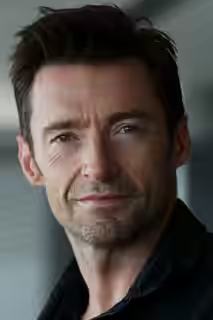
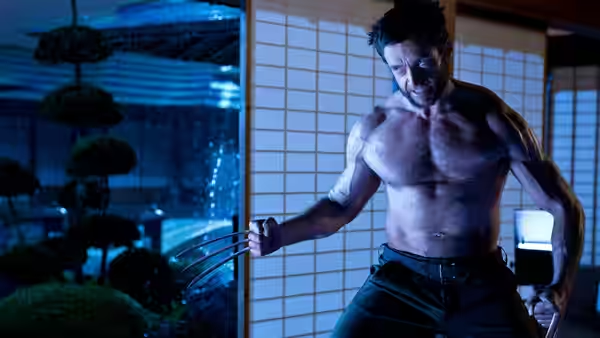
Jackman has played this part before and here he plays it tired. He lets the shoulders drop and the voice go to a growl, and when the offer is made he takes a beat before refusing that tells us he has thought about it. Janssen appears in a white nightdress in a white bed to say soothing things that are not soothing. The device is used once too often, but it gives Logan a reason to want it finished.
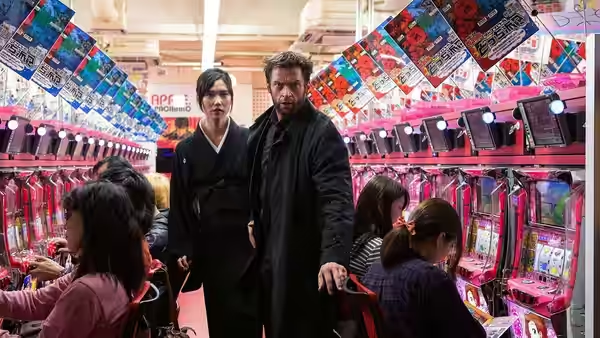
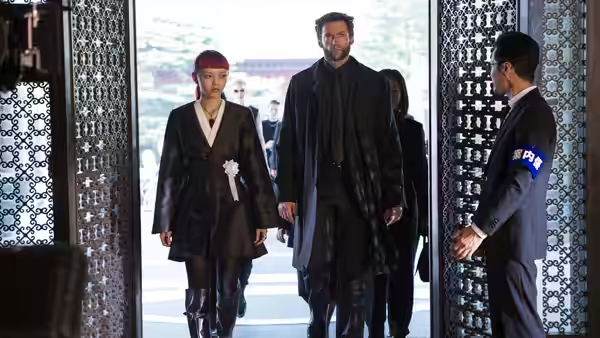
François Audouy gives Yashida’s compound dark wood, glass walls and a hospital bed at the heart of it. Ross Emery shoots Tokyo in reflected neon and the Nagasaki prologue in a white so hard it hurts, Logan shielding the young officer as the blast rolls over them. Isis Mussenden gives Yukio (Rila Fukushima) scarlet hair and a blazer and Mariko (Tao Okamoto) a wardrobe so muted she sometimes vanishes into the sets. Marco Beltrami keeps the music low, drums and bowed strings, and lets the silences work until the finale asks him to shout.
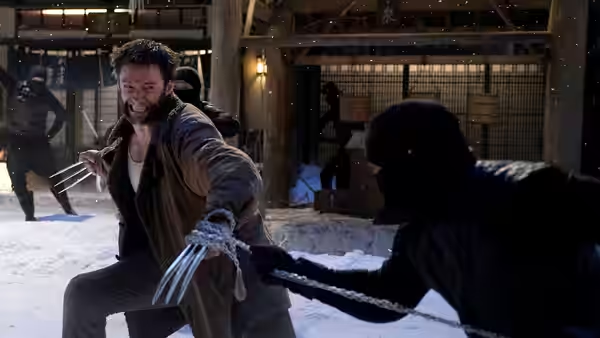
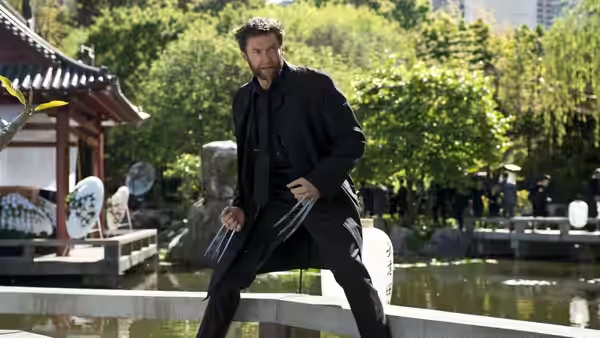
The bullet train fight is the set piece everyone mentions, and it deserves it. Logan and a handful of yakuza cling to the roof of a Shinkansen, claws and knives stabbed into the steel to hold on, ducking gantries that arrive like punches. Michael McCusker cuts it so we always know where the next gantry is, which is the whole trick, and Mangold finds the comedy in a man using an expensive train as a pin cushion. It lasts five minutes, and it is the one stretch in which the film is wholly sure of itself.
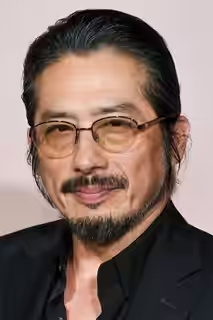
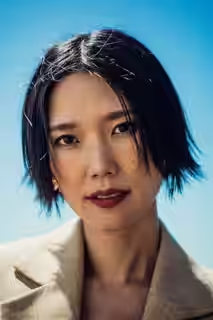
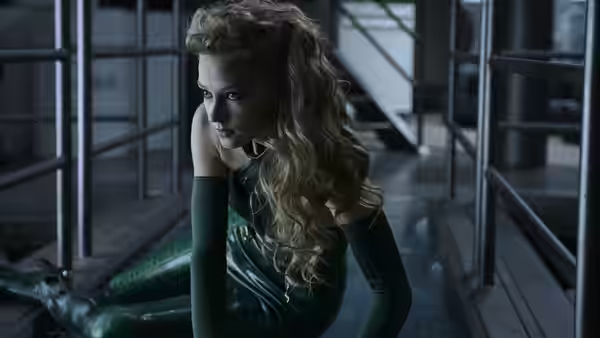
Fukushima is the film’s find. Her Yukio is cheerful, lethal and half in love with the man she has been sent to collect, and she can see how people will die, which the script uses well once and then forgets. Okamoto’s Mariko is the woman to be protected, and her romance with Logan is decided by the writers rather than by the actors. Hiroyuki Sanada glowers as Shingen, Yashida’s son, and gets one proper sword fight. Will Yun Lee’s archer Harada and Brian Tee’s Noburo, Mariko’s fiancé, do what is asked of them. Svetlana Khodchenkova’s Viper, a poisoner who sheds her skin, has wandered in from another film, a louder and sillier one, and every time she appears this one gets sillier with her.
The moment we remember is small: at the funeral Logan is shot and looks down, and the wound does not close. Jackman plays it with a flicker of fear and, under that, something like relief, and we sat forward, because for once a man with knives in his hands had something to lose. The film holds that idea for an hour and then, in its final half hour, lets go. The ending takes a turn we will not describe, except that it involves a great deal of metal, and the quiet film about a man who might die is replaced by a loud one about a man who must hit something enormous. We felt it sag, and we minded.
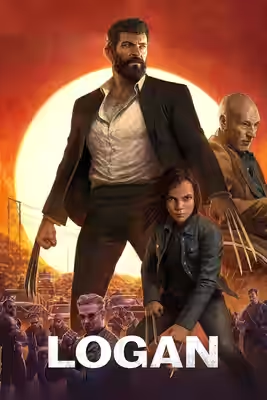
Mangold made Cop Land (1997) and 3:10 to Yuma (2007), and he is good at tired men who have decided to do one more thing; the first two thirds of this belong with them. He would come back to the character in Logan (2017) and finish the thought. For now, see this for Jackman, for Fukushima and for the train. It runs 126 minutes and carries a 12A, and when the shouting starts you may make the tea with a clear conscience.