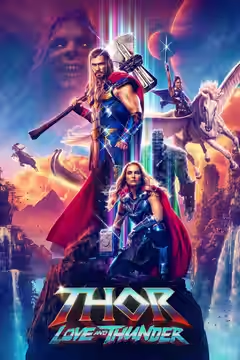
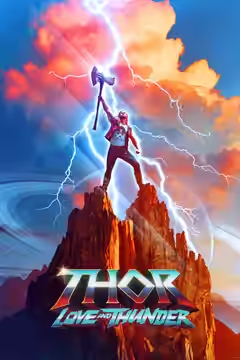
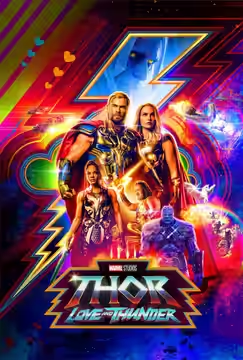
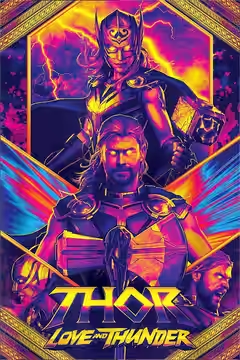
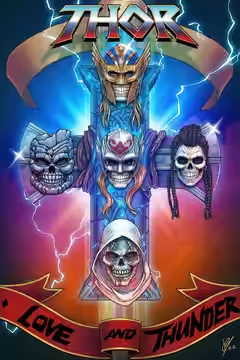
Taika Waititi’s second Thor film has a proper villain in Christian Bale, a real story in Natalie Portman’s return, and a joke every thirty seconds that lets neither of them breathe. It is often funny and it does not add up.
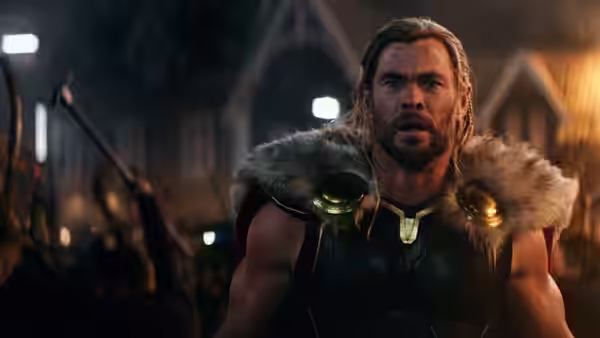
Taika Waititi’s second Thor film opens with a man carrying his dead child across a desert. Christian Bale is Gorr, and when he meets his god the god laughs at him. A black sword takes his hand and he swears to kill every god. It is a hard, frightening ten minutes, and it unsettled us. Then the film cuts to Chris Hemsworth doing sit-ups with the Guardians of the Galaxy while Korg narrates his diet, and inside fifteen minutes Love and Thunder has shown us what it will do for the next hundred minutes: interrupt itself.
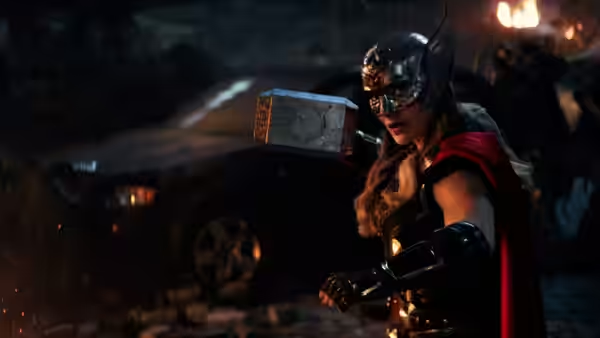
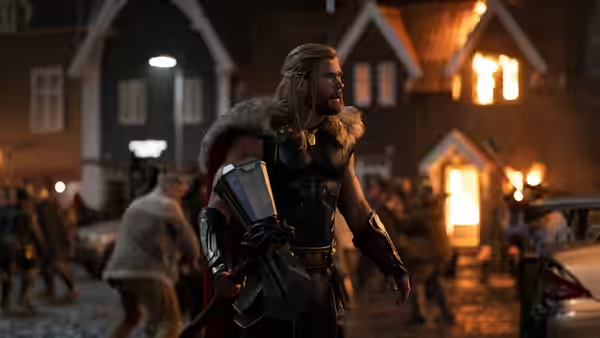
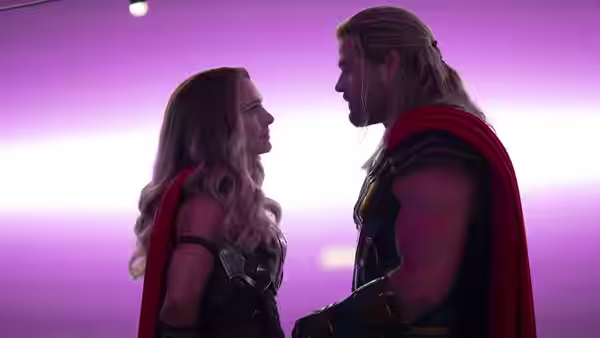
The premise is good, and the script by Waititi and Jennifer Kaytin Robinson knows it. Natalie Portman returns as Jane Foster, the astrophysicist Thor lost touch with, now ill and out of options, and his old hammer puts itself back together for her. Gorr’s shadow creatures attack New Asgard, a fishing village that Tessa Thompson’s King Valkyrie has turned into a theme park, and carry off its children. A father who lost a daughter to an indifferent god; a god about to lose the woman he loves. That is a story, and the film does not trust it.
Bale plays it as a horror film, and he is right to. Pale, hairless, barely above a whisper, he is kindest in the scenes where he is most dangerous, telling frightened children a bedtime story. He is the only thing in the film that frightened us, and he is off screen for long stretches. Portman gives Jane a tired brightness, a woman trying on heroism because the alternative is a hospital bed, and Hemsworth is loose and warm with her. Russell Crowe’s Zeus, in gold curls and an accent that wanders round the Mediterranean, enjoys himself so plainly that we did too.
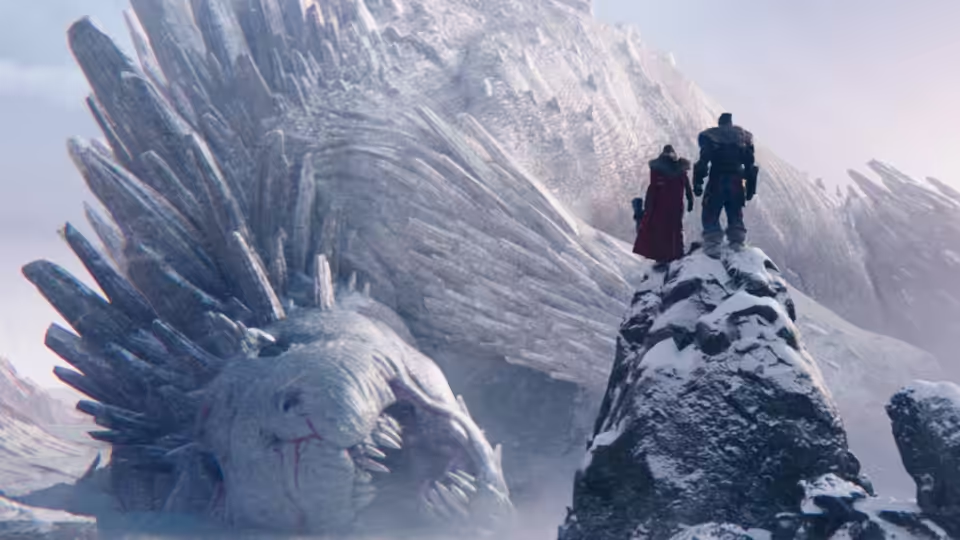
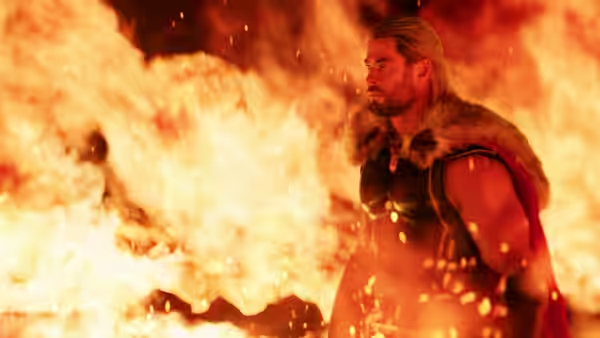
Baz Idoine shoots the gods’ city in gold and sherbet pink and Gorr’s territory with the colour drained out, so that Thor’s lightning is the only colour in the frame. That black-and-white stretch is the film’s best-looking passage and the one where nobody is cracking wise. Nigel Phelps builds New Asgard with a gift shop and Zeus’s palace as a casino. Mayes C. Rubeo puts Crowe in a gold toga and Bale in a grubby white robe. Michael Giacchino and Nami Melumad’s score sits underneath Guns N’ Roses songs, which arrive whenever the film wants us to have a good time.
Waititi cannot leave a serious moment alone for longer than it takes to make a face. Every scene of feeling is cut off by a gag, and it is mostly the same gag: two enormous goats scream, Thor is jealous of his old hammer, Korg says something mild. We laughed at the goats the first time. By the fourth we were watching a scene about a dying woman waiting to see whether they would scream over it, and they did, and we felt insulted on Portman’s behalf. Four editors are credited, Peter S. Elliot, Matthew Schmidt, Tim Roche and Jennifer Vecchiarello, and the film cuts like something assembled from pieces, nearly every scene ending on a punchline. By the last half hour the jokes had stopped landing and the story had stopped moving, and we were bored, which with Bale in the building takes some doing.
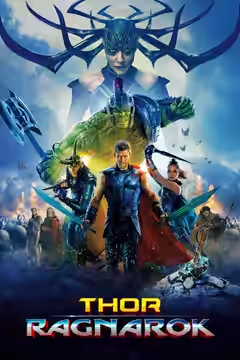
Thor: Ragnarok (2017) had the same jokes, but it had a straight man. Hela was a real threat and Hemsworth’s deflation was the comedy. Here nobody plays it straight except Bale, and the film treats him as a guest. Thompson wears a crown and has little to do with it. Chris Pratt, Dave Bautista, Karen Gillan and Pom Klementieff are in and out inside ten minutes. Jaimie Alexander’s Sif gets one scene and a joke about an arm.
It runs 119 minutes and carries a 12A, and the children it is aimed at will have a fine time; the goats are for them, and fair enough. Adults who loved Ragnarok will get forty minutes of what they came for, in two-minute pieces. We sat through the rest waiting for Bale to come back. He always did, and he was worth it, and the film around him was not.