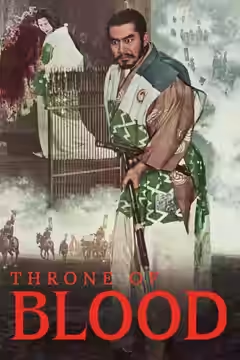
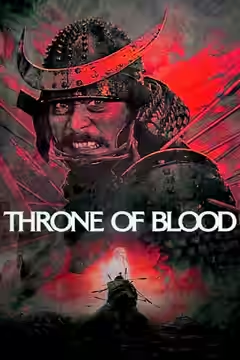
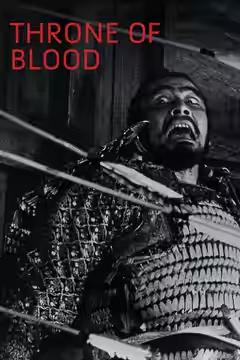
Akira Kurosawa’s samurai Macbeth is frightening, forcefully acted and worth the occasional struggle to follow its politics. Toshirō Mifune and Isuzu Yamada make the pursuit of power feel exhausting before it can feel desirable.
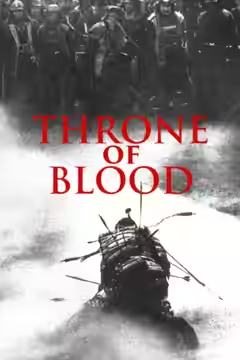
Throne of Blood is a frightening and persuasive adaptation of Macbeth, with a stiffness in its storytelling that we would not pretend away. Akira Kurosawa moves the play into feudal Japan and makes the samurai setting feel essential to its account of ambition. Rank matters in every encounter, and the prospect of possessing more of it seems to make nobody comfortable. We recommend it warmly, with a reservation about how readily the atmosphere can overwhelm the telling of the story.
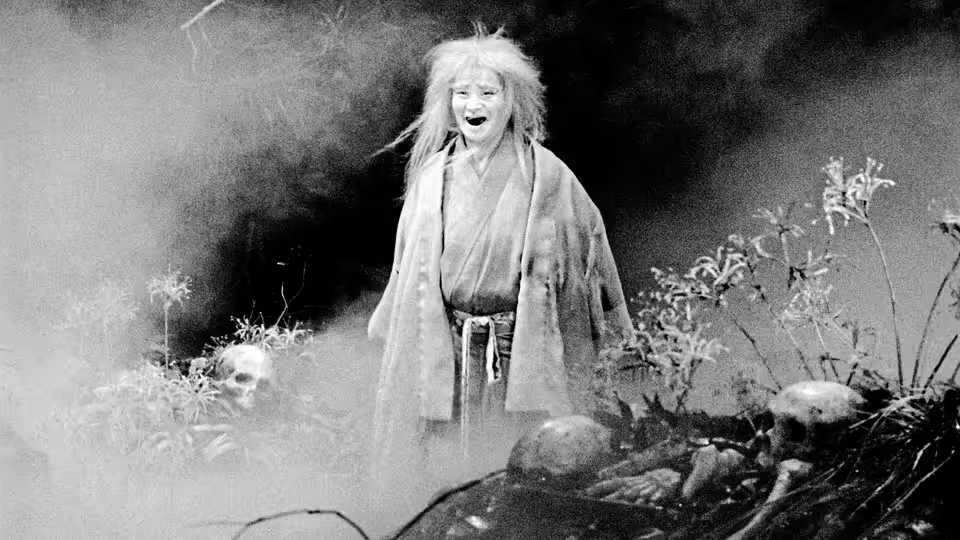
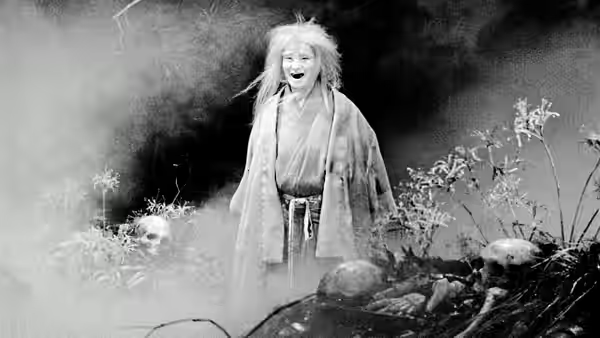
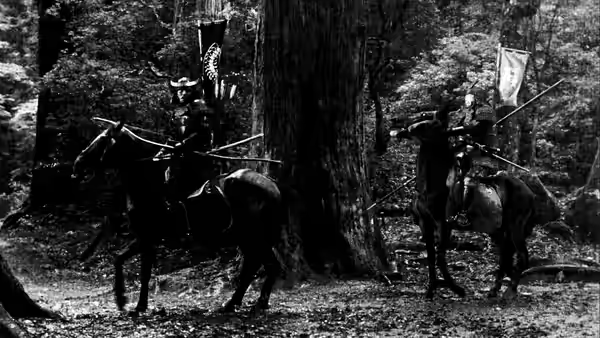
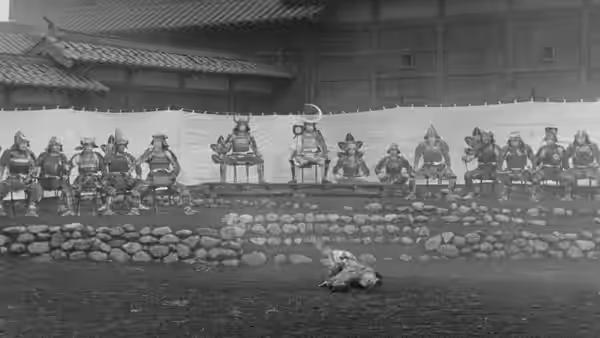
Asakazu Nakai’s cinematography makes the mist feel oppressive. It takes away our bearings, and the director’s camera movement gives little reassurance that a clearer view will make this place safer. We felt uneasy watching it, because the fog leaves us unable to judge the space around the characters. The unease continues inside Yoshirō Muraki’s sets, whose severity makes the castle seem a poor place to recover from anything encountered outside.
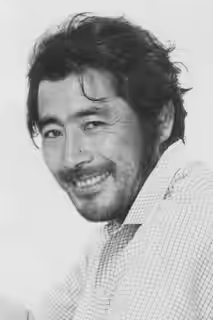
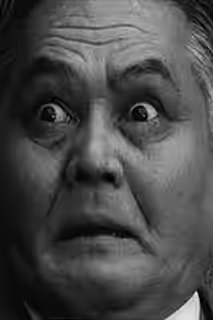
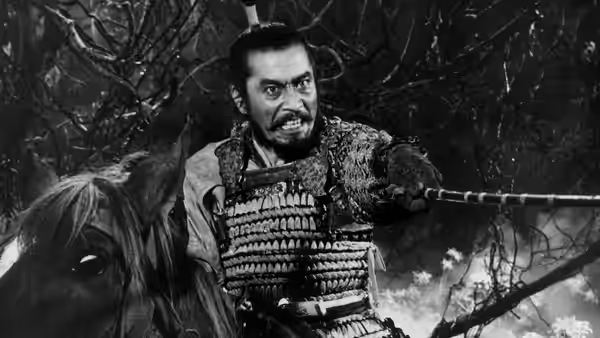
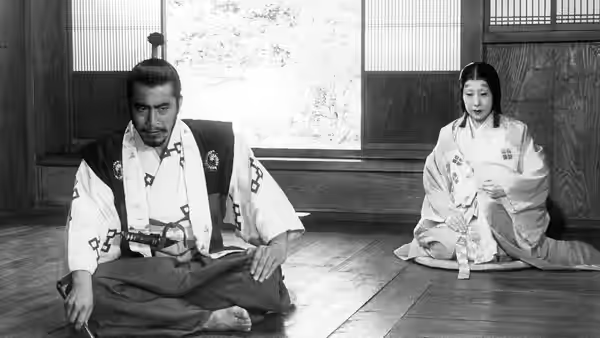
Toshirō Mifune gives Taketoki Washizu an agitation that keeps the formal staging from becoming merely impressive. There is something tiring about watching him, deliberately so: authority appears to require an effort he can never stop making. We keep looking for a moment when he might be comfortable with himself. The performance is large enough to risk exhausting our sympathy, but that excess suits a man who cannot leave his own ambitions alone.
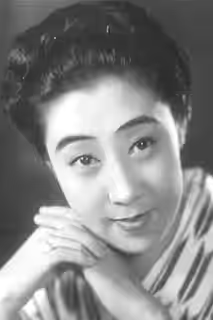
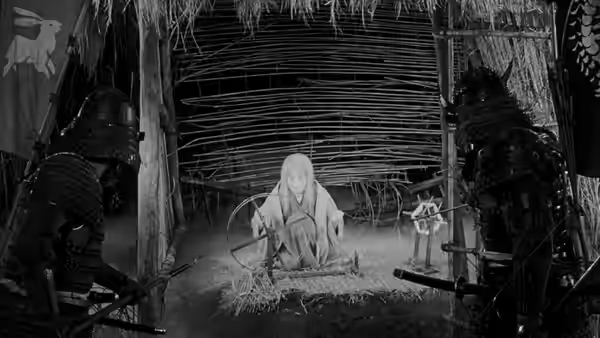
Isuzu Yamada makes Lady Asaji Washizu harder to read, and the contrast is crucial. Her composure gives the marital scenes a pressure that another equally expansive performance would dissipate. Watch how much weight she gives to remaining calm while he cannot: it makes his agitation seem increasingly futile. The relationship supplies much of the film’s tension, and she deserves as much attention as the more visibly troubled man beside her.
Akira Kurosawa also edits, and his patience occasionally becomes a liability. He allows the atmosphere to gather until we begin anticipating trouble in images that need no overt threat. Some stretches feel held beyond their useful length, particularly when the political story needs greater clarity. Masaru Satō’s music helps sustain the unease, though sound and image cannot always supply a dramatic connection that the writing has left unclear.
As screen Shakespeare, the film has the confidence to give its setting a substantial part in the drama. There is no need to judge every character against a remembered counterpart in Macbeth, or to approach the samurai setting as a puzzle to be decoded. The fear remains clear even when the politics become difficult to follow. The castle, the mist and the strain visible in the performances give us enough to watch without mentally consulting the play.
At 108 minutes, it does not demand a long evening, though its deliberate pace deserves a quiet one. We would choose it when we wanted to be unsettled and had no wish to be hurried. Familiarity with Macbeth is no reason to treat it as homework. Give those faces your full attention.