Joel Coen’s black-and-white Macbeth is spare, fast and often frightening, and Kathryn Hunter’s witches are the best thing we have seen in a Shakespeare film for years. It is colder at the centre than it should be, and we recommend it anyway.
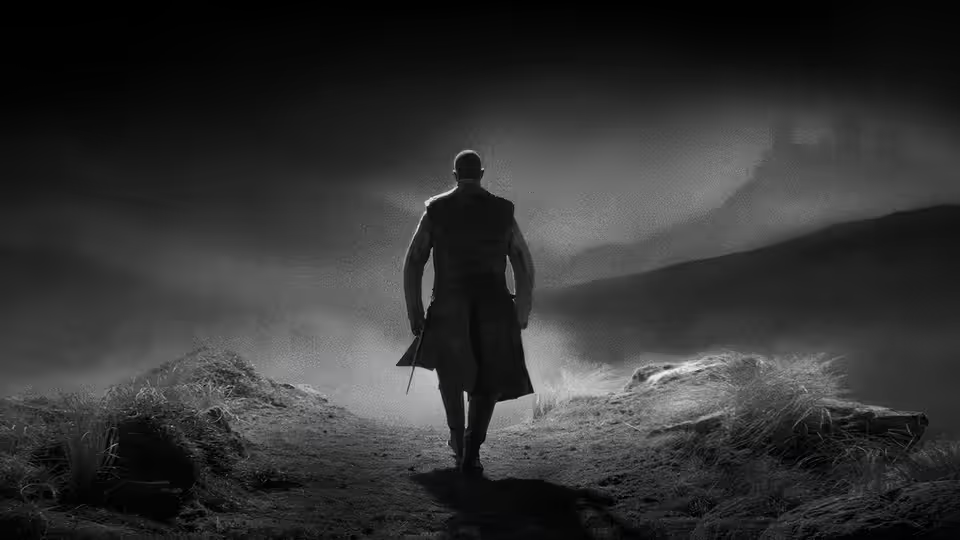
Joel Coen has made this one without his brother Ethan, and he has cut Shakespeare’s play down to 105 minutes, shot it in black and white on soundstages and boxed it into the old square ratio. It is the plainest Macbeth we have seen and one of the most frightening. Its one real fault is that it is colder than it should be, and we will come to that.
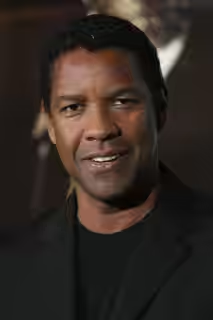
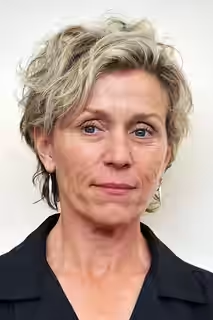
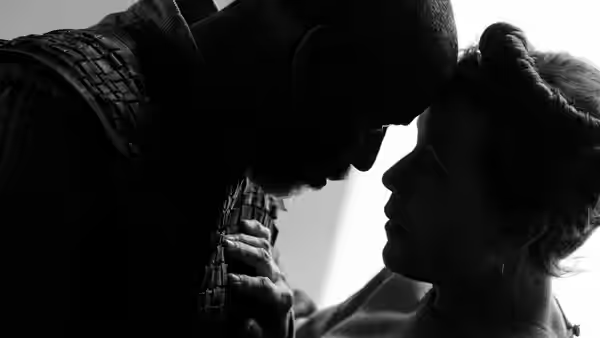
Denzel Washington and Frances McDormand play the Macbeths old. Not as people who have spent years wanting the crown but as people who have run out of years to want it in. Washington speaks the verse as if it were conversation, low and unhurried, and lets the famous lines arrive without a run-up; the dagger speech is done almost to himself, as a man checking his own eyesight. McDormand’s Lady Macbeth is dry and practical, a woman making arrangements, and she is at her best in the letter scene, reading her husband’s news and settling the matter before he is through the door. What she is not is frightening. The play asks something of her later that this performance does not quite have in reserve.
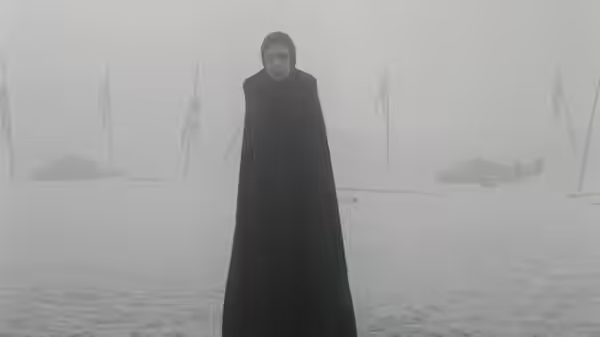
The witches are one woman. Kathryn Hunter plays all three, and on her first appearance on the heath she does it with a single body, bending her arms back at the elbow until they look like folded wings and dropping her voice to a croak. Bruno Delbonnel shoots her from low and reflects her in a pool of standing water so that for a moment there are three of her. We were unnerved in a way Shakespeare films almost never manage, and it was Hunter who did it, because she does not play a witch. She plays something that has learned to imitate a person and not quite got it right. Every scene she is in, the film is better.
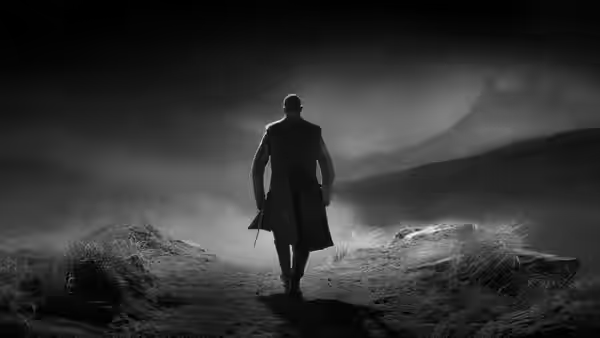
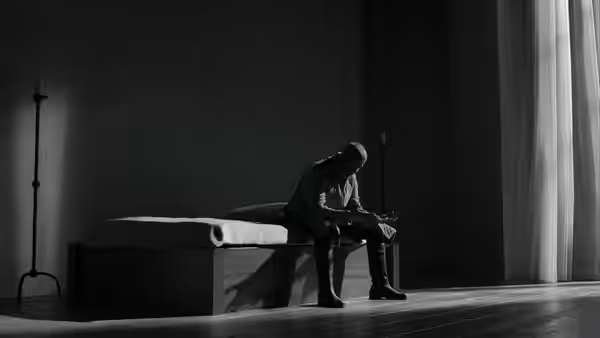
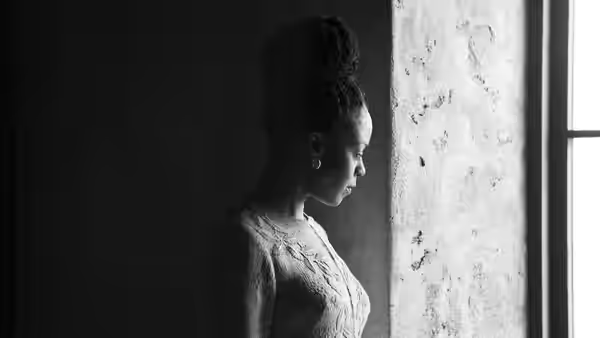
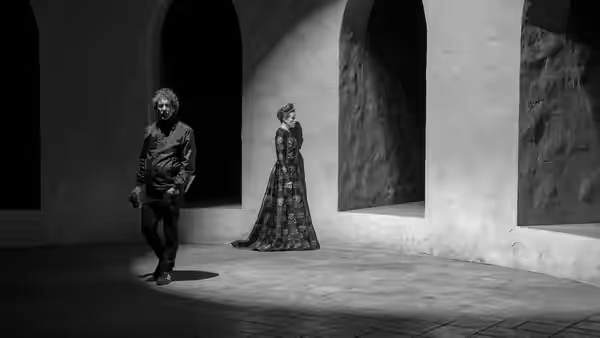
Stefan Dechant’s Inverness is not a castle anyone could live in. The walls are blank plaster, the arches go up out of frame, the corridors lead to more corridors, and there is almost no furniture. Delbonnel lights it with hard white through high windows and fills the outdoors with fog and skies with nothing in them. Mary Zophres dresses everyone in dark wool with no ornament, so a crown or a blade is the brightest thing in the shot. Carter Burwell’s score is mostly a slow knock, a drum or a heartbeat, with strings under it, and it has the sense to stop dead when a door is about to open. Coen and Lucian Johnston cut it fast; scenes end on the line rather than after it, and the whole thing moves like a thriller.
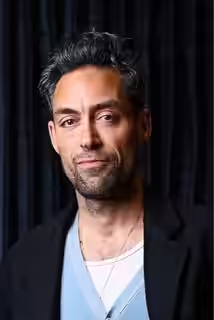
The coldness is the price. Killings happen in this film as if they were being described rather than done, cleanly, in shadow, with the blood kept to a minimum, and after a while we wanted someone to lose their temper. Some of the supporting cast oblige. Corey Hawkins’s Macduff and Moses Ingram’s Lady Macduff have the rawest scenes in the film. Bertie Carvel’s Banquo is warm and easy and the only man here who seems to like Macbeth. Brendan Gleeson’s Duncan is a tired, decent king who deserves a better host. Coen also keeps Alex Hassell’s Ross in the corner of nearly every room, watching, and pays that off late in a way we will not describe and did not expect.
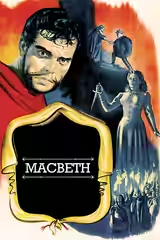
Against other Macbeths it is the tidiest. Orson Welles made his in 1948 out of fog and cardboard; Roman Polanski’s 1971 film is the bloody one and stays bloody; Justin Kurzel’s 2015 version put Michael Fassbender in real mud on a real hillside. Coen’s trusts the words most and the weather least. Against his own films, it is the least funny thing he has put his name to. There are no fools here talking themselves into a hole, and we missed them a little.
It is a 15 certificate and 105 minutes, and the verse has been cut and spoken so plainly that you could follow it never having read a word of the play. Watch it in a dark room with the sound up; Delbonnel’s whites go grey on a bright afternoon and Burwell’s knock needs to be felt in the chest. Keep an eye on the crows. They are hers as well.