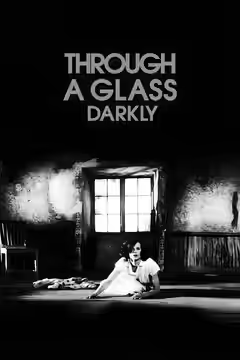
Bergman’s island chamber piece is short, plain and pitiless, and Harriet Andersson plays a woman’s illness without a single false note. Only the ending, which reaches for a comfort the rest of the film has refused, lets it down.
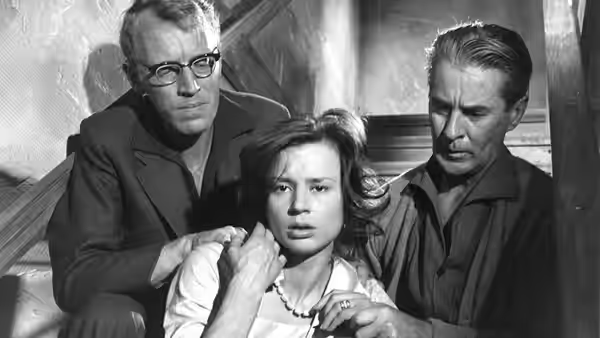
Ingmar Bergman puts four people on an island for a day and a night and lets us watch what they do to each other. Karin (Harriet Andersson) has come home from hospital with an illness her doctors have given up on. Her father, her husband and her brother love her, and each of them, in his way, uses her. Through a Glass Darkly runs 91 minutes, has one location and almost no music, and it is among the most direct things Bergman made. We think it is very good, with one reservation about how it chooses to end.
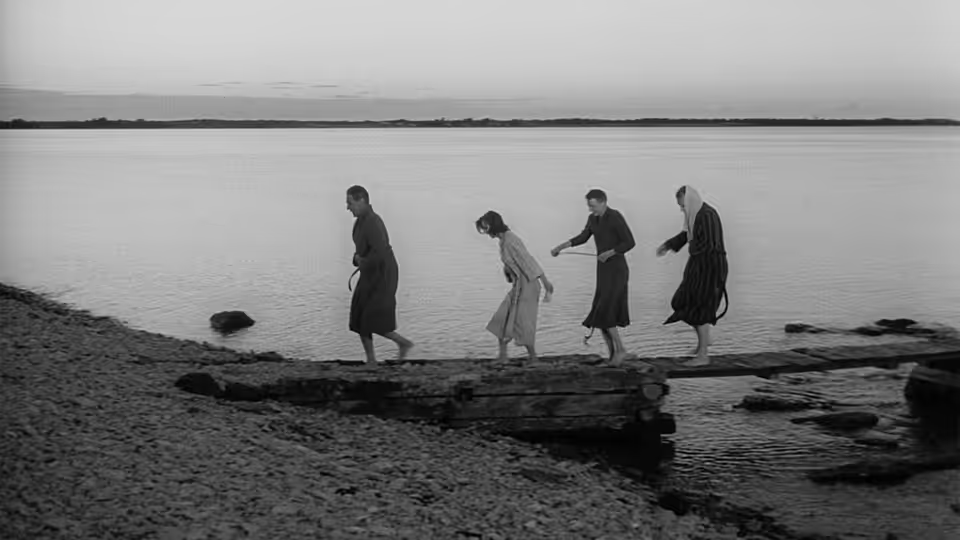
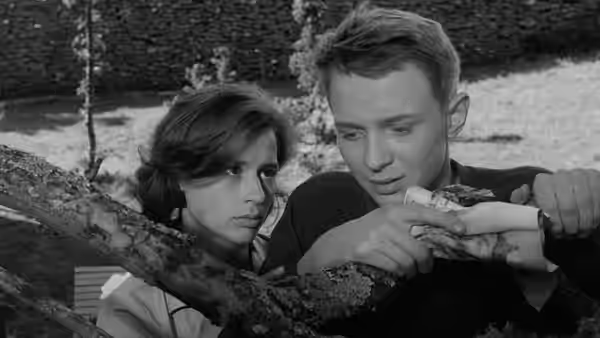
The first act is all sunlight. The four come laughing out of the sea, fetch the nets, lay a table on the grass. David (Gunnar Björnstrand), a novelist, has come back from Switzerland with presents that show how little he knows about any of them, and announces over supper that he will be off again soon. Karin and Minus (Lars Passgård) put on a play for him, a small cruel piece about an artist who prefers his art to a living woman, and Björnstrand’s face as he applauds it is the first sign of what the film is about. Later Karin wakes before dawn and climbs to an empty room where, she is certain, people are waiting behind the wallpaper. Then she reads her father’s diary.
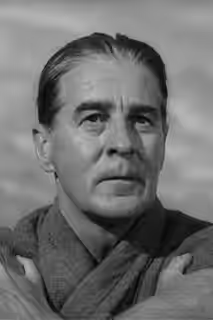
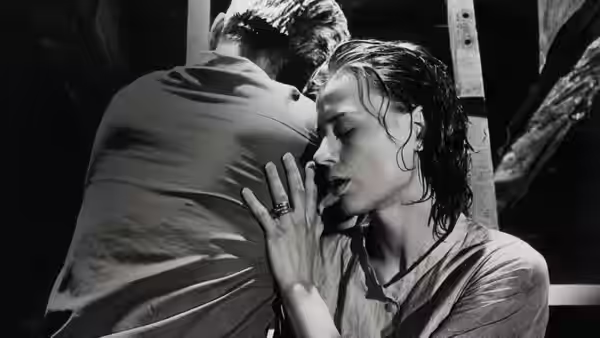
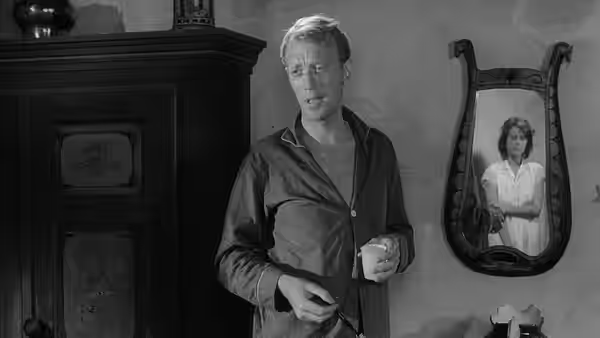
Andersson carries it. She plays Karin as someone entirely sane about her own madness, describing the voices the way a patient describes a symptom, and then letting the description slide into the thing itself while her face barely moves. There is no shrieking. Björnstrand gives David a weak man’s charm and a weak man’s cowardice, and one scene alone in his room, weeping with a hand over his mouth so nobody hears, is as good as anything he did for Bergman. Max von Sydow’s Martin is a decent doctor who has run out of ideas and knows it. Passgård is the greenest of the four and it shows, but Minus is meant to be raw, a boy whose body has got ahead of him, and the awkwardness mostly serves the part.
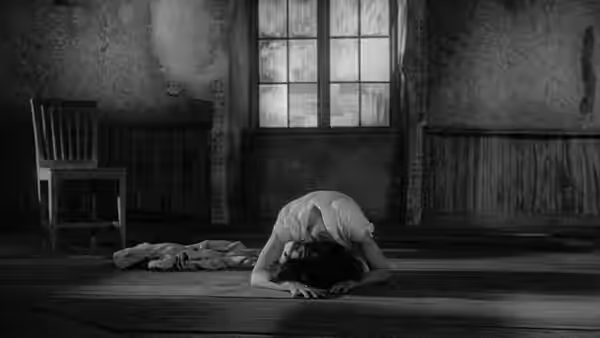
Sven Nykvist shoots it in black and white under a hard, flat northern daylight that gives nothing a shadow to hide in. The island is rock, grass and water, and P.A. Lundgren keeps the wooden house so bare that the upstairs room, with its peeling paper and nothing in it, is only a little emptier than the rest. At night Nykvist lights faces from one side and lets everything else go, so a conversation in a rowing boat is two half-faces and black water. Erik Nordgren is credited with the music; what we mostly hear is a Bach cello piece, used a handful of times and never under dialogue. Ulla Ryghe cuts slowly and without show, holding on a face after the line has gone, and the film is better for every second she declines to cut.
That scene upstairs is where the film got us. Bergman does nothing. There is no sound effect, no shadow, no voice we can hear; only Andersson, kneeling, listening, and then speaking gently to whoever is behind the paper. We were frightened, properly frightened, because the film will not tell us whether anyone is there and she plainly knows they are. It is the scene we have kept thinking about, and it lasts about three minutes.
What does not work is the writing when it stops trusting the pictures. The script is built to a plan, one day, four people, each paired off with each of the others in turn, and by the halfway point we could feel the pairings coming. The men talk about God and art and their own failures in complete sentences, and the confessions arrive on schedule. The ending, which we will not describe, includes a conversation in which the film says aloud what the previous eighty-odd minutes had shown without a word. Some critics take that speech as the film’s message. We think it is the film losing its nerve.
Bergman went on to make Winter Light (1963) and The Silence (1963), and the three are usually spoken of together as his films about faith. This is the first and the plainest, and the one that puts a woman’s illness at the centre and refuses to make it either pretty or symbolic. See it with the lights off and the phone in another room. It is short, it is quiet, and there is a scene with a wall you will not forget.