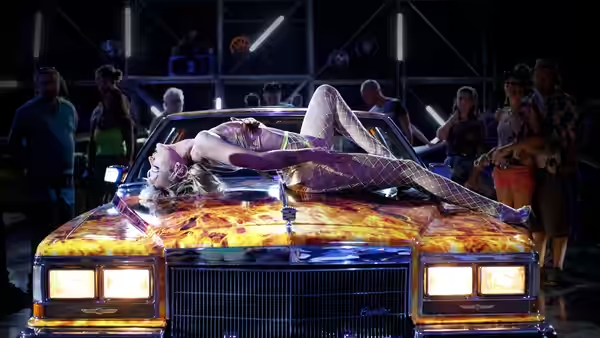
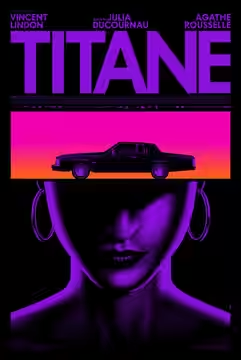
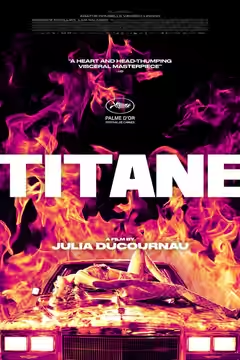
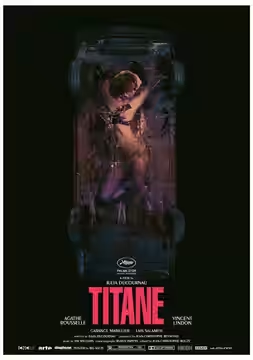
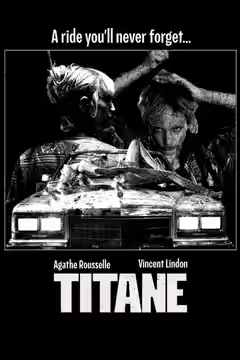
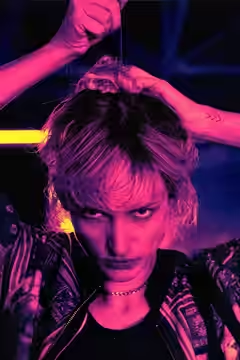
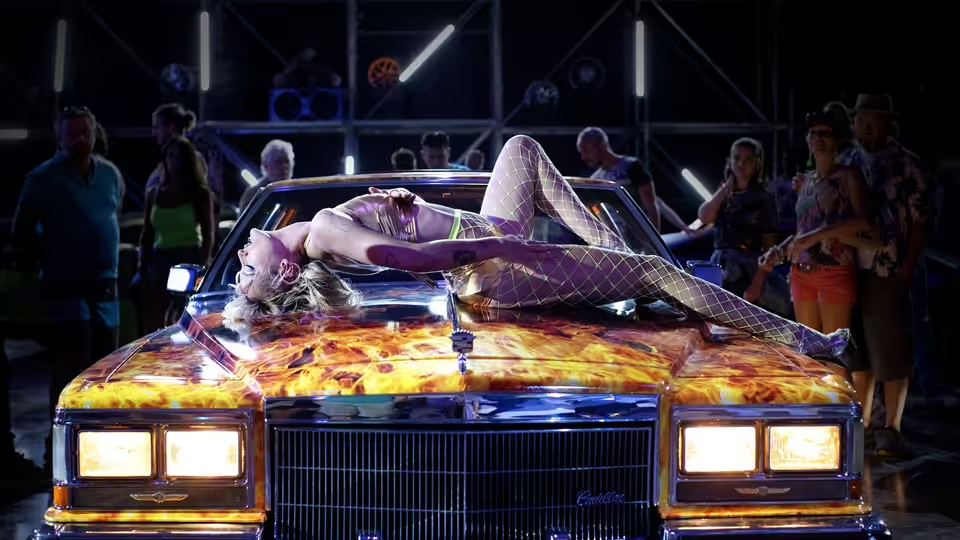
Alexia (Agathe Rousselle) lies across a customized car as onlookers gather
Film review

Titane

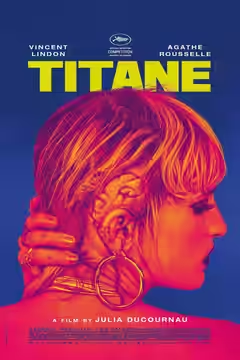
2021 · Directed by Julia Ducournau · 1h 48m · MiC VM18

In a sentenceA woman gets pregnant by a car and moves in with a fireman, and the second half is the gentler one

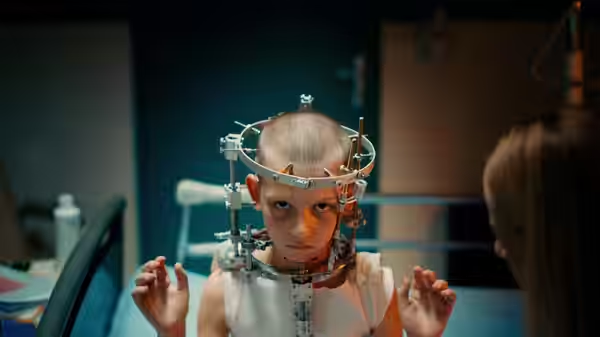
Alexia, aged seven (Adèle Guigue), distracts her father (Bertrand Bonello) at the wheel; the car crashes and surgeons fix a titanium plate into her skull. Years later Alexia (Agathe Rousselle) dances on the bonnets of flame-painted cars at a tuning show, where fans queue for photographs. One of them (Thibault Cathalifaud) follows her to the car park, and she kills him with a hairpin. That night she climbs into the show car and has sex with it. Soon she is pregnant, leaking motor oil, and killing again. Wanted by the police, she cuts her hair, binds her chest, breaks her own nose on a sink and presents herself as Adrien, a boy missing for ten years. Adrien’s father Vincent (Vincent Lindon), a fire captain, takes her home.

Plays from YouTube when you press play; nothing loads from them until then.

Fi1m review

Julia Ducournau’s second film begins as a serial-killer picture with a car in it and becomes a story about a lonely fire captain and the stranger he decides is his missing son. Fierce, strange, handsomely shot, and slack for half an hour in the middle.

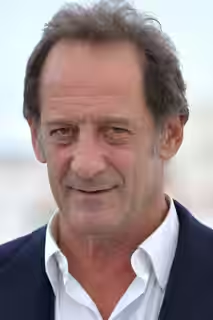
Julia Ducournau’s first film, Raw, was about a vegetarian who developed a taste for flesh: tight, funny and controlled. Her second is none of those things for long stretches, and we would still send anyone with a strong stomach to see it. Alexia (Agathe Rousselle) has a titanium plate in her head from a childhood crash, dances on car bonnets for a living, kills people, and gets pregnant by a car. Then she passes herself off as a boy missing for ten years and is taken in by his father, Vincent (Vincent Lindon), a fire captain. The first half is a horror film. The second is about two damaged people agreeing to believe a lie.

The opening is the best sustained filmmaking in it. Ruben Impens follows Alexia in one long take through a tuning show, past chrome and undercarriage lights and men filming on their phones, to a flame-painted car she climbs and grinds against while the light goes pink and gold. In three wordless minutes we know what kind of body this woman has and what she uses it for. Rousselle, in her first feature, barely speaks. She acts with her jaw and her shoulders and the flat way she looks at people who are about to be in trouble.

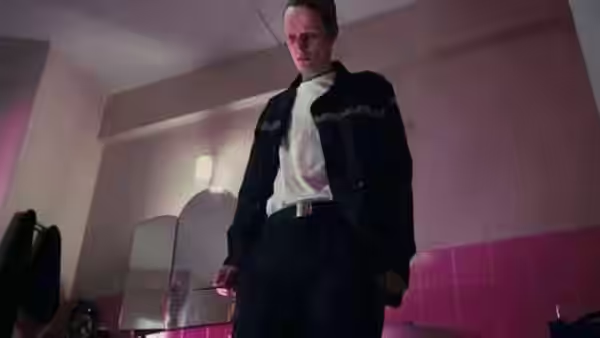
A fan (Thibault Cathalifaud) follows her to the car park and is dealt with by hairpin, and a sequence in a suburban house turns killing into exhausted farce, Alexia growing more irritated with each new person found at home. We laughed, and were not proud of it. Then she stands over a station sink and breaks her own nose against the porcelain, and Jean-Christophe Bouzy holds the shot so the sound arrives before we understand the picture. We looked away. We cannot remember last doing that in a cinema.

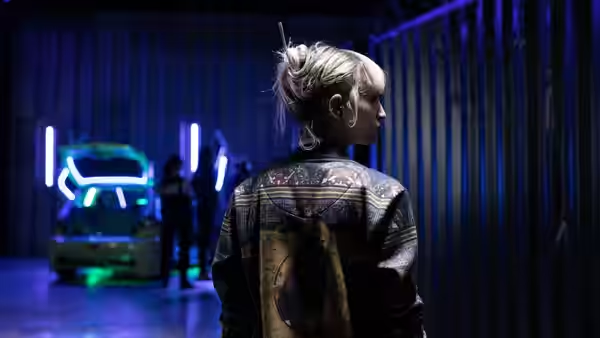
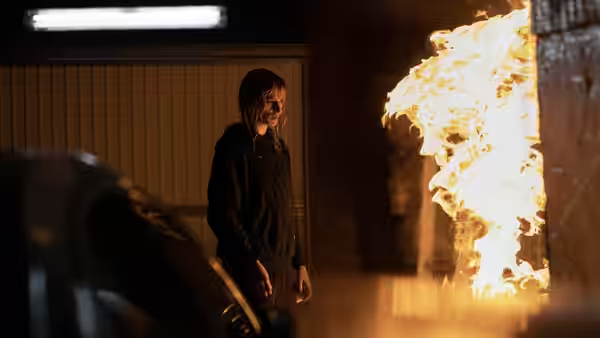
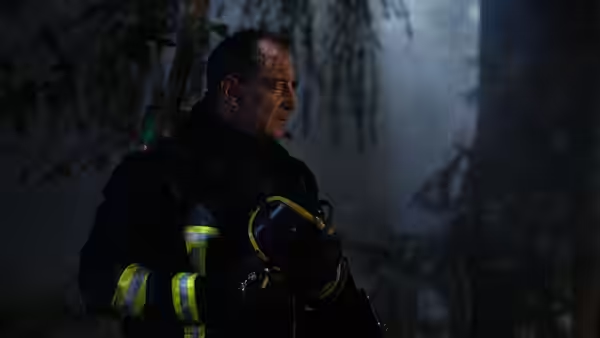
Lindon plays a man who injects steroids into his bruised backside nightly to keep a body that is giving up on him, and commands firemen who half-worship and half-manage him. Lise Péault and Laurie Colson’s fire station is concrete, red steel and strip light; Impens shoots it in orange and near-dark so the men glow. Anne-Sophie Gledhill puts Alexia in a uniform two sizes too big and lets the cloth hide what she is hiding. Jim Williams’s score is mostly organ and low choir, church music for a garage, and it rises under a party scene in which Alexia climbs onto the fire engine and does her show-dance for a room that does not know how to take it. That scene moved us more than we expected; what did it was Lindon’s face as he watched, deciding what he was prepared not to notice.

The middle is where the film sags. Once Alexia is inside the station the story has two questions, will she be found out and what is she carrying, and Ducournau lets both idle for forty minutes. A young fireman, Rayane (Laïs Salameh), suspects the new arrival, and that strand is picked up and put down without much coming of it. Adrien’s mother (Myriem Akheddiou) has one good scene, and it shows how much sharper the film could have been about the world outside the station. The pregnancy is a marvel of make-up and dread, oil where blood should be, skin that splits to show metal, and we are never sure what Ducournau wants it to mean. Motherhood, gender, the body as a machine that will not take orders: the film touches each and settles on none.

Cronenberg’s Crash is the plain ancestor for the car, and Ducournau does not pretend otherwise; his people were bored and hers are desperate. Garance Marillier, who led Raw, turns up as Justine, a fellow dancer, a nod admirers of the earlier film will enjoy. Against Raw, this is looser, bigger and less certain of what it is saying. Against most horror films, it is alive in every frame.

It is an 18 certificate and it earns it inside twenty minutes. At 108 minutes it is not long, though the middle will make it feel longer. It opened in British cinemas on 26 December 2021, and somebody in a distribution office must have enjoyed that.
Critical consensus AI synthesised

78
Positive
22
Mixed
6
Negative
0

Most critics come out shaken and won over. The reviews are firmly positive, with no outright dismissals among the 28, and the praise gathers in the same two places: Agathe Rousselle’s almost wordless, punishing physical performance, and the tenderness that grows between her Alexia and Vincent Lindon’s Vincent underneath all the body horror. Several critics are surprised to find the film sweet. Ruben Impens’ high-contrast cinematography, the colour and the sound design draw repeated notice.

The reservations are consistent too. A number of critics find the characters thinly drawn and their motives vague, which makes the emotional turn harder to accept, and several say the middle stretch sags after a ferocious opening. The spread is narrow for a film this extreme, running from lukewarm to rapturous with nothing hostile. The coolest voices are Screen Daily’s Jonathan Romney, who finds it provocative but silly, and Deadline’s Anna Smith, who thinks it falls short of Ducournau’s Raw.

Sight and Sound
14 July 2021 · festival review · BFI
95*

The critic considers the film a full-throttle masterpiece that exceeds expectations. They single out its astonishing performances and the tender, human relationship at its heart.

Read the full review →
IndieWire
13 July 2021 · A- · David Ehrlich
90

Ehrlich praises the film as a daring, moving blend of body horror and found-family fable, while noting that its characters can feel vague. He singles out Ducournau’s skillful balance of shock and tenderness, along with Vincent Lindon’s performance and the film’s vivid visual style.

Read the full review →
Little White Lies
festival review · Hannah Strong
85*

Strong finds the film audacious, seductive and impressively boundary-pushing, despite its more freeform narrative. She especially praises Agathe Rousselle’s intense physical performance and the film’s striking command of colour and sound.

Read the full review →
Los Angeles Times
30 September 2021 · Justin Chang
85*

Chang finds the film a daring, emotionally affecting triumph, despite its occasional self-infatuation and slickness. He especially praises Agathe Rousselle’s virtually wordless performance and the unexpected tenderness of her character’s bond with Vincent.

Read the full review →
Variety
13 July 2021 · Critics Pick · Peter Debruge
85*

Debruge finds the film daring and compelling, though its logic and final reveal can be difficult to follow. He praises its boundary-pushing body horror and Ruben Impens’ velvety, high-contrast cinematography.

Read the full review →
Radio Times
★★★★ · Beth Webb
80

The review describes the film as gut-churning and inventive. It singles out Ducournau’s body horror as its strength.

Read the full review →

Straight answers AI written, from our review

Is Titane worth watching?
Titane is worth watching for anyone with a strong stomach and a taste for horror that is alive in every frame, and we scored it 74. The opening long take at the tuning show and Vincent Lindon's fire captain are the reasons to see it; the middle forty minutes idle, and the film never settles on what its motor-oil pregnancy is meant to mean.
How long is Titane, and what is it rated?
Titane runs 1h 48m and is rated VM18 by the MiC in Italy. It is a drama and thriller film.
Where can I watch Titane in Italy?
Titane is streaming on Amazon Prime Video in Italy, and it is also available to buy from Apple TV and Amazon Prime Video from €7.99. Availability is checked daily; the links above go straight to each service.
How violent or frightening is Titane, and is it suitable for children?
Titane carries an 18 certificate in the UK and earns it inside twenty minutes, so it is not for children or younger teenagers. There is a hairpin killing, a spree in a suburban house played as farce, and a scene in which Alexia breaks her own nose on a sink that made us look away. The squeamish should stay clear; the pregnancy alone is skin splitting to show metal.
How does Titane compare to Crash?
Titane is the wilder, warmer descendant of Cronenberg's Crash, which is its plain ancestor for the car. Cronenberg's people are cool and bored; Ducournau's are desperate, and her second half becomes a story about a lonely father and a stranger rather than an erotic thriller. Crash is the more controlled film, Titane the more felt one, and the choice depends on which you would rather sit through.
What should I watch after Titane?
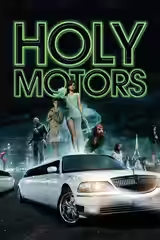
After Titane, try Crash (1996, Fi1m 78): Cronenberg’s cool, bored people and their cars; the obvious parent of Alexia’s night out. Then Tetsuo: The Iron Man (1989, Fi1m 82): Sixty-seven minutes of a man turning to scrap metal, shot like a panic attack; and Holy Motors (2012, Fi1m 84): A man changes bodies across one Paris night; French, unexplained and stranger than this.

Cast

Awards

Gaudí Award for Best European Film, 2022

Nominated
Gaudí Award for Best European Film

International Submission to the Academy Awards, 2022

Nominated
International Submission to the Academy Awards

Cannes Film Festival, 2021

Won
Palme d'Or

European Film Award for Best Actor, 2021

Nominated
European Film Award for Best Actor

European Film Award for Best Actress, 2021

Nominated
European Film Award for Best Actress

European Film Award for Best Director, 2021

Nominated
European Film Award for Best Director

European Film Award for Best Film, 2021

Nominated
European Film Award for Best Film

European Film Award for Best Hair and Makeup Artist, 2021

Won
European Film Award for Best Hair and Makeup Artist

If you liked this, try…

  1. Raw (2016) · not on Fi1m yetDucournau’s first film: a veterinary student, a taste for flesh, and far tighter control.

  2. Crash (1996, Fi1m 78)Cronenberg’s cool, bored people and their cars; the obvious parent of Alexia’s night out.

  3. Tetsuo: The Iron Man (1989, Fi1m 82)Sixty-seven minutes of a man turning to scrap metal, shot like a panic attack.

  4. Border (2018) · not on Fi1m yetA Swedish customs officer discovers what she is; strange, sad and oddly gentle.

  5. Holy Motors (2012, Fi1m 84)A man changes bodies across one Paris night; French, unexplained and stranger than this.