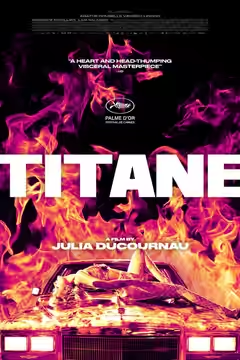
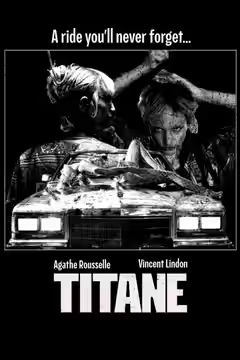
Julia Ducournau’s second film begins as a serial-killer picture with a car in it and becomes a story about a lonely fire captain and the stranger he decides is his missing son. Fierce, strange, handsomely shot, and slack for half an hour in the middle.
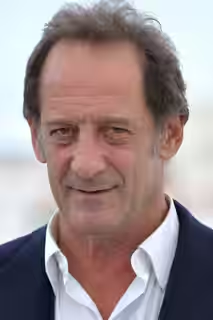
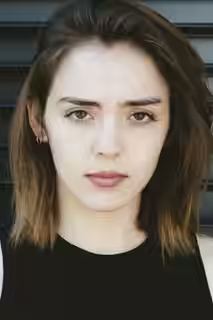
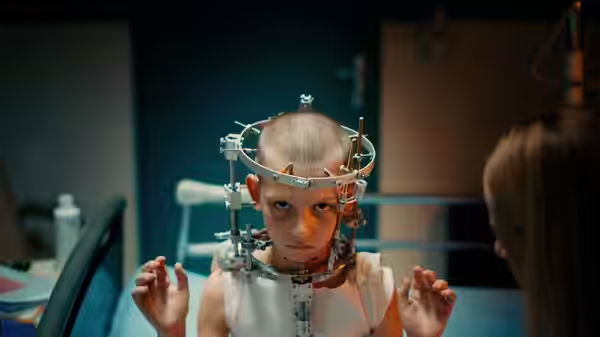
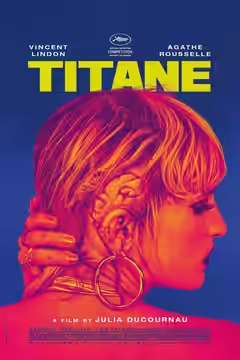
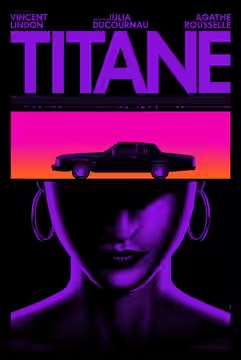
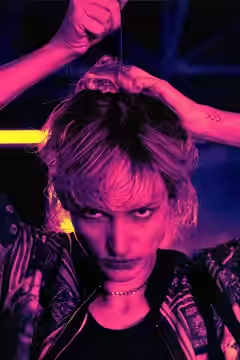
Julia Ducournau’s first film, Raw, was about a vegetarian who developed a taste for flesh: tight, funny and controlled. Her second is none of those things for long stretches, and we would still send anyone with a strong stomach to see it. Alexia (Agathe Rousselle) has a titanium plate in her head from a childhood crash, dances on car bonnets for a living, kills people, and gets pregnant by a car. Then she passes herself off as a boy missing for ten years and is taken in by his father, Vincent (Vincent Lindon), a fire captain. The first half is a horror film. The second is about two damaged people agreeing to believe a lie.
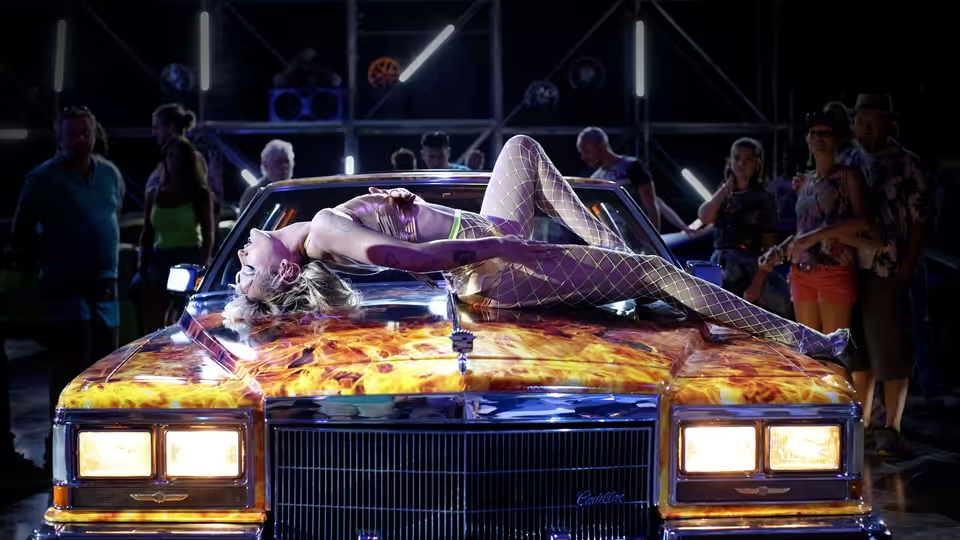
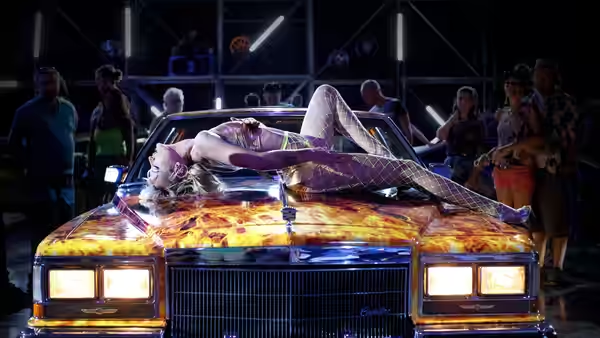
The opening is the best sustained filmmaking in it. Ruben Impens follows Alexia in one long take through a tuning show, past chrome and undercarriage lights and men filming on their phones, to a flame-painted car she climbs and grinds against while the light goes pink and gold. In three wordless minutes we know what kind of body this woman has and what she uses it for. Rousselle, in her first feature, barely speaks. She acts with her jaw and her shoulders and the flat way she looks at people who are about to be in trouble.
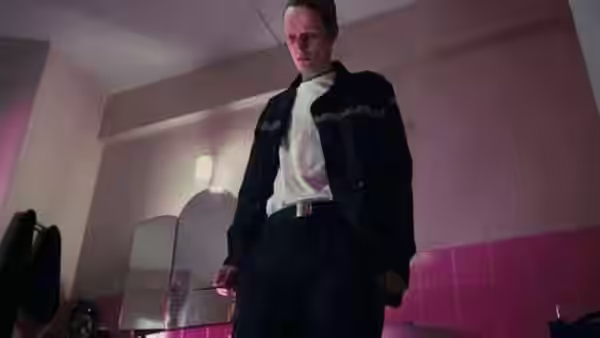
A fan (Thibault Cathalifaud) follows her to the car park and is dealt with by hairpin, and a sequence in a suburban house turns killing into exhausted farce, Alexia growing more irritated with each new person found at home. We laughed, and were not proud of it. Then she stands over a station sink and breaks her own nose against the porcelain, and Jean-Christophe Bouzy holds the shot so the sound arrives before we understand the picture. We looked away. We cannot remember last doing that in a cinema.
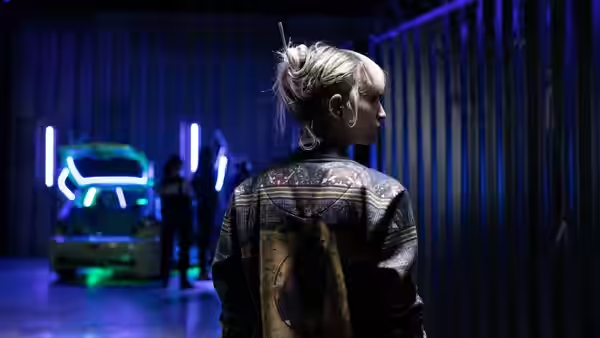
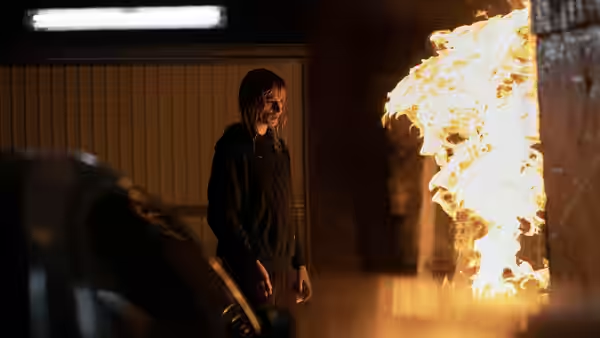
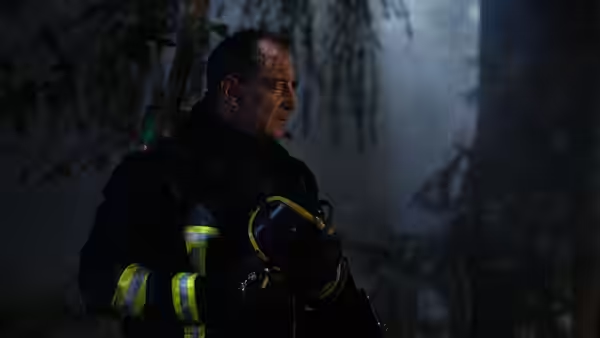
Lindon plays a man who injects steroids into his bruised backside nightly to keep a body that is giving up on him, and commands firemen who half-worship and half-manage him. Lise Péault and Laurie Colson’s fire station is concrete, red steel and strip light; Impens shoots it in orange and near-dark so the men glow. Anne-Sophie Gledhill puts Alexia in a uniform two sizes too big and lets the cloth hide what she is hiding. Jim Williams’s score is mostly organ and low choir, church music for a garage, and it rises under a party scene in which Alexia climbs onto the fire engine and does her show-dance for a room that does not know how to take it. That scene moved us more than we expected; what did it was Lindon’s face as he watched, deciding what he was prepared not to notice.
The middle is where the film sags. Once Alexia is inside the station the story has two questions, will she be found out and what is she carrying, and Ducournau lets both idle for forty minutes. A young fireman, Rayane (Laïs Salameh), suspects the new arrival, and that strand is picked up and put down without much coming of it. Adrien’s mother (Myriem Akheddiou) has one good scene, and it shows how much sharper the film could have been about the world outside the station. The pregnancy is a marvel of make-up and dread, oil where blood should be, skin that splits to show metal, and we are never sure what Ducournau wants it to mean. Motherhood, gender, the body as a machine that will not take orders: the film touches each and settles on none.
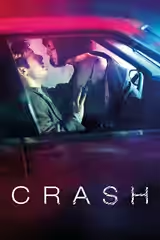
Cronenberg’s Crash is the plain ancestor for the car, and Ducournau does not pretend otherwise; his people were bored and hers are desperate. Garance Marillier, who led Raw, turns up as Justine, a fellow dancer, a nod admirers of the earlier film will enjoy. Against Raw, this is looser, bigger and less certain of what it is saying. Against most horror films, it is alive in every frame.
It is an 18 certificate and it earns it inside twenty minutes. At 108 minutes it is not long, though the middle will make it feel longer. It opened in British cinemas on 26 December 2021, and somebody in a distribution office must have enjoyed that.