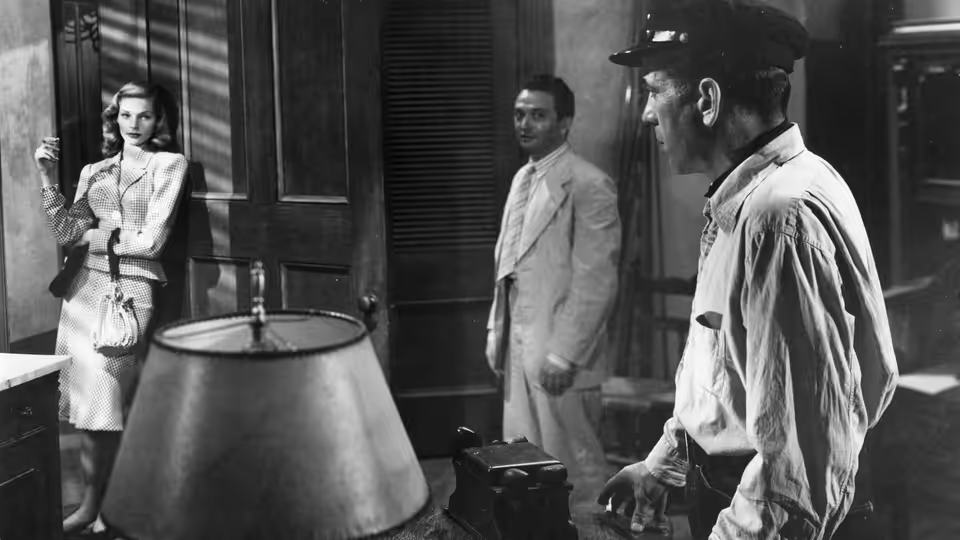
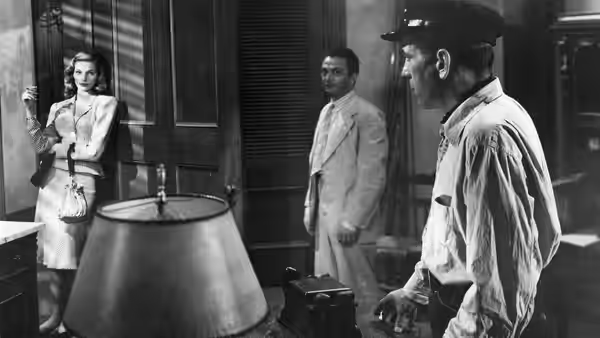
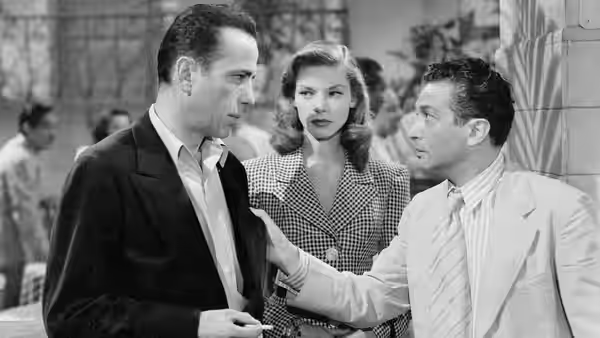
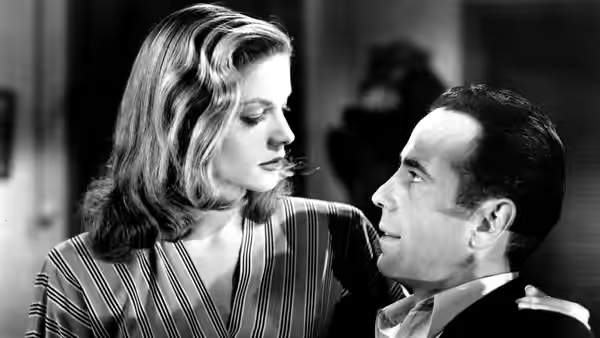
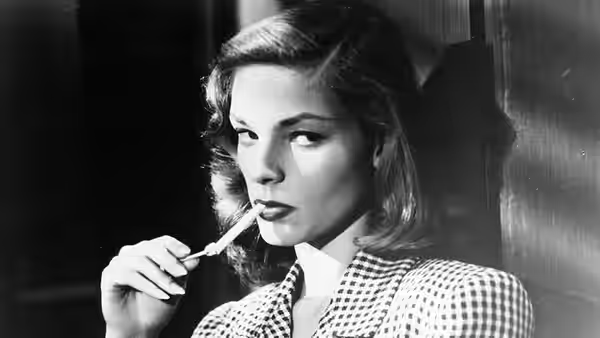
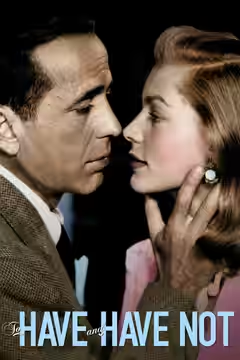
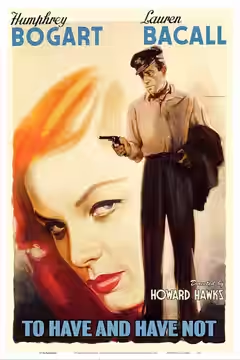
Howard Hawks gives Humphrey Bogart and Lauren Bacall time to enjoy one another, and we happily join them. The adventure occasionally lacks urgency, but the romantic playing makes this an easy recommendation.
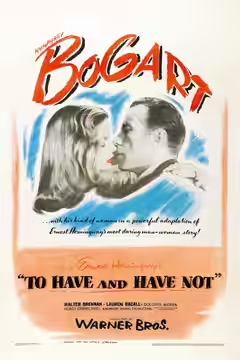
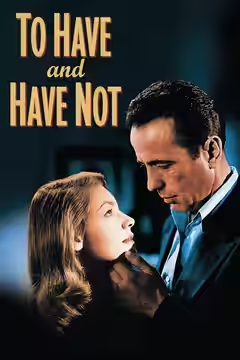
Howard Hawks’s To Have and Have Not is a warm, assured pleasure, and watching Humphrey Bogart and Lauren Bacall together supplies most of it. We recommend it for the company, with a reservation about how little urgency the adventure sometimes supplies. The director understands that watching capable people take an interest in one another can be sufficiently absorbing without constant incident. The film is most persuasive when he gives his leads room to do exactly that.
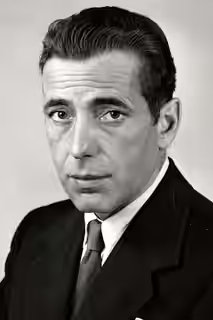
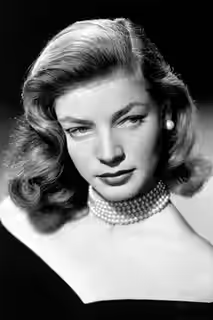
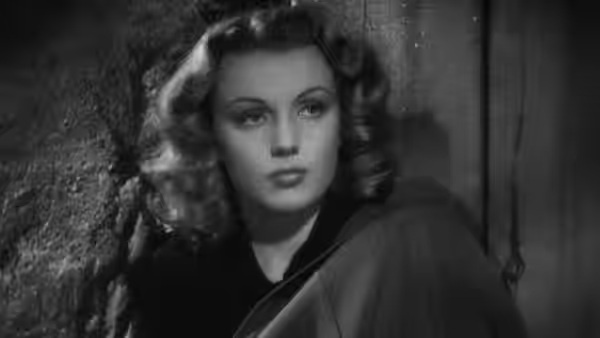
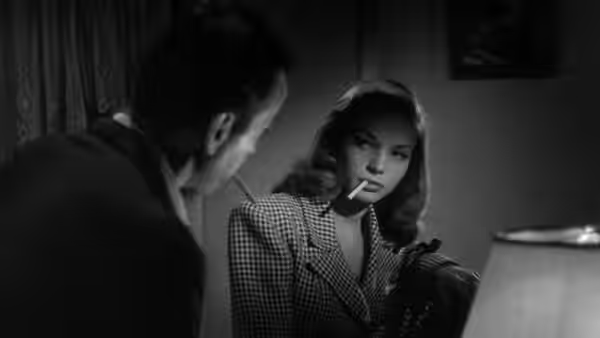
As Harry Morgan, Humphrey Bogart never seems to be spending effort merely to look important. Lauren Bacall’s Marie Browning meets that restraint with an assurance that makes her difficult to stop watching. We were delighted by her composure, particularly the unhurried way she responds to her co-star. Neither performance seems anxious to win our affection, and that gives their exchanges a freedom we enjoy: there is time to consider what each makes of the other.
The screenplay by William Faulkner, Jules Furthman and Whitman Chambers, drawing on Ernest Hemingway’s novel, is at its most agreeable when it trusts the performers. That is substantial literary company, but the film’s appeal does not depend on recognising any of it. What matters is the ease of the exchanges and the sense that the actors have something to enjoy in the words. The writing is less convincing when it needs to make the adventure feel equally important, and our attention sometimes wanders from the business occupying the characters.
Sidney Hickox’s cinematography serves the performances well: faces hold our attention without the photography becoming a separate attraction demanding admiration. Christian Nyby’s editing is equally valuable for the ease it gives the exchanges. We have time to register a response without feeling that a moment has been held up for inspection. That restraint matters in a romance, where cutting too insistently can make an audience feel instructed to notice a connection it would happily discover for itself.
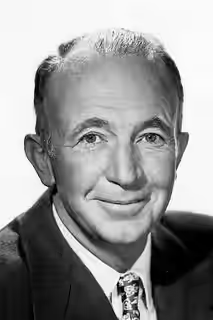
Franz Waxman’s music is effective without becoming the element we remember most clearly. Hoagy Carmichael’s Cricket contributes to the film’s relaxed appeal, although that ease can also reduce the pressure of its adventure. Walter Brennan’s Eddie is a less consistent pleasure: the performance sometimes works harder for affection than we need it to. There is warmth in the playing, but the indulgence becomes noticeable beside the economy of the leads.
The consensus is cooler than our verdict, though the three reviews behind it are sharply divided. We disagree with the hostility towards Lauren Bacall’s performance: her confidence is a large part of the film’s appeal, and calling it overdone gives too little weight to its humour. The objection to the treatment of Marcel Dalio’s Gerard ‘Frenchy’ is easier to understand, since the part feels less generous than the performer deserves. That unevenness is worth acknowledging without discounting the considerable pleasure elsewhere.
Romantic adventures can become so busy that there is little time to enjoy the romance. Here the leisurely manner gives us that time, even if it leaves the danger feeling a little remote. The 100-minute running time is modest enough, though the film asks for a willingness to linger that the number alone does not convey. If brisk plotting is the priority, save this for another evening.