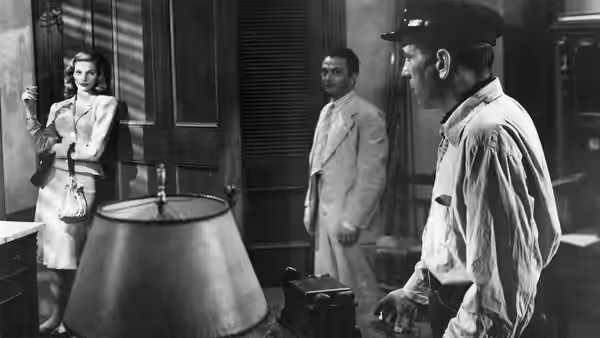
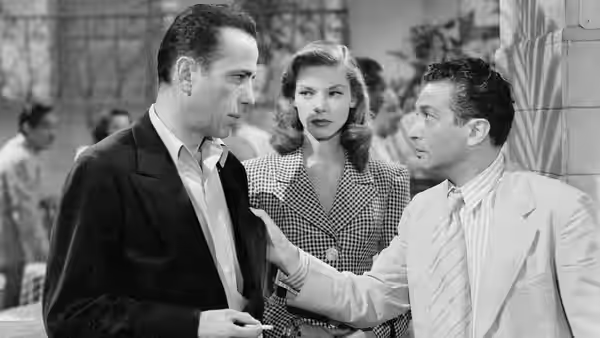
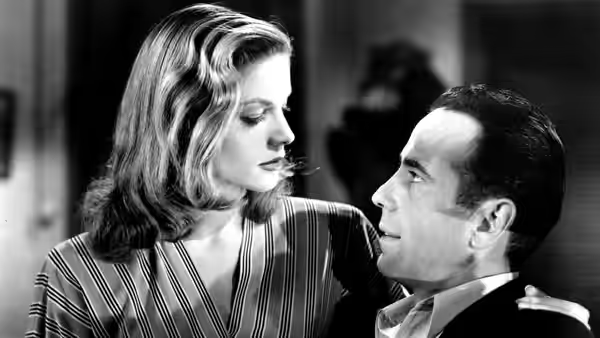
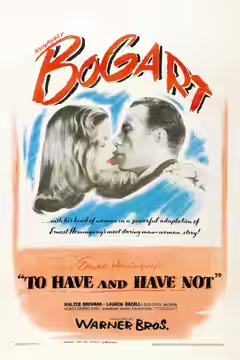
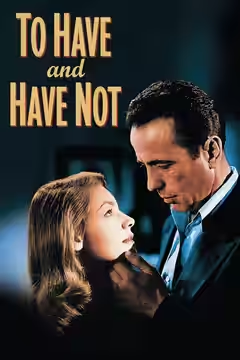
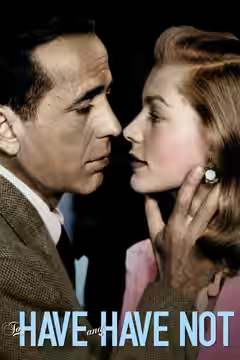
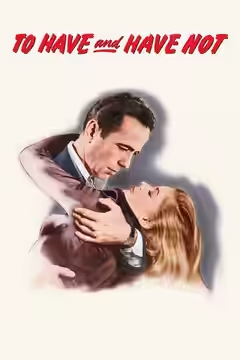
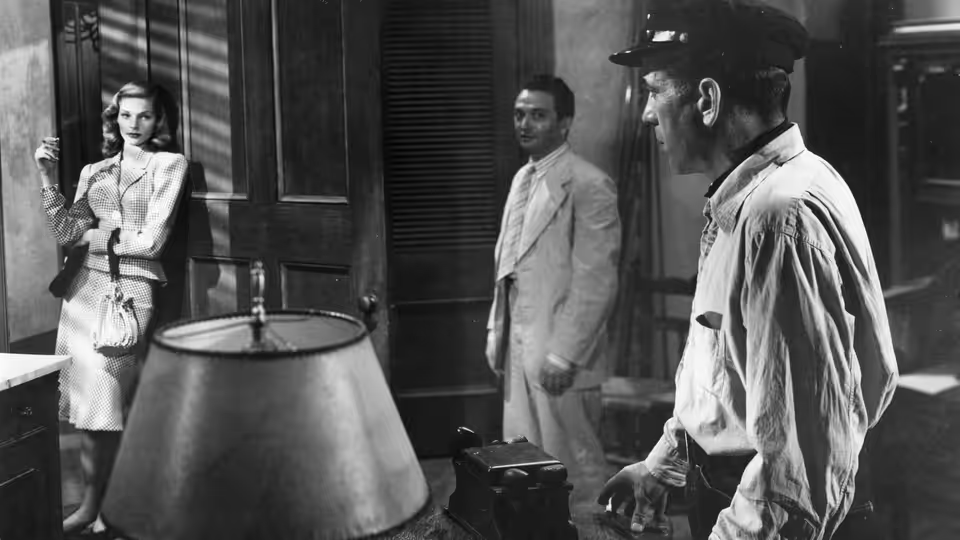
Marie Browning (Lauren Bacall) stands across a hotel room from Harry Morgan (Humphrey Bogart)
Film review

To Have and Have Not

1945 · Directed by Howard Hawks · 1h 40m

In a sentenceThe adventure can wait; Humphrey Bogart and Lauren Bacall are busy sizing each other up

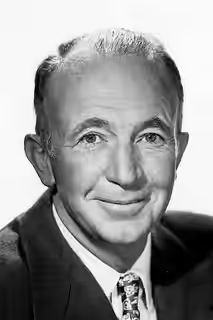
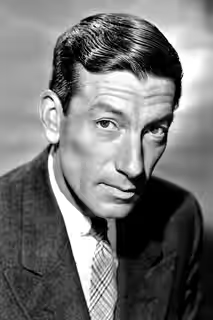
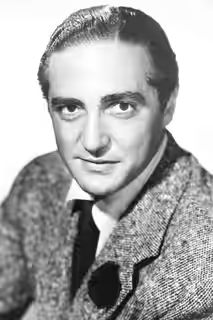
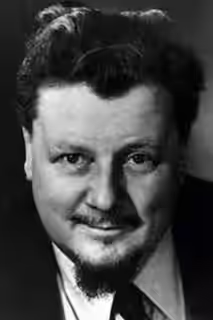
Harry Morgan (Humphrey Bogart), Marie Browning (Lauren Bacall) and Eddie (Walter Brennan) lead an adventure combining romance and war. The characters around them include Cricket (Hoagy Carmichael), Gerard ‘Frenchy’ (Marcel Dalio) and Fishing Customer Johnson (Walter Sande), alongside Paul de Bursac (Walter Surovy) and Mme. Hellene de Bursac (Dolores Moran). Also present are Lt. Coyo (Sheldon Leonard), Capt. M. Renard (Dan Seymour) and Renard’s Bodyguard (Aldo Nadi). Howard Hawks directs, with a novel by Ernest Hemingway providing the source and a screenplay credited to William Faulkner, Jules Furthman and Whitman Chambers.

Fi1m review

Howard Hawks gives Humphrey Bogart and Lauren Bacall time to enjoy one another, and we happily join them. The adventure occasionally lacks urgency, but the romantic playing makes this an easy recommendation.

Howard Hawks’s To Have and Have Not is a warm, assured pleasure, and watching Humphrey Bogart and Lauren Bacall together supplies most of it. We recommend it for the company, with a reservation about how little urgency the adventure sometimes supplies. The director understands that watching capable people take an interest in one another can be sufficiently absorbing without constant incident. The film is most persuasive when he gives his leads room to do exactly that.

As Harry Morgan, Humphrey Bogart never seems to be spending effort merely to look important. Lauren Bacall’s Marie Browning meets that restraint with an assurance that makes her difficult to stop watching. We were delighted by her composure, particularly the unhurried way she responds to her co-star. Neither performance seems anxious to win our affection, and that gives their exchanges a freedom we enjoy: there is time to consider what each makes of the other.

The screenplay by William Faulkner, Jules Furthman and Whitman Chambers, drawing on Ernest Hemingway’s novel, is at its most agreeable when it trusts the performers. That is substantial literary company, but the film’s appeal does not depend on recognising any of it. What matters is the ease of the exchanges and the sense that the actors have something to enjoy in the words. The writing is less convincing when it needs to make the adventure feel equally important, and our attention sometimes wanders from the business occupying the characters.

Sidney Hickox’s cinematography serves the performances well: faces hold our attention without the photography becoming a separate attraction demanding admiration. Christian Nyby’s editing is equally valuable for the ease it gives the exchanges. We have time to register a response without feeling that a moment has been held up for inspection. That restraint matters in a romance, where cutting too insistently can make an audience feel instructed to notice a connection it would happily discover for itself.

Franz Waxman’s music is effective without becoming the element we remember most clearly. Hoagy Carmichael’s Cricket contributes to the film’s relaxed appeal, although that ease can also reduce the pressure of its adventure. Walter Brennan’s Eddie is a less consistent pleasure: the performance sometimes works harder for affection than we need it to. There is warmth in the playing, but the indulgence becomes noticeable beside the economy of the leads.

The consensus is cooler than our verdict, though the three reviews behind it are sharply divided. We disagree with the hostility towards Lauren Bacall’s performance: her confidence is a large part of the film’s appeal, and calling it overdone gives too little weight to its humour. The objection to the treatment of Marcel Dalio’s Gerard ‘Frenchy’ is easier to understand, since the part feels less generous than the performer deserves. That unevenness is worth acknowledging without discounting the considerable pleasure elsewhere.

Romantic adventures can become so busy that there is little time to enjoy the romance. Here the leisurely manner gives us that time, even if it leaves the danger feeling a little remote. The 100-minute running time is modest enough, though the film asks for a willingness to linger that the number alone does not convey. If brisk plotting is the priority, save this for another evening.

Critical consensus AI synthesised

3 of 6
Positive
1
Mixed
1
Negative
1
Time Out
· PH
90*

The review presents the film as an unassuming masterpiece. It singles out Hawks’s tough treatment of necessity, though the available description gives no further detail.

Read the full review →
The New York Times
12 October 1944
64*

The article appears to be a review, but its text is unavailable. Its verdict and any specific praise or complaint cannot be established from the page provided.

Read the full review →
Sight and Sound
13 August 2014 · Herman G. Weinberg
10*

The original review dismisses the film as poor stuff and predicts it will succeed commercially. It particularly condemns Lauren Bacall’s femme-fatale performance and the treatment of Dalio’s character.

Read the full review →

Straight answers AI written, from our review

Is To Have and Have Not worth watching?
To Have and Have Not is an easy recommendation for its relaxed romance and the pleasure of watching Humphrey Bogart and Lauren Bacall together; we score it 84 out of 100. Their unhurried exchanges are the attraction, but we recommend something else if brisk plotting and urgent adventure are the priority.
How long is To Have and Have Not, and what is it rated?
To Have and Have Not runs 1h 40m. It is an adventure and romance film.
Where can I watch To Have and Have Not in Peru?
To Have and Have Not is not on any streaming or rental service in Peru at the moment. It is available in 23 other countries; change your country at the top of the page to see where. Availability is checked daily.
How violent or frightening is To Have and Have Not, and is it suitable for children?
To Have and Have Not carries a UK PG certificate, which indicates general suitability but allows for material that may not suit younger children. We find its adventure less urgent than its romance, with danger that feels rather remote, though that is not a guarantee that every child will find it comfortable viewing.
How does To Have and Have Not compare to Only Angels Have Wings?
To Have and Have Not is the more leisurely romantic choice beside Only Angels Have Wings, which we recommend more strongly for gripping adventure and guarded affection that feels urgent. Both reward patience with capable people sizing each other up, but Bogart and Bacall’s exchanges are more compelling than the danger surrounding them.
Is To Have and Have Not based on a true story or a book?
To Have and Have Not draws on a novel by Ernest Hemingway, with a screenplay credited to William Faulkner, Jules Furthman and Whitman Chambers. We find no need to know the book beforehand: the film’s appeal rests on the ease of its dialogue and the pleasure Bogart and Bacall take in their exchanges.
What should I watch after To Have and Have Not?
After To Have and Have Not, try Only Angels Have Wings (1939, Fi1m 88): Another patient adventure where competence and attraction make the danger matter. Then The Lady Eve (1941, Fi1m 90): Two assured leads turn romantic bargaining into a sustained comic pleasure; and A Matter of Life and Death (1946, Fi1m 92): A wartime romance that gives its lovers room amid stranger complications.

Cast

If you liked this, try…

  1. Only Angels Have Wings (1939, Fi1m 88)Another patient adventure where competence and attraction make the danger matter.

  2. The Lady Eve (1941, Fi1m 90)Two assured leads turn romantic bargaining into a sustained comic pleasure.

  3. A Matter of Life and Death (1946, Fi1m 92)A wartime romance that gives its lovers room amid stranger complications.

  4. Out of Sight (1998, Fi1m 86)Flirtation repeatedly interrupts criminal business, with welcome confidence in both leads.

  5. The Lunchbox (2013) · not on Fi1m yetA quieter romance, attentive to hesitation, loneliness and the pleasure of correspondence.