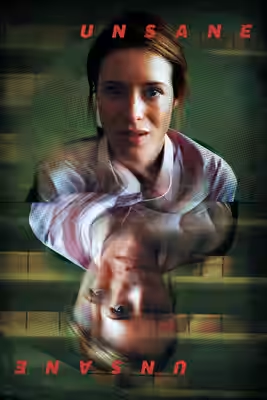
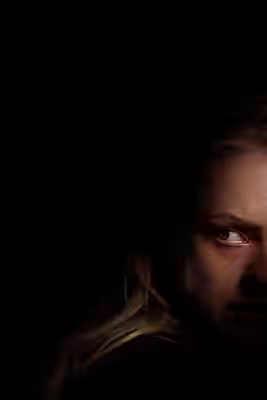
Soderbergh shoots a woman’s committal on a phone, and for an hour the cheap, sickly image is exactly right. Claire Foy is furious and superb throughout. Then the script settles which film it is, and picks the sillier one.
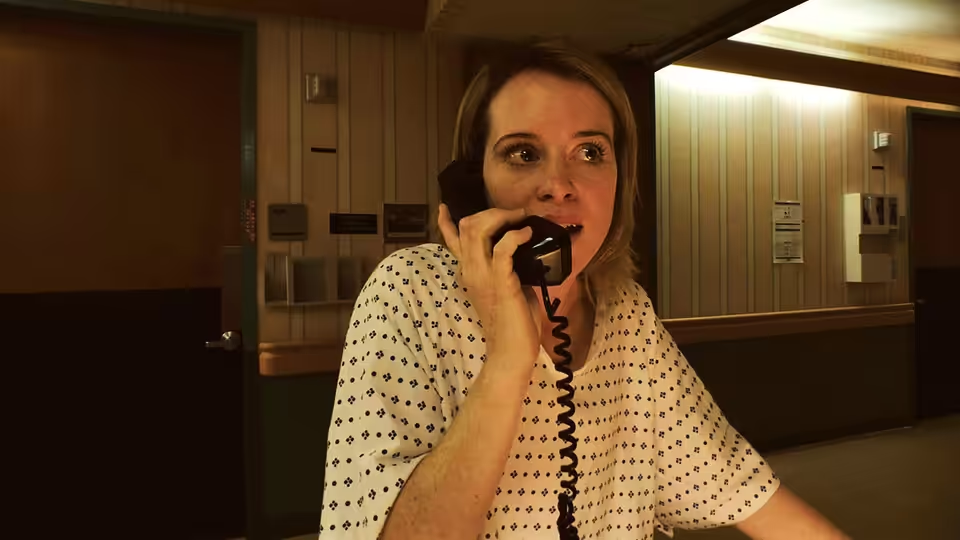
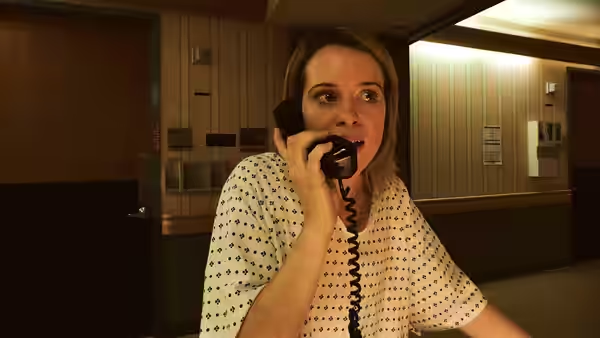
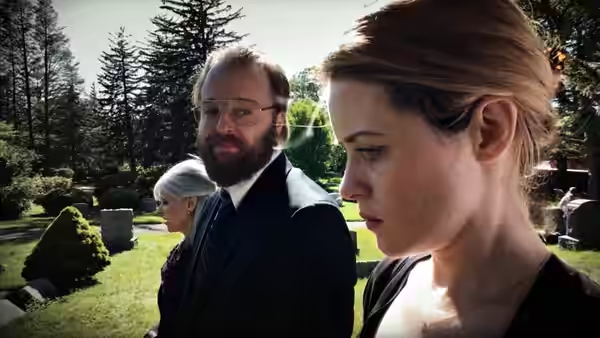
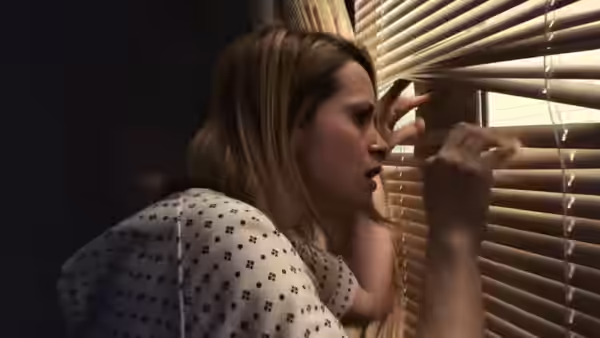
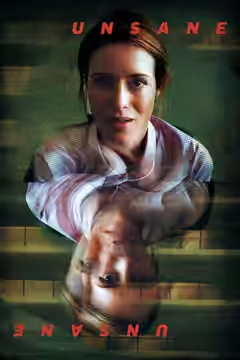
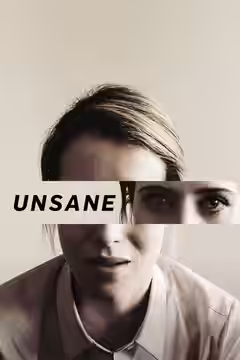
Steven Soderbergh has shot a thriller on an iPhone about a woman nobody will believe, and for about an hour the two things suit each other. Sawyer Valentini (Claire Foy) has moved cities to get away from a stalker, taken a job at a bank, and booked a session with a counsellor because she is still not sleeping. She signs some forms. Minutes later she is on a ward she cannot leave, and not long after that she sees, in an orderly’s uniform, the face she moved to escape. Unsane runs 98 minutes. It is good for around sixty of them, and Foy is good throughout.
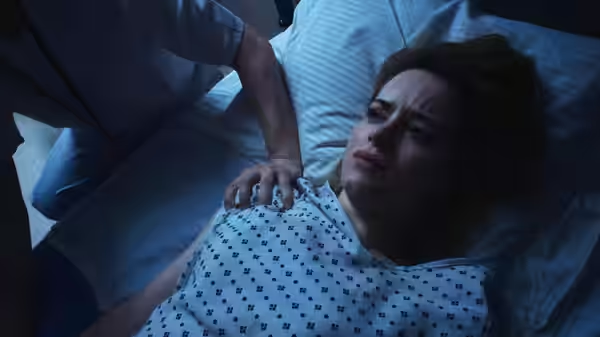
Foy plays Sawyer as a woman who ran out of patience some time before the film began. She is short with a date (Colin Woodell), short with her boss (Marc Kudisch), short with the counsellor, and none of it is illness. When the doors lock she does what a sane person would do, which is shout, and the shouting is what gets her held down. Her voice cracks, her hands do not know where to go, and she keeps arguing her case in full sentences to people who have stopped listening. Here is where the film had us. Sawyer asks for her phone back and a nurse tells her, quite kindly, that she signed for a voluntary stay. Foy’s face does the arithmetic, ours did too, and we felt something close to nausea.
Soderbergh is credited as his own cinematographer and editor, and the phone is a choice rather than a stunt. Its lens is wide and he sits it low and close, so the ward’s ceilings press down and any face near the edge of the frame stretches slightly out of true. Under the strip lights everything turns the yellow-green of an old bruise. April Lasky’s hospital is beige walls, plastic chairs and a common room with a bolted-down television; it looks as if it cost nothing, which is the point, since this place is a business. Susan Lyall keeps Sawyer in the same work blouse for days. David Wilder Savage’s score is a low electronic pulse that stays under the scenes and rises only when something is about to go wrong.
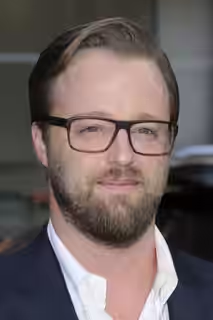
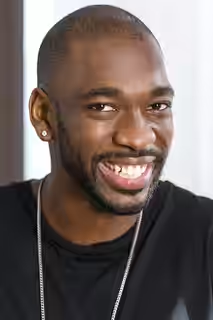
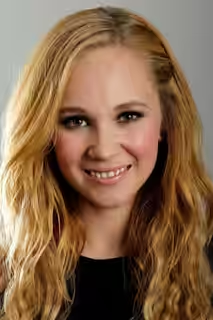
Jay Pharoah is the calmest thing in the film and the best written. His Nate has been on the ward a while, and over a plastic table he explains that the hospital keeps you for exactly as long as your insurance pays, then declares you cured. Juno Temple’s Violet is the ward bully, all hair and hiss, played several sizes larger than anything around her. Amy Irving, as Sawyer’s mother Angela, telephones people and is put on hold. Joshua Leonard plays David Strine with a soft voice and wet eyes, and he is frightening because he never raises it.
The screenplay, by Jonathan Bernstein and James Greer, has two good ideas. One is the tagline: is she or isn’t she. The other is Nate’s, that the ward is a scam and the doctors are salesmen. The film spends the first idea fast, settling the question well before the halfway mark, and once settled the doubt has nowhere to go. It then largely forgets the second idea, which is the more interesting one. The last half hour takes a turn we will not describe, except to say that it is borrowed from cheaper films than the one we had been watching, and that nobody who runs the hospital behaves like a person who has ever met a lawyer. By then we were not frightened. We were counting the exits the script had left open, and irritated that the film was not.
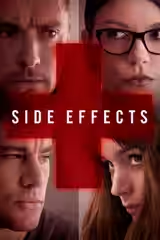
Soderbergh has done this better. Side Effects (2013) also asked whether to believe a troubled woman, and kept its answer back until it was ready; Unsane gives its early and carries on as if it had not. The film is at its best when the phone is the point, unflattering and close and unable to make anyone look well, and it looks merely cheap once the plot takes over.
Worth an evening if you can bear being shouted at, and better at home, where the image looks less like an experiment and more like footage someone should not have. It carries a 15 and it is over in 98 minutes. Read the forms.