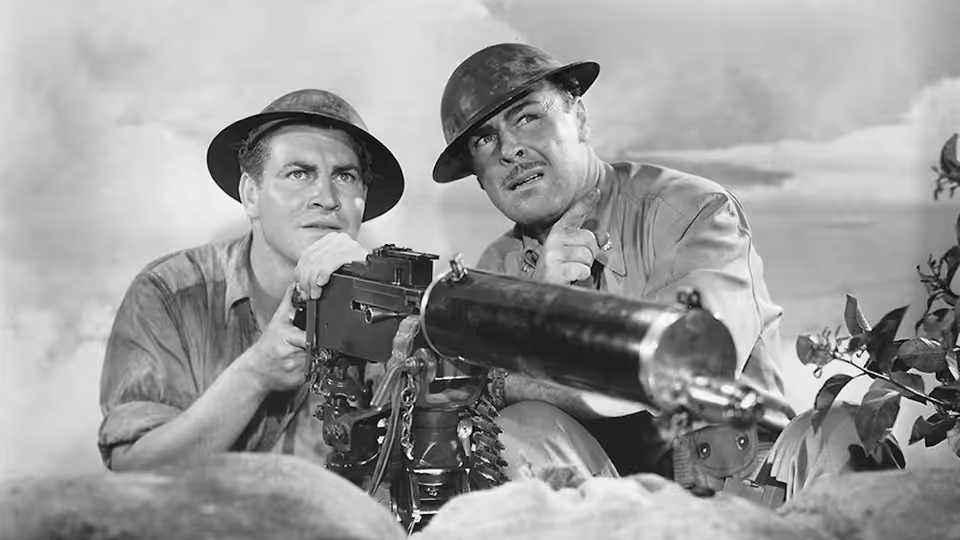
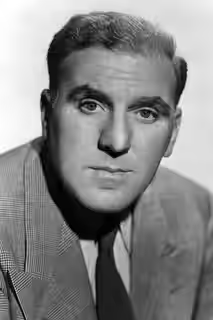
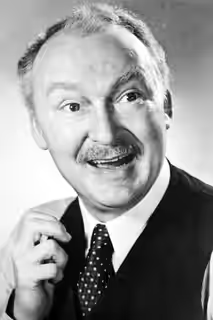
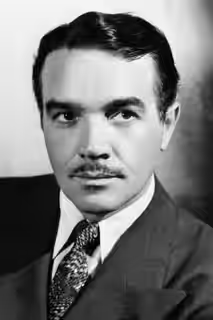
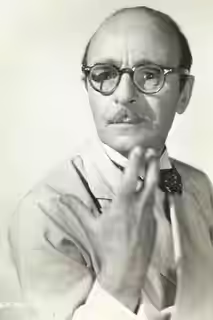
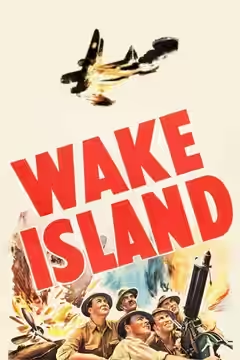
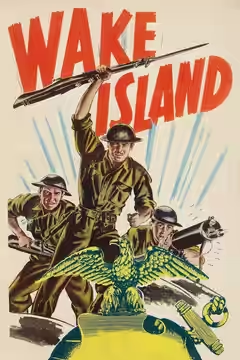
John Farrow’s account of the Marines on Wake Island was made within months of the events and it shows, mostly in good ways: it is brisk, blunt and does not soften what the history books record. It is also a recruiting film, and the enemy never gets a face.
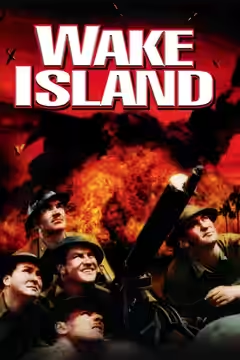
Wake Island was made while the battle it describes was still recent news. Japanese forces attacked the atoll in December 1941, in the same week as Pearl Harbor, and the film reached cinemas in 1942. John Farrow directs from a screenplay by Frank Butler and W.R. Burnett, and the whole thing runs 87 minutes. It is a recruiting film, plainly, and we should say that first. It is also a good one: quick, hard, and honest about how the story ends. If wartime pictures are your genre, it is worth your evening.
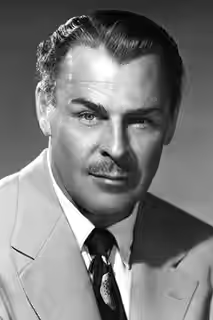
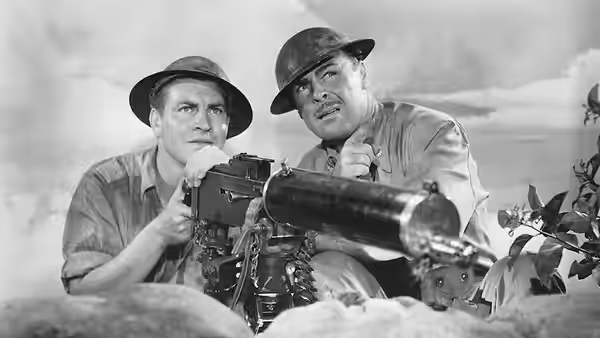
The first half hour is about a quarrel. Maj. Caton (Brian Donlevy) arrives to command a garrison that shares the island with a construction crew, and the crew’s foreman, Shad McClosky (Albert Dekker), does not care for him. Donlevy plays Caton clipped and quiet, a man who has decided not to raise his voice. Dekker is loud and wide, and the two are staged as opposites so the film can bring them together later. It is not subtle. It works, because both actors know exactly what they are for.
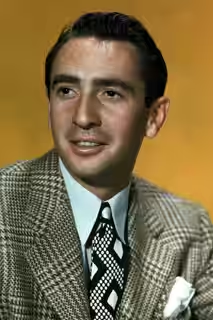
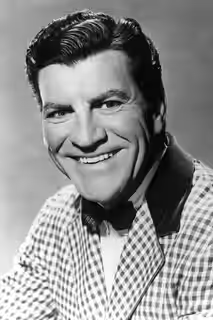
Robert Preston and William Bendix carry the comedy. Doyle and Randall are the two privates who cannot stop hitting each other, and Randall is counting the days to the end of his hitch. We laughed at Bendix, who has a slow, injured look that has been borrowed by every dim, decent private in every war film since. Then the raids begin and the film uses that laughter against us. The routine goes on a scene or two too long, but the payoff is fair.
Theodor Sparkuhl and William C. Mellor shoot the island as flat white sand under a great deal of sky, the horizon low and empty, so that when aircraft appear they appear from nowhere. The raids are dust and smoke and men pressed into the ground. Frank Bracht and LeRoy Stone cut them short and hard, and mostly get away from the model aircraft and toy ships before we can look too closely. Mostly. David Buttolph’s music is brass and drum, and there is more of it than the film needs, though it has the sense to fall away near the end. Bill Goodwin narrates as well as playing Sgt. Higbee, and the narration is the one element we would remove altogether; the pictures are doing the job without it.
The weaknesses are the ones you would expect. The Japanese are aircraft, distant boats and a diplomat who passes through on his way to Washington; nobody on the other side is given a face. The speeches about duty arrive on schedule. Macdonald Carey’s Cameron, the pilot with a wife at Pearl Harbor, gets the thinnest strand, a telegram and a look. Walter Abel’s Cmdr. Roberts is there to have things explained to him, and Mikhail Rasumny’s Probenzky is a contractor with an accent and a punchline. This is a film about a garrison, not about people, and it does not pretend otherwise.
What surprised us was the last ten minutes. We knew what the history books say, and we went in expecting to be lectured. Instead the film goes nearly silent. The jokes stop, the narrator stops, most of the music stops, and Farrow simply watches faces in a dugout as the shelling comes closer. We will not describe what follows, except to say the film does not flinch from it, and that we sat quieter afterwards than we had expected to. A recruiting film that ends this way is a rarer thing than it sounds.
Set beside the flag-waving pictures that came after it, this is harder and less sentimental. Set beside what a viewer now wants from a war film, it is propaganda, and you should watch it knowing that. Burnett had written gangster stories before this, and you can feel it in the dialogue, which is short and does not explain itself. The film shares that virtue. It says what it has to say in 87 minutes and then it stops.