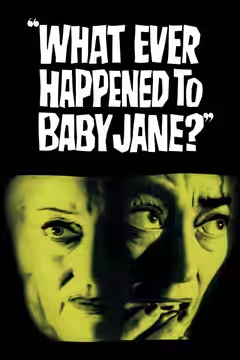
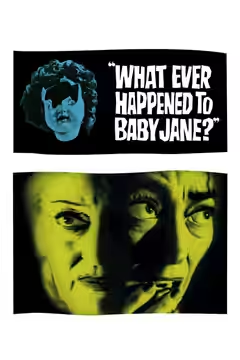
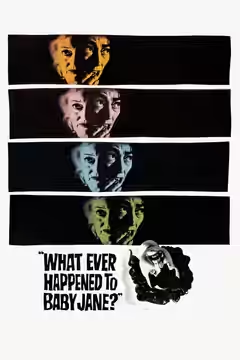
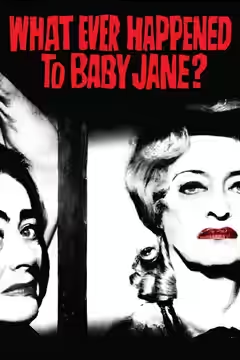
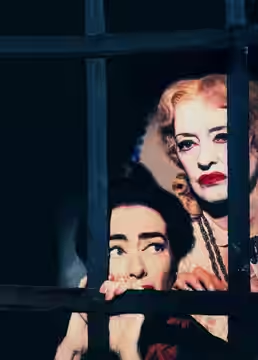
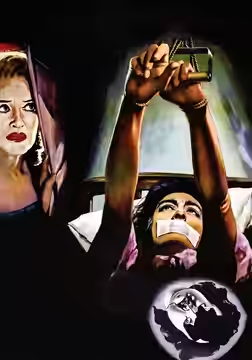
Robert Aldrich locks Bette Davis and Joan Crawford in a Hollywood mansion and lets them go at each other for 135 minutes. It is cruel, funny and frightening, and about twenty minutes too long. We recommend it, with the lights on.
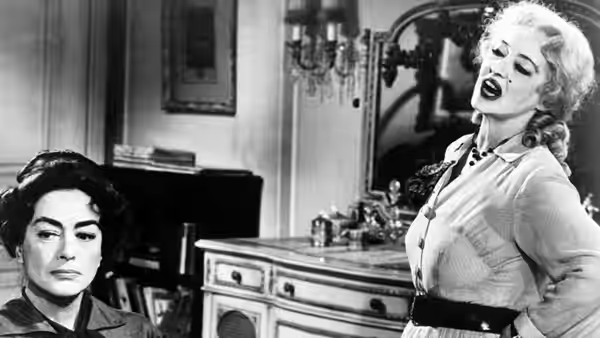
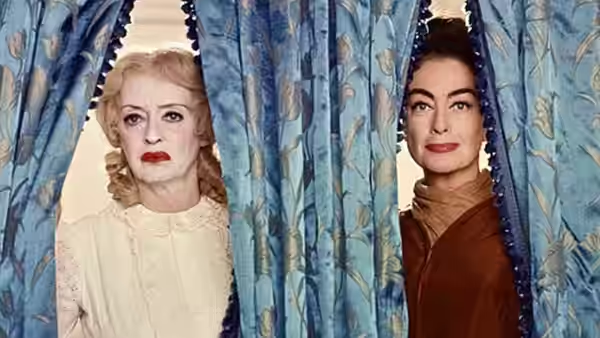
Robert Aldrich’s film is about two sisters who were both famous once and now cannot leave each other alone. Baby Jane Hudson (Bette Davis) was a child star of the vaudeville stage. Blanche (Joan Crawford) grew up to be the film star Jane never became, until a car crash finished her career and put her in a wheelchair, and the two have been shut up together in a Hollywood house ever since. Lukas Heller’s screenplay, from Henry Farrell’s novel, treats this as a horror film, and it is one. It is also a comedy about show business and a study of two women who have each spent thirty years blaming the other. It is a fine film, and it is too long.
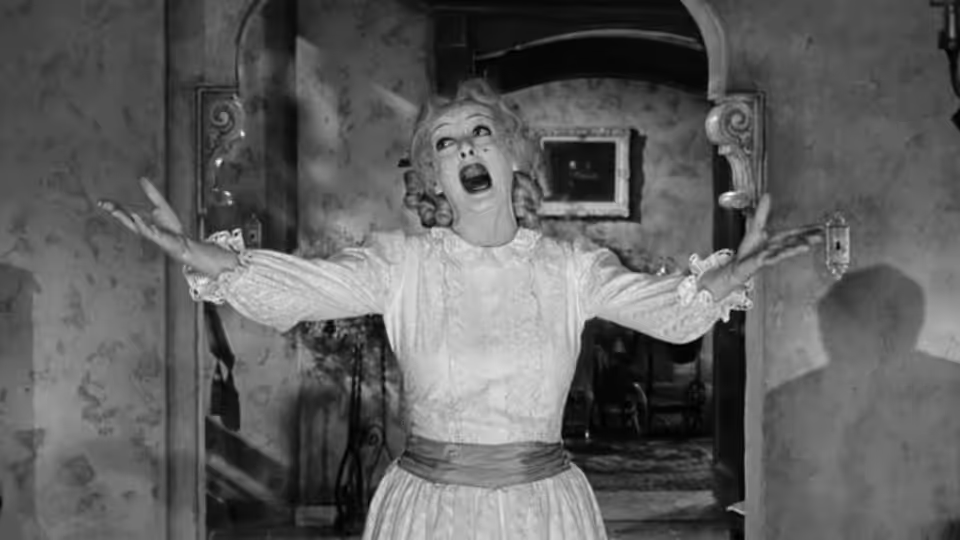
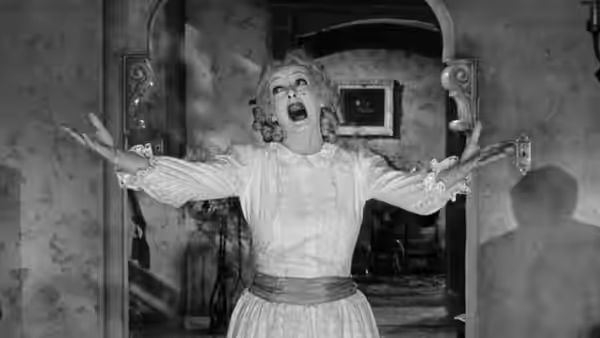
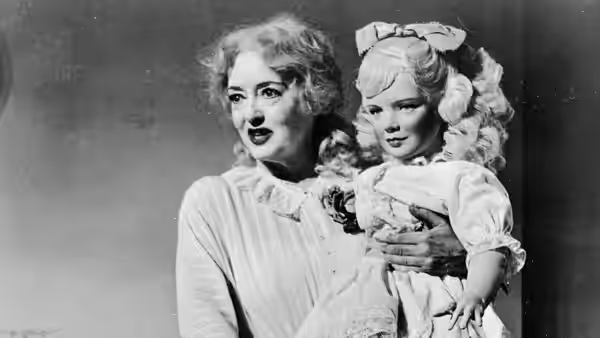
Davis plays Jane as a woman who stopped at about eleven. She wears the ringlets and frilled frocks of her old stage act, and a coat of white powder over which the lipstick and kohl have been applied by someone who cannot quite see. Her voice goes up into a baby’s whine when she wants something and down into a rasp when she does not get it. The scene most people remember is the one at the mirror: Jane, rehearsing her comeback, sings the song that made her famous as a child, gestures and all, and then catches sight of her own face. We laughed at the song. We were ashamed a moment later, when she screamed, because Davis had let us laugh on purpose and then showed us what we had been laughing at. There is no vanity in the performance at all.
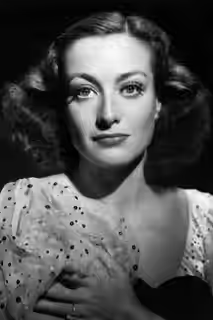
Crawford has the harder job, because Blanche has to be sympathetic without being a saint, and she has to do most of it sitting down. She is patient with Jane, gracious to the housekeeper and shrewd about money, and Crawford lets you see what the patience costs her. Blanche watches her own old films on the bedroom television with an expression that is not quite pleasure. When Jane sets the covered tray on the bed, Crawford does the fear with her hands, gripping the blanket, and keeps her face still. Maidie Norman plays the housekeeper, Elvira Stitt, with plain good sense, and for a long stretch she is the only person in the house we would trust with a kettle.
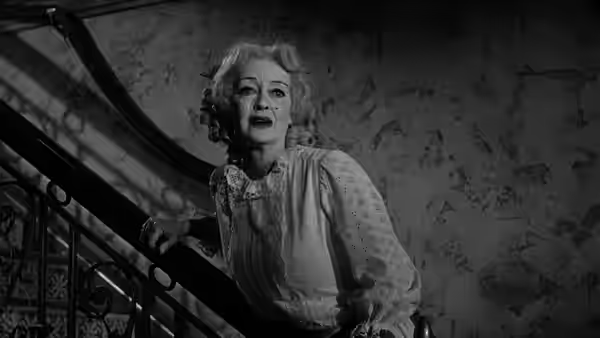
Ernest Haller shoots the house in black and white with the blinds drawn, and the light is different on each floor. Blanche’s bedroom is lamplit and grey. Jane’s kitchen is lit hard from above, so every crack in the powder shows. The staircase between them is where the film really lives, and Michael Luciano cuts up and down it with a patience that makes each of Jane’s climbs feel longer than the last. Frank De Vol’s score takes the childhood song and slows it into something for a music box that has been left out in the rain. It is not subtle and it is not meant to be.
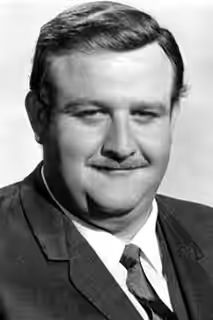
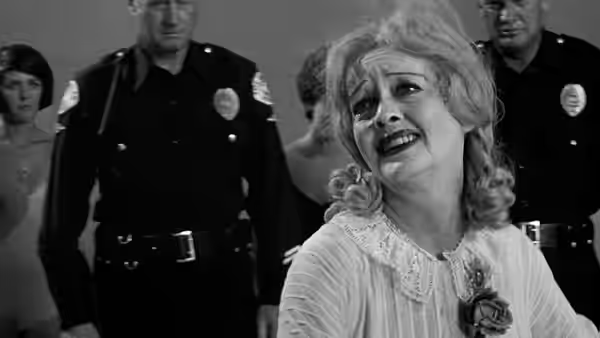
The film runs 135 minutes and does not need them all. Victor Buono’s Edwin Flagg, the large, damp pianist who answers Jane’s advertisement, is a good comic creation, all wounded dignity and one eye on the chequebook, but the scenes with his mother, Dehlia (Marjorie Bennett), in their rooms across town stop the film dead while we wait to get back to the house. The business with the trays is done one time more than it needs to be. And Aldrich, who directs the quiet scenes with real care, stages two of the violent ones so bluntly that the audience we sat with laughed at moments plainly meant to hurt. Some of that is the passage of sixty years. Some of it is the film.
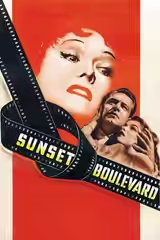
It owes something to Sunset Boulevard, which also put a forgotten star in a big house with the curtains drawn, and it was followed by a decade of films about older actresses menacing each other in decaying mansions. Almost none of them understood what makes this one work. The dark stairs and the covered tray are the least frightening things in it. The frightening thing is that each sister has a case against the other, has had one since 1935, and the first act shows us just enough to know it. The film carries an 18 certificate, which surprised us until we thought about the tray.
Watch it with a sibling, and do not offer to make lunch.