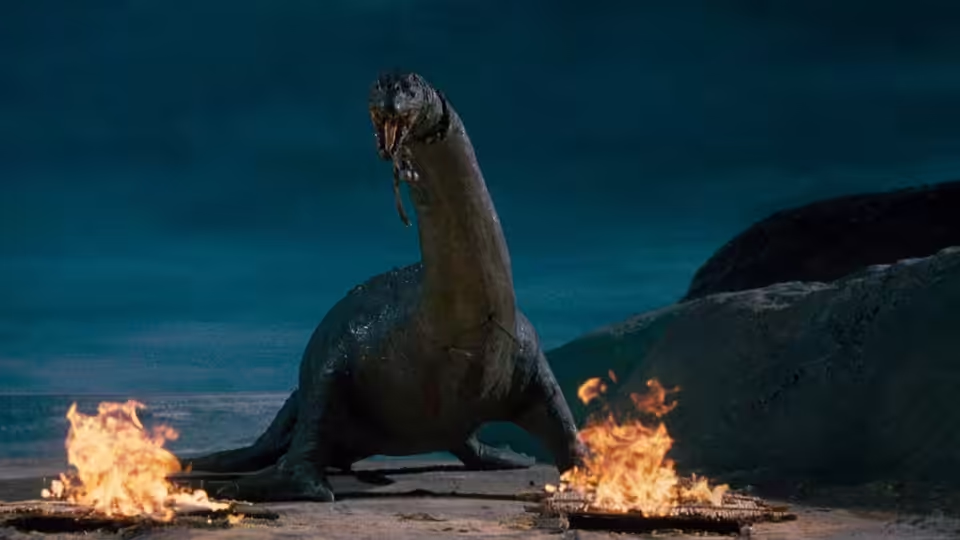
Val Guest’s prehistoric fantasy finds a workable balance of danger and gentle send-up, but its invented language keeps the people at a distance. There is modest fun here, provided character is not the main attraction.
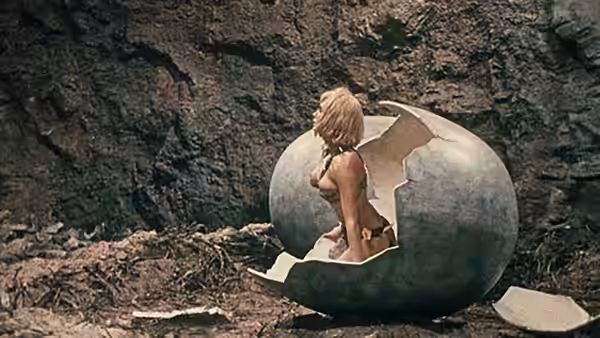
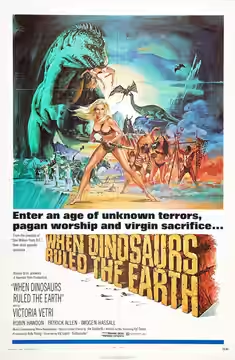
Val Guest’s When Dinosaurs Ruled the Earth is a modest diversion, hampered by its invented language. It wants the danger to count without making the entire enterprise solemn, and the balance of seriousness and send-up is its most useful quality. Pagan worship and virgin sacrifice are stern subjects for a fantasy adventure, but the film allows room for amusement. We can accept an impossible prehistory readily enough when it is offered in that spirit. The difficulty is finding much interest in the people who inhabit it.
The invented prehistoric speech is the chief obstacle. We found it frustrating, because it makes the actors work harder to suggest differences between people while depriving them of words that might make those differences interesting. The notion has an obvious appeal: familiar conversation might puncture the prehistoric setting. But accepting the choice does not make the exchanges more rewarding, and the effort to maintain an unfamiliar language draws attention away from whatever the characters are trying to communicate.
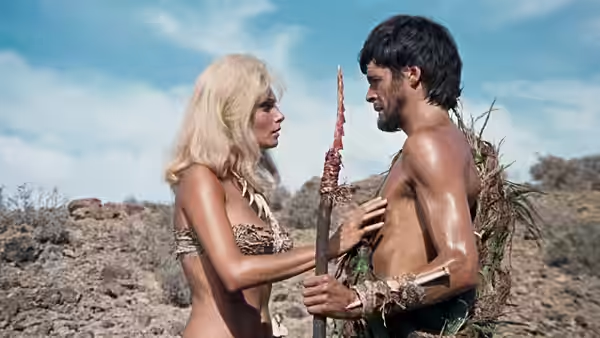
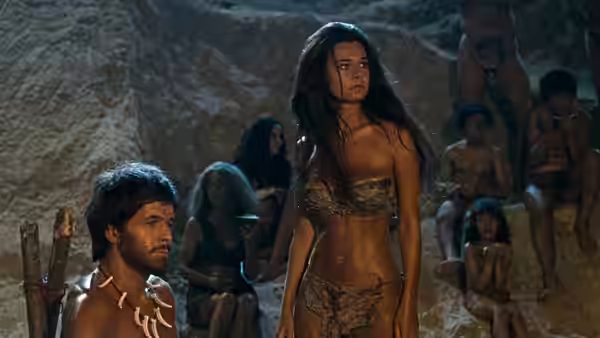
Victoria Vetri plays Sanna, Robin Hawdon plays Tara and Patrick Allen plays Kingsor, with Imogen Hassall as Ayak. There is a limit to how much a cast can achieve when the dialogue itself draws so much attention. We hesitate to blame the performers for failing to leave a stronger impression when the governing choice has made that task unnecessarily difficult. It also makes the film less inviting: there is only so much interest to be had in watching actors negotiate the same restriction.
Dick Bush handles the cinematography, Peter Curran the editing and Mario Nascimbene the music. With dialogue operating this way, their work must carry an unusually heavy share of the explanation: pictures, rhythm and sound have to sustain our interest without the usual help from conversation. The language consequently affects how the whole adventure works. Its shortcomings cannot be treated as a minor eccentricity when they make it harder to become involved with the cast throughout a feature.
Val Guest and J.G. Ballard have the writing credits, but those names should not encourage us to demand a different kind of film. A prehistoric fantasy deserves some freedom to be improbable, and taking its premise apart would be an easy way of avoiding the question of whether it entertains. The humour helps because it does not seem to come from contempt for the material. Nor does the seriousness become an instruction to admire everything. That is a sensible approach to this sort of adventure, even if the characters remain thin.
At 100 minutes, the language is a substantial condition of entry, and our tolerance for it does not grow. The film earns some goodwill by knowing how lightly to take itself, then spends too much of that goodwill on a choice that limits its performers. We would not dismiss the pleasure available to an enthusiast of prehistoric fantasy. Approach it for that pleasure, with modest expectations of the people.