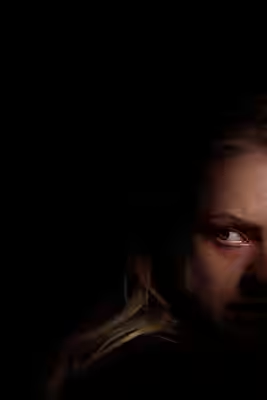
Leigh Whannell takes the change slowly and lets us hear the world go wrong inside Blake’s head, and those passages are the best thing here. Around them is a family we never get to know, in a house we can barely see.
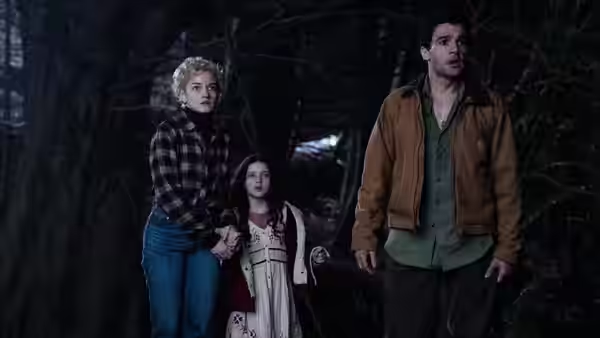
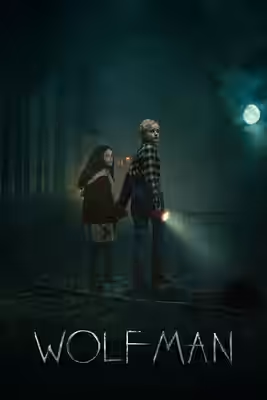
Leigh Whannell has made a werewolf film that is mostly one man in a farmhouse over a single night, and his idea is a serious one: the thing Blake (Christopher Abbott) is afraid of becoming is his father. The script, by Whannell and Corbett Tuck, opens with a prologue in the woods, Zac Chandler as the boy and Sam Jaeger as Grady, a father who teaches by shouting. Years later Blake is a gentle, anxious parent in San Francisco whose marriage to Charlotte (Julia Garner) has stopped talking, and he takes her and their daughter Ginger (Matilda Firth) back to his father’s house. Something meets them on the road. The rest of the 103 minutes is about what it left in him. It is a decent idea for a film, and for about forty minutes it is a decent film.
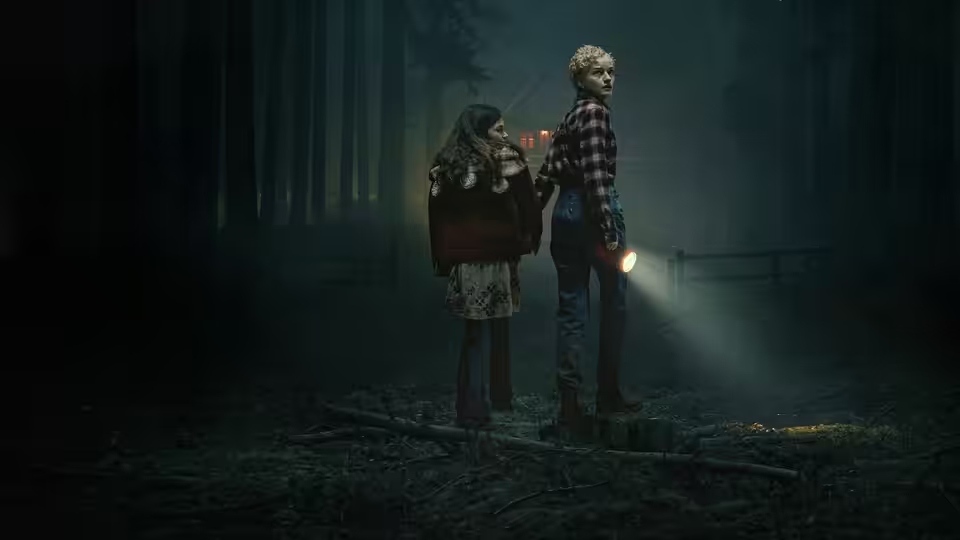
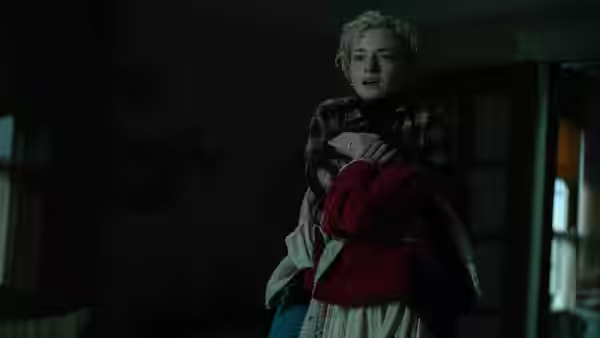
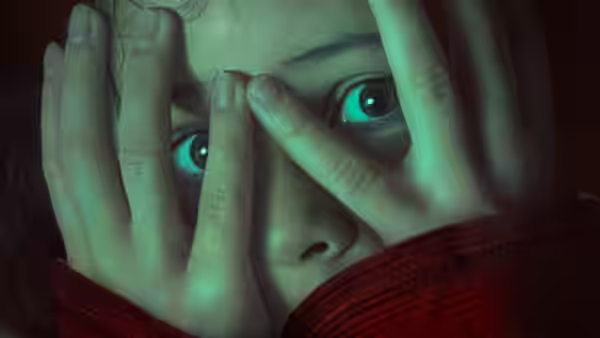
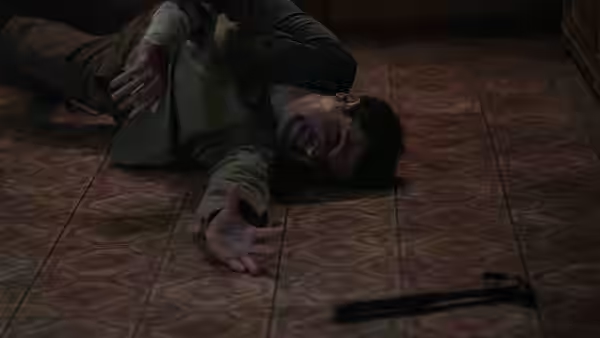
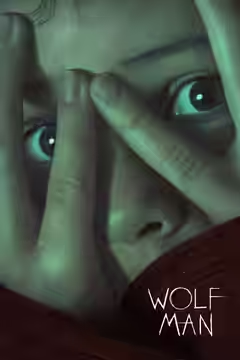
The transformation is the reason to be here. Whannell takes it slowly, over hours rather than a howl and a cutaway. Abbott’s skin goes grey and damp; a fingernail comes away; a tooth is worked loose at a kitchen sink and examined. Andy Canny cuts each of these as a small, separate event rather than a montage, and it is the right instinct. Stefan Duscio’s best decision is to shoot from inside Blake’s head as his senses turn: the image drains of colour and starts to glow, the damp on the wall seems to breathe, and Charlotte’s voice becomes a low, wet smear of sound.
We felt a real and unexpected grief at the point where Ginger talks to her father and he cannot make out a word. The horror is not that he might bite her but that he is already gone. The sound design does most of the work in those passages, and Benjamin Wallfisch keeps his score to long, low tones underneath the noise rather than telling us what to feel. It is the one stretch where the film’s idea and its craft are doing the same job.
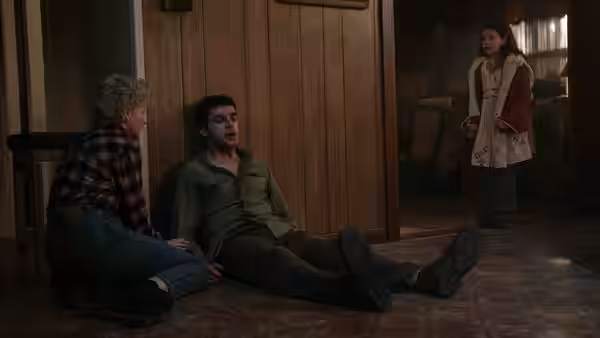
The problem is that once Blake starts to change, nobody else in the house has anything to do but wait. Garner is a good actress given a wife defined by a job and a frown, and the marital scenes before the trouble starts are written as if somebody described an argument to the writers over the phone. Firth is fine and is given a great deal of screaming. The dialogue announces the themes: fear is passed down, fathers fail their children, the line about protecting your own is said aloud more than once. We were told what the film was about three times before we had been allowed to feel it once.
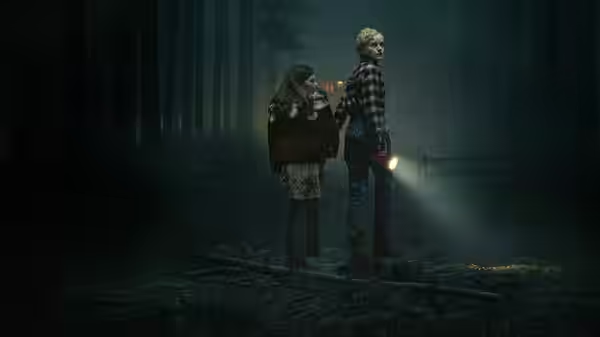
Ruby Mathers’s farmhouse is a good, plain, cluttered place, but Duscio keeps it so dark for so long that its layout becomes a guess, and a siege film needs us to know which door leads where. Sarah Voon dresses the family in the soft, sensible fleece of people who did not expect to be hunted, which is a nice touch, and then the film puts them where we cannot see it. The creature, when it finally arrives in full, is a man-shaped thing with too many teeth and not enough hair. It looks like a person with a skin condition, which may be the point, but it is not a design that has kept us up since.
Whannell’s The Invisible Man, from 2020, took an old monster and found one modern, exact fear inside it, then built a tight machine to deliver that fear. Here the fear is a more familiar one, that we turn into our parents, and the film around it is loose. It is at its best when it trusts the body and the sound to say something about a man who cannot reach his family, and at its worst whenever it stops to explain the metaphor, which is often.
Most critics have landed around the middle and so have we, split along the same line the film cannot cross. If body horror is what you came for, the middle hour has fifteen minutes as patient and unpleasant as the genre has managed lately, and the 15 certificate is earning its keep. The people around the body deserved a script as careful as the prosthetics.