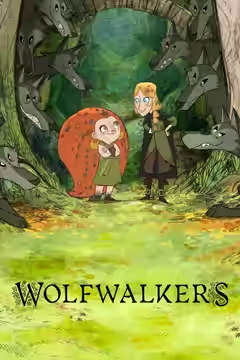
Tomm Moore and Ross Stewart draw the town in hard lines and the wood in loose pencil, and it is the best-looking hand-drawn film we have seen in years. The villain is a stick figure and the story a familiar shape. We recommend it anyway.
Kilkenny, 1650. The English hold the town, the Lord Protector has ordered the forest cleared, and Bill Goodfellowe, a hunter brought over from England, has been given the job of killing every wolf in it. His daughter Robyn wants to go with him. He wants her in the scullery. Tomm Moore and Ross Stewart, working from a script by Will Collins, take that kitchen quarrel and grow it into a fable about who is allowed to be wild. It is the third film Cartoon Saloon has drawn from Irish folklore, after The Secret of Kells and Song of the Sea, and it is the best made of the three. We recommend it warmly, with the caveat that its villain is a stick figure and its story a shape you will know before the halfway mark.
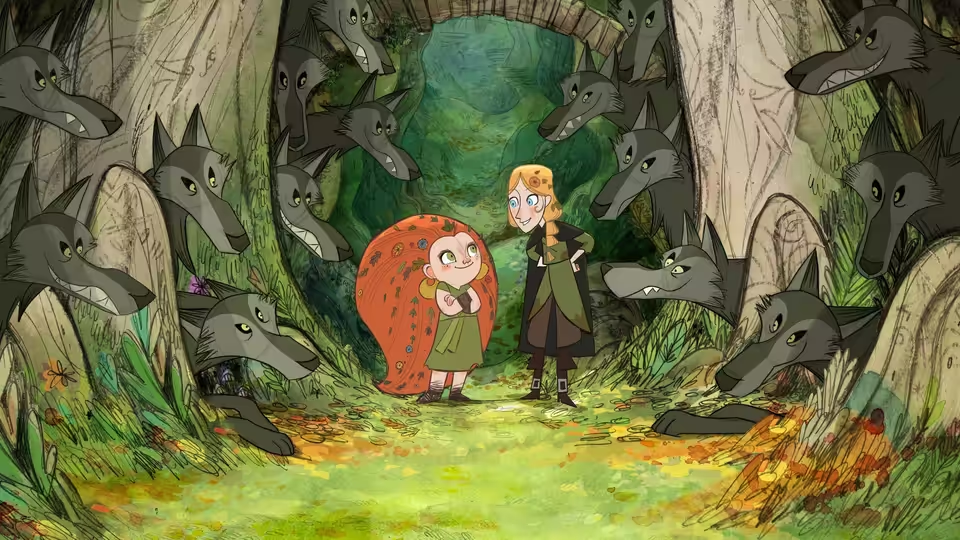
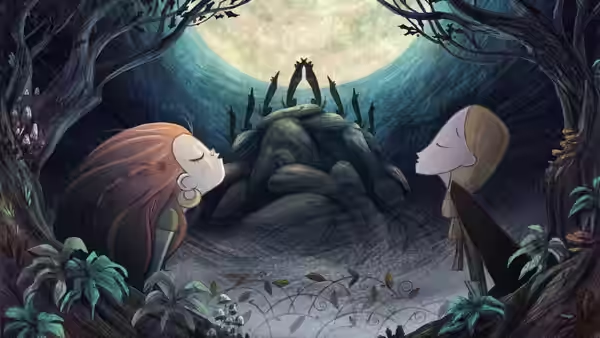
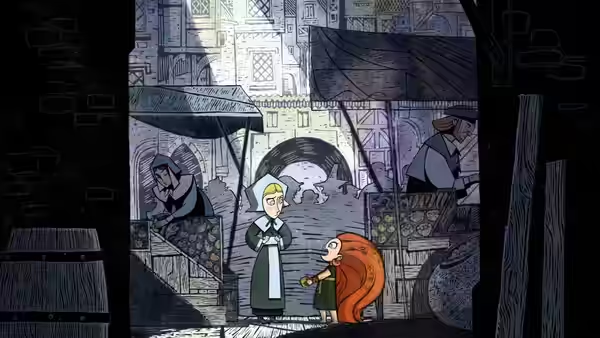
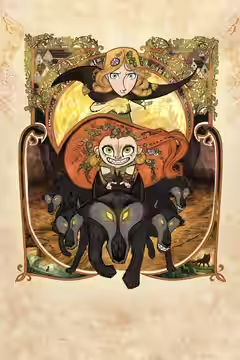
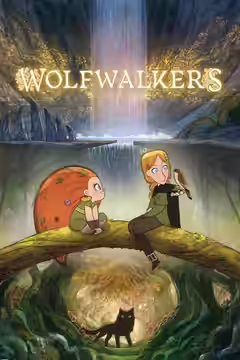
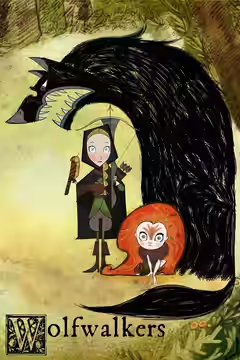
The first thing to say is how it looks, because the look is the argument. Moore, Stewart and Maria Pareja design the town as a woodcut: straight lines, right angles, grey stone, brown timber, every shot boxed in by walls, the townsfolk flat as figures on a playing card. The forest is drawn the other way round, in loose pencil with the construction lines left showing, curves everywhere, watercolour bleeding past the edges. Mebh’s hair is a red scribble that never quite stays on her head. When Robyn climbs over the wall the film loosens with her, and nobody has to say a word about freedom.
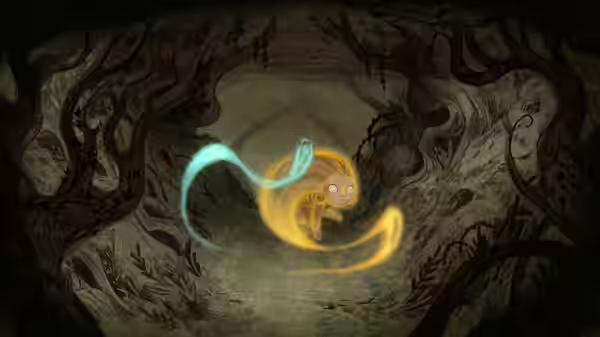
Then there is the running. When a wolf moves through the wood the picture goes to black and the world is redrawn in scent: glowing threads of colour trailing off rabbits and woodsmoke and frightened men, charcoal and light, the ground rushing past at nose height. We sat up. We have watched a great many animated forests and had never seen one drawn from the inside of a dog. Editors Richie Cody, Darren T. Holmes and Darragh Byrne split the screen into three and four panels when the girls run together, so you get the leap and the landing and the laugh at once, and for a minute or two it feels like being eight and out of breath. Bruno Coulais writes for whistle, drum and low voices, and has the sense to go quiet and let you hear paws on leaves.
The voices are well chosen. Honor Kneafsey plays Robyn as a careful, proper child who wants badly to be useful, and Eva Whittaker’s Mebh is all appetite and elbows; the film is funniest when she is eating. Sean Bean gives Bill a tired, low voice, a man doing a cruel job because he is frightened for his daughter and cannot say so. There is a scene between the two of them in the kitchen, Bill at his work and Robyn arguing, in which Bean says almost nothing and we were more moved than the scene had any right to make us. It was the pauses that did it. Tommy Tiernan and Jon Kenny fill the streets with grumbling; Maria Doyle Kennedy has less to do than she deserves, for a reason the story sets up early.
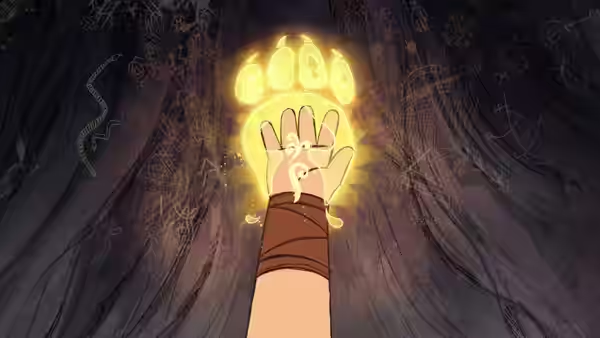
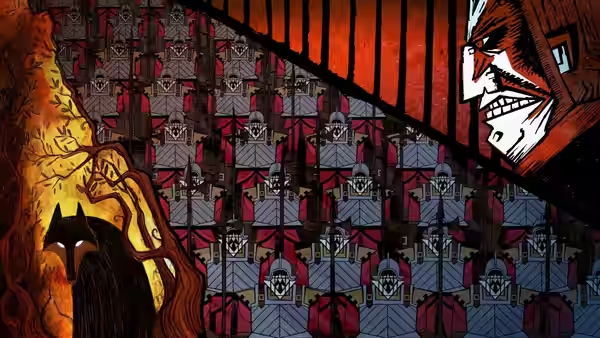
The weaknesses are mostly in the town. Simon McBurney’s Lord Protector is a murmur about the Lord’s will and a set jaw, and that is all Collins gives him. The politics are drawn with a thick marker: English straight lines bad, Irish curves good. That is a fair account of 1650, but a fable with a better villain would be a better fable, and this one could have used a man who believed he was right rather than a man who simply glowers. The story follows the path Song of the Sea wore in: a child with a secret that turns her into an animal, a parent who will not listen, a wild mother lost. The last movement has a siege and a stampede and ends with rather less blood than it has been promising, which is the right decision for a PG and a slightly soft one for a film about wolves.
We did not mind as much as we expected to. We were watching the lines. Set against its ancestors, it sits a long way below Princess Mononoke, which it clearly admires and which trusted its audience with a harder argument, and comfortably above most of what has been drawn by hand since. At 102 minutes it wastes little.
Watch it with a child if you have one to hand. If you do not, watch it anyway, and notice how long it takes before you stop seeing the pencil and start seeing the wood.