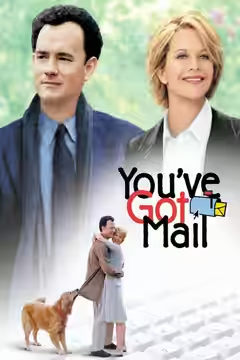
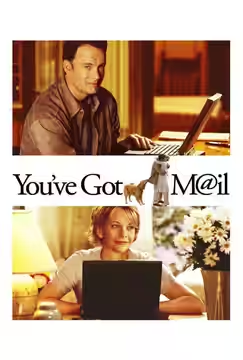
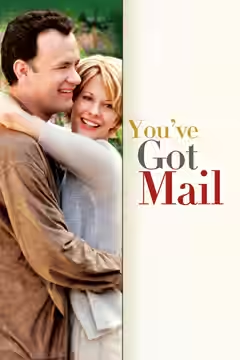
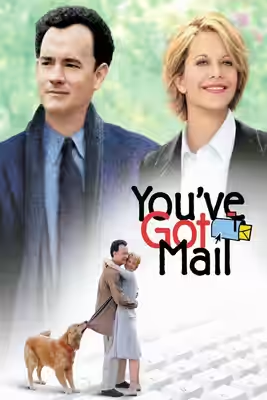
Nora Ephron reunites Tom Hanks and Meg Ryan and has them court by email on the Upper West Side. It is warm, well dressed and easy to like; it also sets up a fight and then declines to have it.
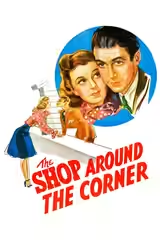
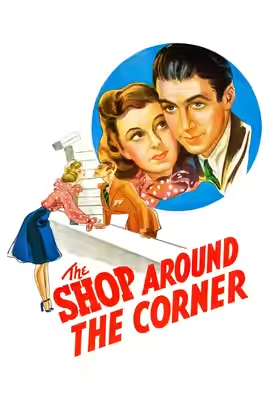
Nora Ephron has taken Ernst Lubitsch’s The Shop Around the Corner (1940), in which two shop assistants who cannot stand each other are falling in love by post without knowing it, and moved it to the Upper West Side with email in place of letters. She wrote it with Delia Ephron, and together they have made two changes that matter. The lovers no longer share a shop; they run rival ones. And one is about to put the other out of business. You’ve Got Mail is a warm, well-made 119 minutes that works whenever it is about the emails and goes soft whenever it is about the shops.
The emails are the film. Hanks and Ryan read them to us in voiceover, and Ephron shoots the mornings as a ritual: coffee, dressing gown, the modem shrieking, the voice from the speaker and the face at the keyboard changing. We were more affected by this than we expected to be. Ryan is not acting the words on the screen; she is acting the wait for them, and Ephron holds on her face while the connection goes through for longer than the plot needs. Hanks, who can play decency in his sleep, instead plays a man who knows he is the villain of somebody’s year and is mildly embarrassed about it, and the embarrassment is funnier than any of his lines.
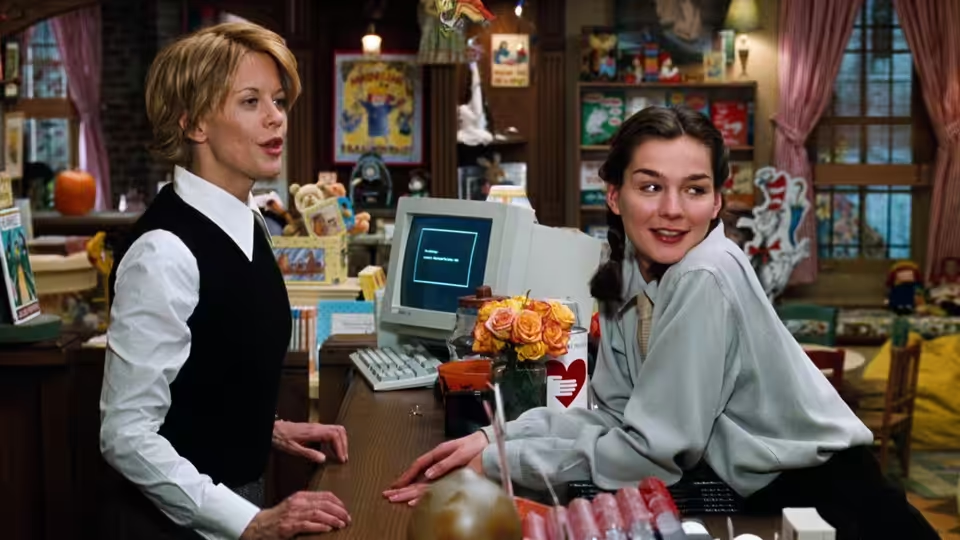
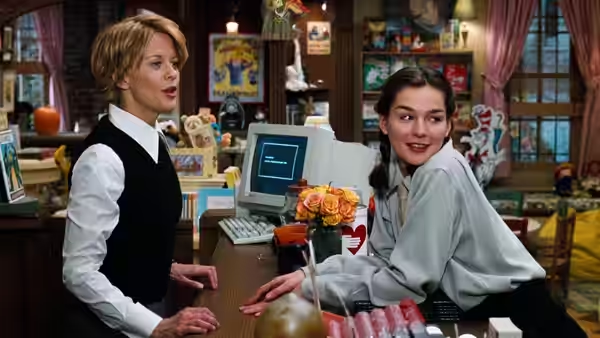
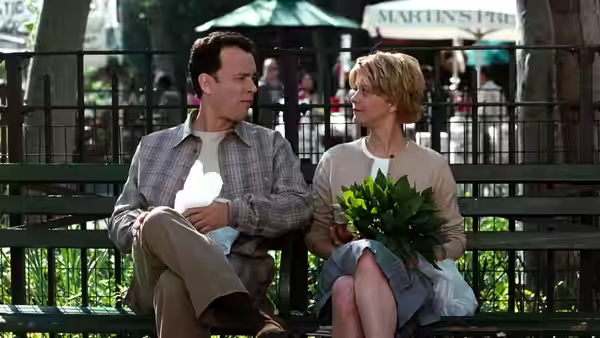
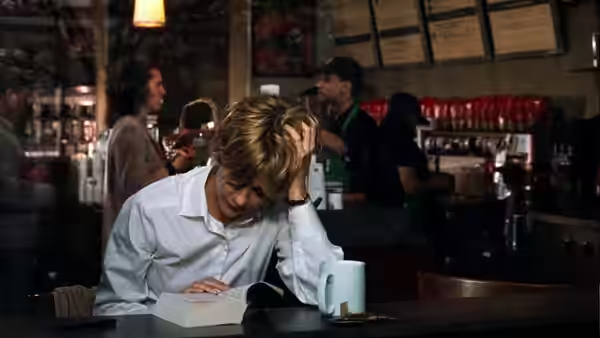
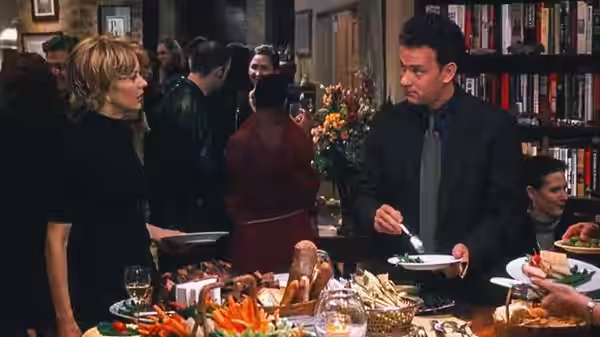
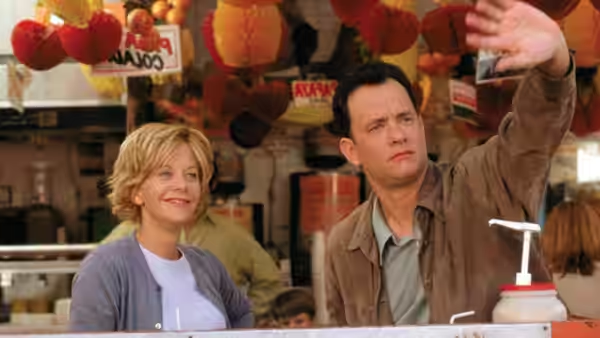
John Lindley shoots the neighbourhood in autumn, all brown leaves and brownstones and farmers’ market, with the light the colour of a reading lamp. Dan Davis gives Kathleen’s shop small chairs, a bell on the door and books face-out at child height, and gives Fox Books escalators, discount stickers and a cappuccino bar. Albert Wolsky puts Ryan in long skirts and cardigans and Hanks in a dark overcoat he never seems to take off. George Fenton’s score is light and stays out of the way of the pop songs, several of them by Harry Nilsson, which carry more of the feeling than the score does.
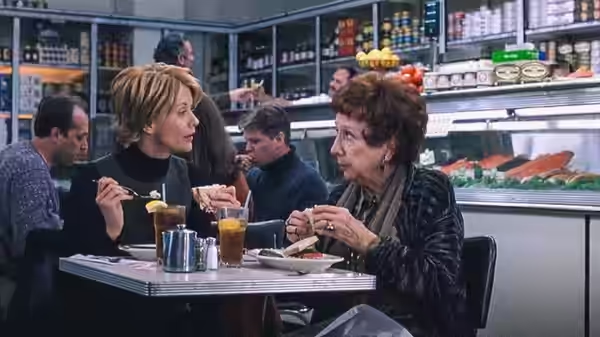
The partners are written to be left. Greg Kinnear’s Frank Navasky is a columnist who loves his typewriter more than he loves Kathleen, and Parker Posey’s Patricia Eden talks through every scene at one volume, so there is nothing at stake in losing either of them. Steve Zahn and Dave Chappelle get a few good lines each as the seconds on either side. Jean Stapleton, as Birdie, has one speech about a long-ago love affair that got the biggest laugh of our evening. Dabney Coleman plays Joe’s father as the man Joe would be if he never said sorry.
The trouble is the fight. The first act sets up a real one: a chain is about to open a block from a shop a woman’s mother opened, and the film shows us why that matters, the regulars, the reading hour, the ledger. Then it loses interest. Richard Marks cuts the business story into montage and the email story into scenes, which tells you which one Ephron cares about. We will not say how the fight ends. We will say that around the ninety-minute mark we noticed we had stopped minding what happened to the shop, because the film had stopped first.
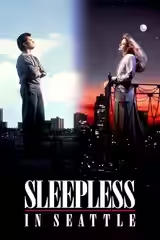
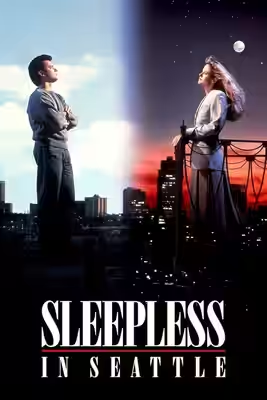
Lubitsch kept his lovers behind one counter, so that the dislike and the love were in the same room every day. Ephron keeps hers a street apart, and they meet in person perhaps half a dozen times before the end, so the dislike never has time to thicken into anything that needs resolving. Sleepless in Seattle (1993) kept Hanks and Ryan on opposite coasts and made the waiting the whole point. Here they are two hundred yards apart and the film is less tense, not more.
It is still a good evening, if the genre is yours. It is kind, it is well dressed, the leads are a pleasure, and nothing in it will frighten the children. Watch it in autumn, with someone who will not ask you afterwards what happened to the shop.