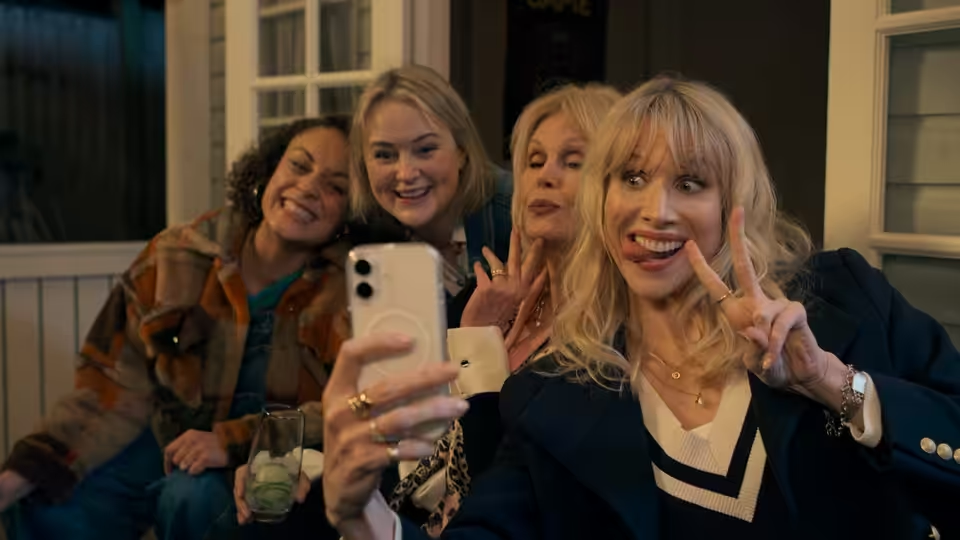
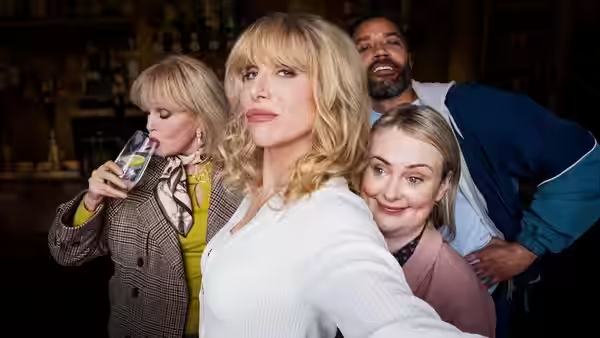
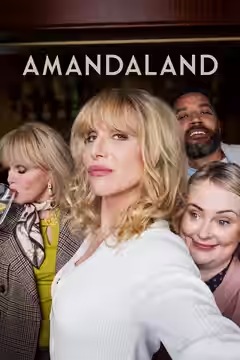
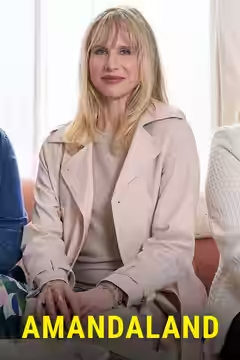
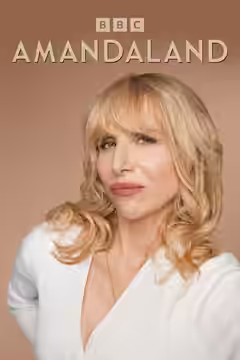
Lucy Punch makes Amandaland a sharp, funny comedy about a snob trying to remain impressive. Joanna Lumley supplies the cruellest laughs, though the wider ensemble takes more effort to feel like a group.
Amandaland asks us to spend an evening with a woman whose need to impress people makes her exhausting company. Amanda has moved to South Harlesden, is parenting teenagers and is trying to establish herself as an influencer. This Motherland spin-off is sharp and funny enough to justify giving Lucy Punch’s snob more of our attention. The reservation is that the people around her do not make quite such a convincing group.
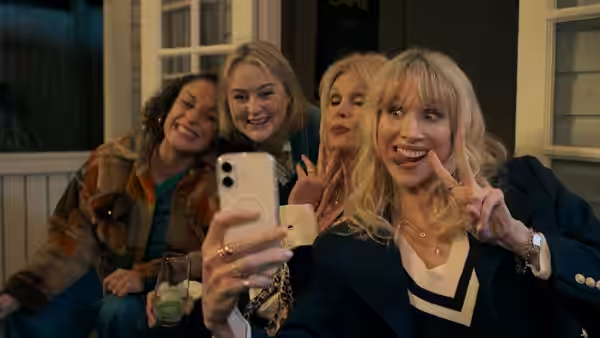
Punch understands that Amanda has to be capable of hurting other people’s feelings without becoming unbearable to watch. She keeps the snobbery, but lets us see how much effort goes into maintaining it when circumstances are against her. We felt unexpectedly sorry for Amanda as her attempts at content creation exposed how badly she wanted approval. Her desperation makes the failed attempts funnier because she has invested so much in them. Punch earns that sympathy without asking us to forget how Amanda treats people.
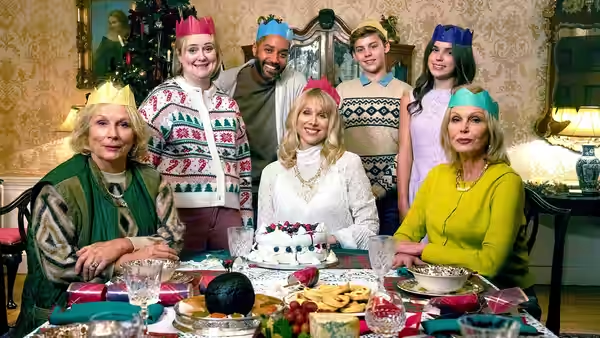
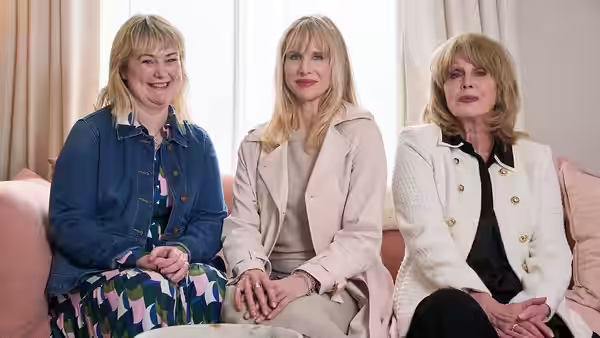
Joanna Lumley’s Felicity helps explain why approval matters so much. As Amanda’s disparaging mother, Lumley can be cruel without suggesting that the programme expects us to applaud her parenting. There is a pleasing lack of reassurance in their relationship, and the comedy benefits from leaving it there. Phillipa Dunne’s Anne is equally important: the need and resentment between the two friends give Amanda someone she cannot simply dismiss. Dunne makes that dependence worth watching even when Amanda’s condescension makes us wish Anne would find other company.
Writers Barunka O’Shaughnessy, Helen Serafinowicz, Laurence Rickard and Holly Walsh get useful mileage from Amanda’s efforts to turn herself into an online attraction. Influencer jokes are not difficult to come by, but attaching them to this particular hunger for status gives them a reason to be here. The teenage-parenting material is more familiar, and sometimes makes the programme feel ordinary in ways its leading performance does not. The writing is strongest when it stays with Amanda’s social climbing and her awkward dependence on Anne.
Directors Alyssa McClelland and Simon Bird keep the performances central, with Matthew Wicks’s cinematography serving the exchanges rather than drawing attention away from them. The editing is credited to Gareth Heal, Lindsey Woodward, Gareth McEwen and Gavin Buckley, and the plentiful jokes keep the programme moving even when a relationship feels underdeveloped. Oli Julian and Ethan Jeffrey provide the music, though the actors’ timing does most of the work. It is a sensible approach for a comedy whose main attraction is watching these people struggle with one another.
That group is where the comparison with Motherland becomes less flattering. Its members do not fit together as readily, and a high gag rate cannot quite disguise the work needed to make them seem like regular company. Punch, Lumley and Dunne give us firmer reasons to return than the ensemble as a whole. In a sitcom built around an insufferable person, that is a limitation worth taking seriously. Try it if you can enjoy a central character without needing to invite her round.