Joe Gilgun and Danny Brocklehurst’s northern caper comedy is filthy, loud and much warmer than it looks, with Gilgun’s Vinnie giving it a centre most sitcoms never find. The plots are nonsense and by the later series the formula shows, but the company is good.
Brassic is a comedy about a gang of thieves in a northern town who are not very good at thieving and have no intention of stopping. Danny Brocklehurst created it with Joe Gilgun, who plays the leader, Vinnie, and the series has been built around him from the first episode. The idea is simple: send the lads out on a job, let it go wrong, and watch them cover for each other. Underneath that, quietly, is a programme about a man whose illness puts him on the floor for days and the people who have decided to keep him alive.
We like it. It is good rather than great, and we would send anyone who enjoys a rude, fast, loyal sort of comedy to the first series without hesitation. The later ones are more of the same, and whether that is a complaint depends on how much you wanted more of the same.
Gilgun is the reason it works. Vinnie is a talker, all hands and teeth and swearing, and for the first twenty minutes we assumed we were watching a turn. Then there is a scene in the first episode where he cannot get up, and the noise stops, and Gilgun lets his face go slack in a way that is not acting-sad but simply empty. We were caught off guard by it, and it is the thing that kept us watching when the jobs wore thin. The series knows when to let him be funny and when to let him be ill, and it never asks for pity on his behalf.
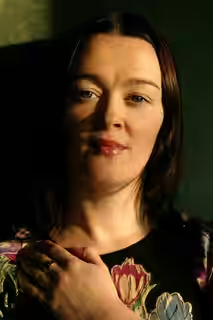
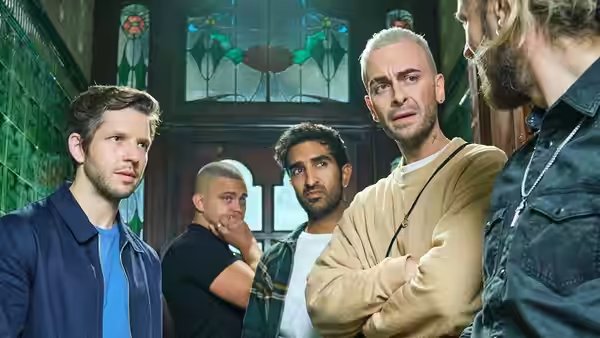
The gang around him is well cast and well drawn. Tom Hanson’s Cardi is a large, gentle man with a lavatory in his garden and no idea why that is odd. Ryan Sampson plays Tommo, who runs a sex club above a shop and talks about it the way other men talk about a pigeon loft. Parth Thakerar’s JJ is the one with a trade and a conscience, and Aaron Heffernan’s Ash is the one with a mother, Carol, whom Bronagh Gallagher plays as a woman who has fed every one of these boys since they were small and does not expect to be thanked. Dominic West turns up as Dr Chris Coxley, Vinnie’s GP, a man of expensive habits and no professional boundaries, and he is plainly enjoying himself.
John Collins’s production design gets the place right: the pub with the sticky carpet, the lock-up, Vinnie’s home, which is barely a building, with a mattress on the floor. Nothing in it looks dressed. Tim Morrish’s music is cheap and cheerful in the right way, a bit of brass over the chases, and it stays out of the way of the talking. Richard Stoddard, George Kane and a long list of other directors keep the episodes moving at the same clip; at 43 minutes nothing is allowed to sit, which is a strength in a caper and a weakness whenever a scene deserves longer.
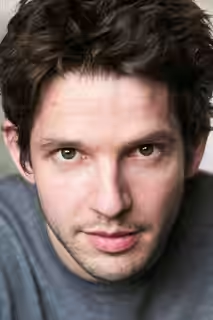
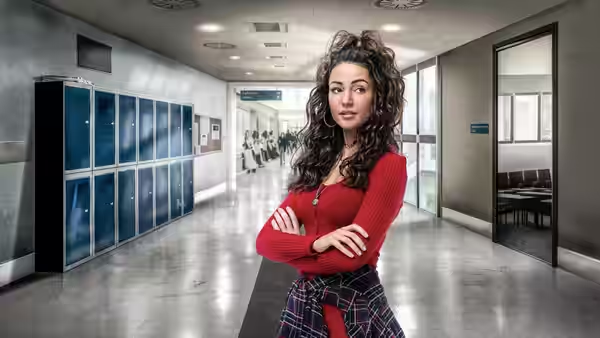
The weaknesses are real. The plots are farce, and not always the clever kind: somebody steals something, somebody with a gun wants it, the lads run. By the third series we could predict the beats of an episode from the first scene. Michelle Keegan’s Erin is written as the sensible one who wants to leave, and in the early run that means she spends a good deal of time standing in doorways telling Dylan to grow up. She is better than that, and the series eventually notices, but it takes its time. Damien Molony’s Dylan, the one who wants out, is the least interesting man in the gang because he is the only one with a plan, and plans are not funny. The violence is cartoon violence, which suits the tone and occasionally jars with the illness the series takes seriously.
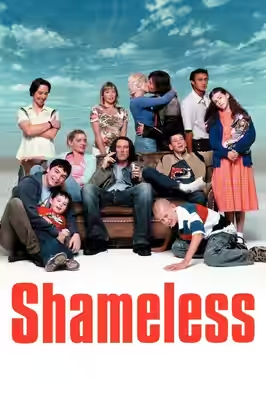
Set against Shameless, the obvious comparison, this is a smaller and softer thing. Nobody here is as monstrous as Frank Gallagher, and nobody is meant to be. What it has instead is a gang who genuinely like each other, and the sense that if any one of them went under the rest would notice. Seven series in, since 22 August 2019, that is still what we come back for.
Start at the beginning and stop when the jobs start to look familiar. For some viewers that will be series three. For others it will be never, and we would not argue with them.