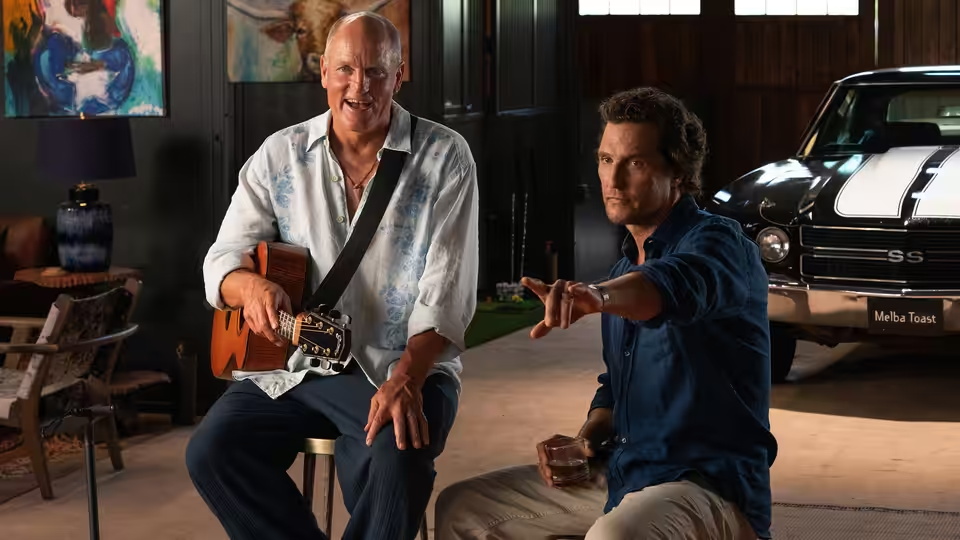
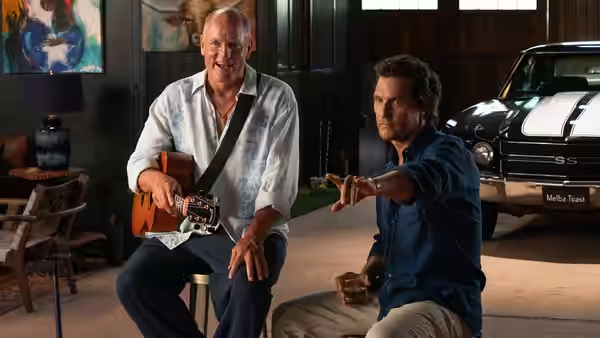
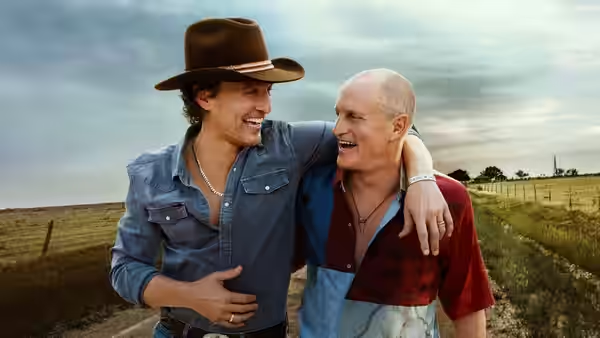
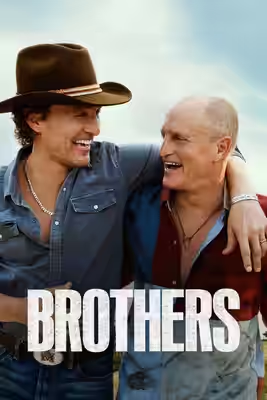
Matthew McConaughey and Woody Harrelson are easy company, but Brothers gives them too little worth doing. Some sharp supporting performances cannot rescue a sitcom that keeps settling for the familiar joke.
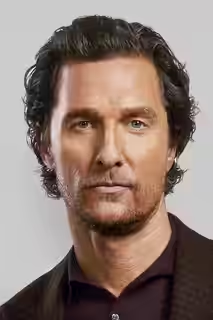
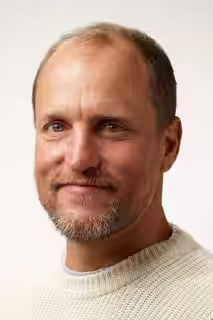
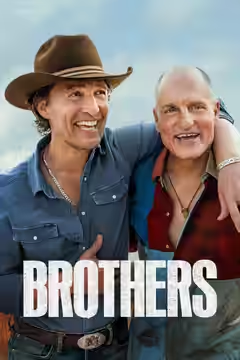
Brothers has an agreeable central pairing and too little comedy to sustain it. Matthew McConaughey and Woody Harrelson play characters bearing their own names, giving the series an immediate source of interest and a fairly obvious job: find something funny about being these particular men. The creators, David West Read, Matthew McConaughey, Woody Harrelson and Lee Eisenberg, largely settle for letting them be pleasant company. Across eight episodes, that begins to feel like an excuse for leaving the jokes unfinished.
The ease between the leads is worth something. They make being together look comfortable, and a sitcom does not need to punish its characters, or its audience, to justify an evening. There is pleasure in watching performers who can suggest a history without having to explain every inch of it. But when the situation is familiar and the next joke is easy to anticipate, their charm has to compensate for the writing.
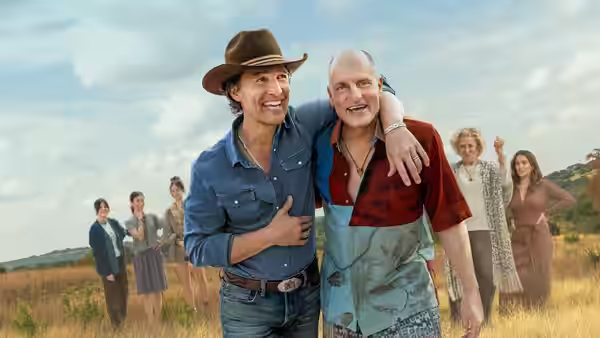
Woody Harrelson is the more rewarding comic presence, with Matthew McConaughey too often left in a muted role. We warmed to the scenes between Woody Harrelson and Highdee Kuan; the tenderness between them briefly made us care about something beyond the famous names. Holland Taylor, playing Ma Mac, also gives the ensemble a welcome lift. The supporting players’ sharper put-downs help, though too few of their characters have enough substance to remain interesting once the joke is over.
The bigger disappointment is how cautiously the series treats its stars. Having them play versions of themselves ought to give the writers access to vanities, blind spots and habits that a wholly invented character would need time to establish. Instead, the self-parody is mild enough to leave both public images comfortably intact. We do not need a confession from either man, but a comedy built around their names should risk making them a little less agreeable.
The surroundings have more character than some of the situations. Chris Teague, Bobby Bukowski and Gavin Kelly handle the cinematography, with production design by Melanie Jones, and the sense of place is one of the programme’s quiet pleasures. It helps the comedy feel inhabited, even when the writing falls back on stock complications. The locations hold our interest more reliably than those complications do.
Arge O’Neal, Sara Rose Nell, Tony Orcena, Liza Cardinale and Jamie Kennedy are credited with editing, and Nick Sena and Zachary Dawes supply the music. Neither department can solve the more basic problem of scenes that offer little surprise. The writing keeps returning to familiar sitcom business, while the series struggles to make its celebrity premise consistently useful. A firmer comic point of view would help more than a quicker cut or another musical cue.
There is nothing wrong with an undemanding sitcom. This one has enough warmth to explain the attraction, and enough unused comic potential to make its limitations frustrating. The pairing alone may satisfy those who already enjoy the company of Matthew McConaughey and Woody Harrelson. For an evening that depends on the jokes rather than the guests, we would choose something else.