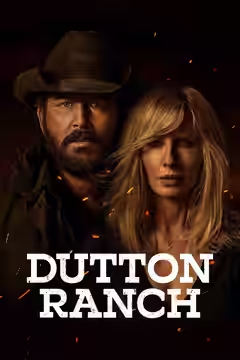
Kelly Reilly is as ferocious as ever and Annette Bening and Ed Harris give her someone worth fighting. Around them the spin-off ambles, stretching a season’s worth of plot across nine episodes and finding room for a school subplot nobody asked for.
Yellowstone ended and its audience did not, so here are Beth and Rip again, given a ranch of their own and nine episodes to run it. Chad Feehan’s series keeps the two characters people watched Taylor Sheridan’s original for and drops nearly everything else: the family, the land, the politics, the bodies. What is left is a couple, a boy, a bunkhouse and a lot of cattle. That is a decent idea for a Western. Stretched across nine episodes it turns out to be a thin one, and the season spends much of its length looking for something to be about.
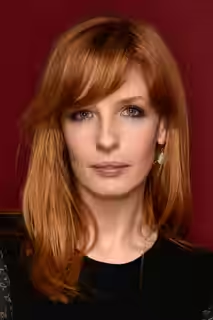
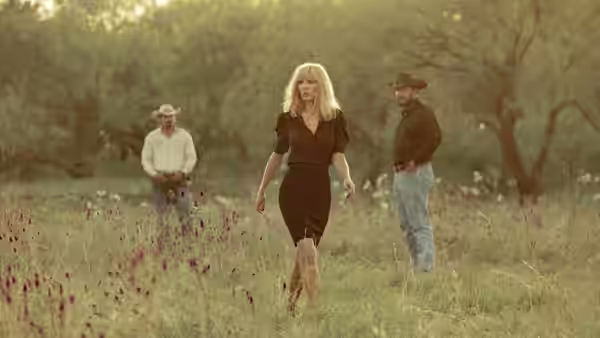
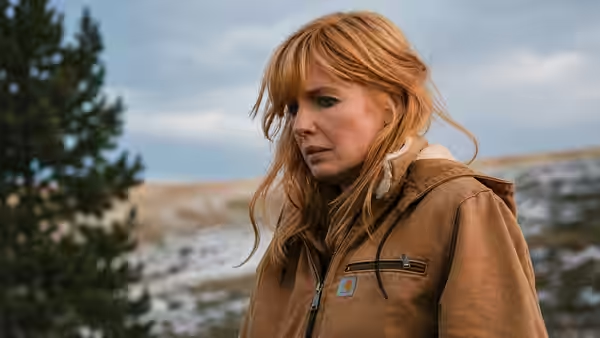
Kelly Reilly is still the reason to watch. Beth Dutton treats every conversation as a fight she intends to win, and Reilly plays her as she always has: whisky voice, stare arriving half a second before the insult, a grin when it lands. The writers, Hilary Bettis and Hayley Tibbenham among them, give her at least one proper speech an episode and she makes each of them sound like something she has just thought of. She is also, for the first time, without her family to fight for, and the series is at its best in the quiet minutes when it notices she does not know what to do with herself. Those minutes are rarer than they should be.
Annette Bening and Ed Harris are the additions that matter. Bening plays Beulah Jackson with Beth’s own composure turned down to a murmur, and the first scene the two women share, across a table, nobody raising her voice, was the one point in the season where we sat forward and stayed there. Harris, as Everett McKinney, gives the series its stillness. He plays a man who has plainly done this work all his life and sees no need to discuss it. He says less in nine episodes than Beth says in one, and we believed every word.
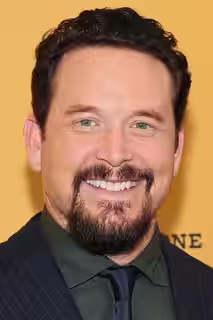
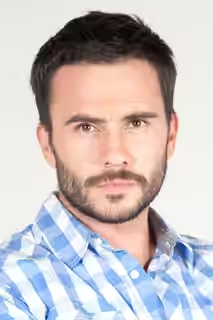
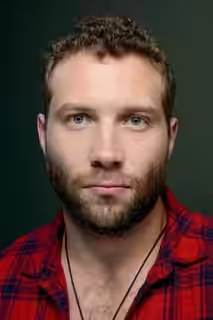
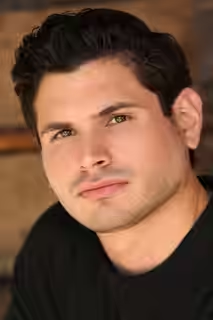
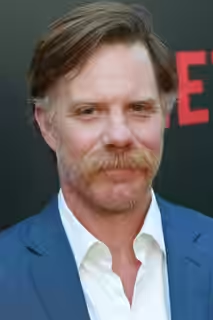
Cole Hauser has less to do than second billing suggests. Rip Wheeler was always a man of few words, but on Yellowstone the silence meant loyalty to John Dutton, and here there is nobody to be loyal to but Beth, who does not need it. The scripts have not worked out what he wants beyond a fence that stays up. He hires hands, Joaquin (Juan Pablo Raba), Rob-Will (Jai Courtney), Azul (J.R. Villarreal) and Zachariah (Marc Menchaca), and the bunkhouse scenes are amiable and go nowhere. Carter (Finn Little) is sent to school, and we are asked to go with him. We were bored, in the flat way you are bored in a waiting room, and it happens in every episode.
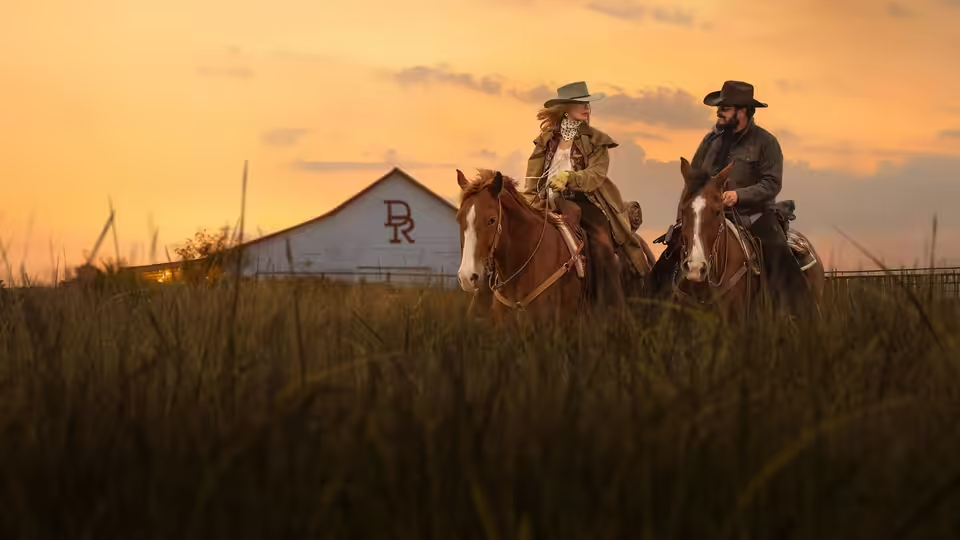
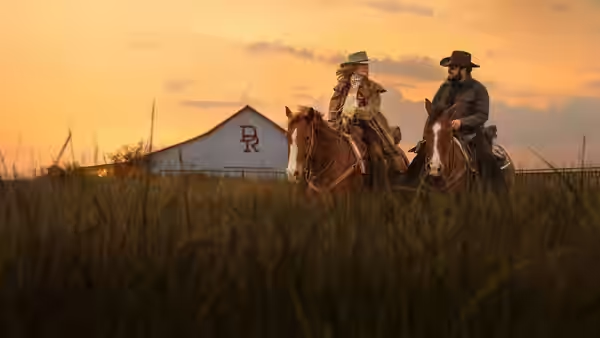
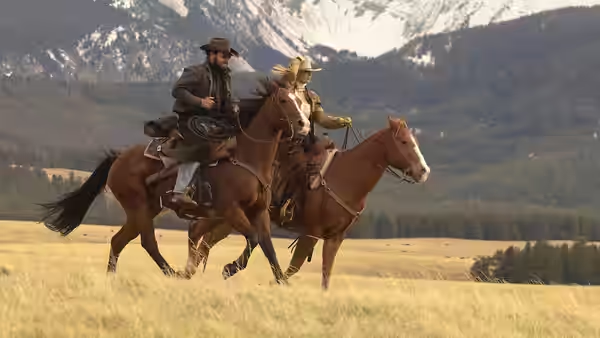
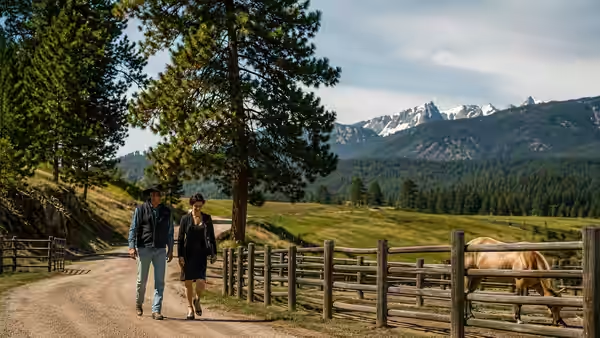
It looks the part. The directors, Christina Alexandra Voros, Greg Yaitanes, Phil Abraham and Jessica Lowrey, shoot the country the way the parent series did: low sun, long lenses, cattle moving through frost, riders on a ridge with the sky taking two thirds of the frame. Branding, calving and fence work are filmed with close attention and often with more interest than the drama around them. A day’s work on a ranch is a fine thing to watch. It is not a plot, and for long stretches the season has nothing else.
Nine episodes is the problem. There is a good six-part series in here and Feehan’s team have spread it thin, so a grievance raised in the second episode is still being nursed in the seventh, and the business between Beth and Beulah, which ought to be the spine, is rationed as though there were seasons to come. Against Yellowstone this is smaller and calmer, which some will welcome; Sheridan’s series was frequently absurd but it was never slow. Against the Western at large it is handsome and forgettable.
It carries a 15. If you watched Yellowstone to the end you will watch this, and there is enough of Reilly and Bening to make that a reasonable use of your evenings. If you did not, this is not the place to start; it assumes you already know why Beth is the way she is and does not stop to tell you.