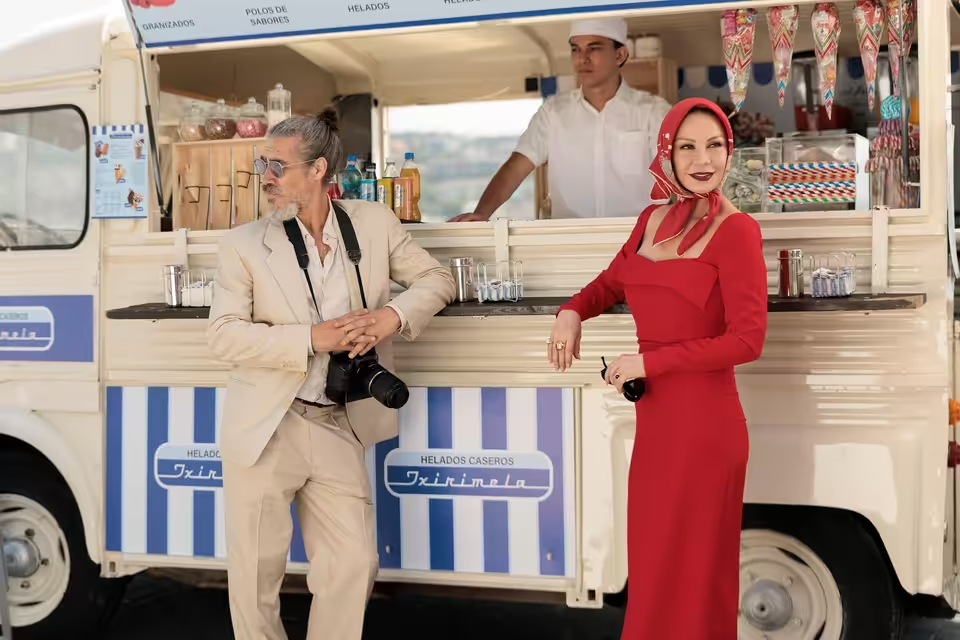
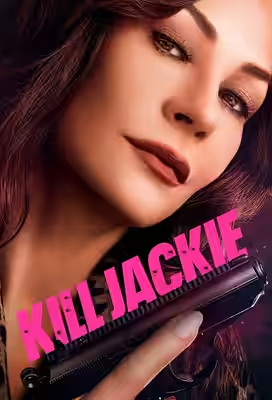
Catherine Zeta-Jones has a fine time as a well-spoken woman who treats a contract on her life as a mild inconvenience. The series around her borrows its jokes, its violence and its slow motion from better shows and never settles on which one it wants to be.
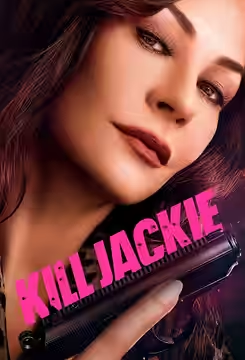
Kill Jackie is adapted from a Nick Harkaway novel about a woman named Jackie Price whom somebody wants dead, which the title has already told you. Conor Keane created the series and wrote it with Tom Butterworth; Damon Thomas directs. What they want is a comedy of manners with a body count, in which a woman of a certain age and good tailoring treats being hunted as an inconvenience on a par with a cancelled train. That is a fine idea for two hours. Stretched over eight episodes it becomes a series that is forever glancing over its shoulder at what other thrillers have done, and coming back with their furniture.
Catherine Zeta-Jones is the reason to watch, and she plainly knows it. She plays Jackie Price as a woman who has never raised her voice because she has never needed to, and she gets her laughs from a pause rather than a line: a glance at a gun, a glance at the man holding it, a small decision to be disappointed in him. We laughed properly twice, both times at her and both times in the opening two episodes, once when she corrects a killer’s grammar and once when she offers another a receipt. After that the script stops trusting her stillness and starts giving her speeches, and the speeches are the same speech.
The people sent to kill her are a mixed bag, which is at least true to how the show treats them. Sidse Babett Knudsen’s Karenina is the only one written as a person; she plays the job as a profession with a pension attached, and her two scenes alone with Zeta-Jones are the best in the series, two tired women comparing overheads. Julian Rhind-Tutt does the talking as Friedrich, a fastidious manager of murder who minds about expenses, and he is funny in a way the series seems not to have noticed. Rafferty Law’s Sean Harper is handed youth and a jacket and nothing else. Christine Adams, as The Doc, patches people up with the calm of someone who has read the last page. Daniel Ings, as Jackie’s friend Sam, spends eight hours apologising, mostly to her, occasionally to us.
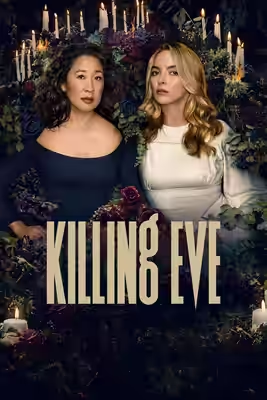
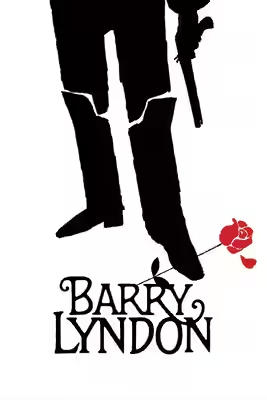
The trouble is not that Kill Jackie borrows. The trouble is that it borrows from everyone at once and never chooses. There is the chic, amused assassin from Killing Eve, the hitman with feelings from Barry, the damp, unglamorous London of Slow Horses and the slow-motion gunplay of John Wick, sometimes all within one episode. An episode will end on a killing played for a laugh, then the next will open on grief for the same body, and the series expects us to carry both. We were bored by the fourth episode, when Jackie is moved between safe houses for the third time, and by the sixth we were irritated, because it was plain that the story had been over for two hours and the series was making up the difference with montage.
Noam Piper’s production design is the most consistent thing on screen. Jackie’s flat is pale walls, stripped floors and a single expensive chair, and it tells you more about her than her voice-over does; the townhouse the killers rent is dressed like a boutique hotel, which is a good joke, quietly made. Thomas shoots London at night as wet tarmac and shop-front neon, which suits it, and then cuts every fight so fast that we could not tell who was winning until somebody stopped moving. The music is one pop song per killing, and by the third episode we were flinching at the opening bars before the gun came out.
Harkaway’s novel was narrated by a man, in a voice that never stopped talking. Making Jackie a woman of Zeta-Jones’s age is the smartest decision anyone made here, and the series does nothing with it beyond the casting. Nobody underestimates her for long enough to make it matter, and nobody she meets is allowed to be surprised.
The one review we have read so far is harsher than we are, and we understand why. There is a decent two-hour film in here, most of it in the first two episodes, and Zeta-Jones is worth those. It arrives on 2 October 2026 in eight parts. Watch the first two, decide whether her company is enough, and be honest with yourself about the answer.