Lee Eisenberg’s adaptation of Bonnie Garmus’s novel is handsome, well acted and kind to everyone in it, which is the problem. Brie Larson and Aja Naomi King are worth the evening; the series around them keeps deciding not to hurt anyone.
Lee Eisenberg’s eight-part adaptation of Bonnie Garmus’s novel puts a gifted chemist in a 1950s California laboratory where the men publish her work and expect her to make the coffee. Elizabeth Zott is denied a doctorate and a laboratory of her own, and the series follows her out of the building and, by a route we will not describe, into a television kitchen. It is handsome, well acted and kind to everyone in it. It never once made us uncomfortable, which for a story about what was done to clever women is a strange thing to be able to say. It is a decent evening. It should have been a better one.
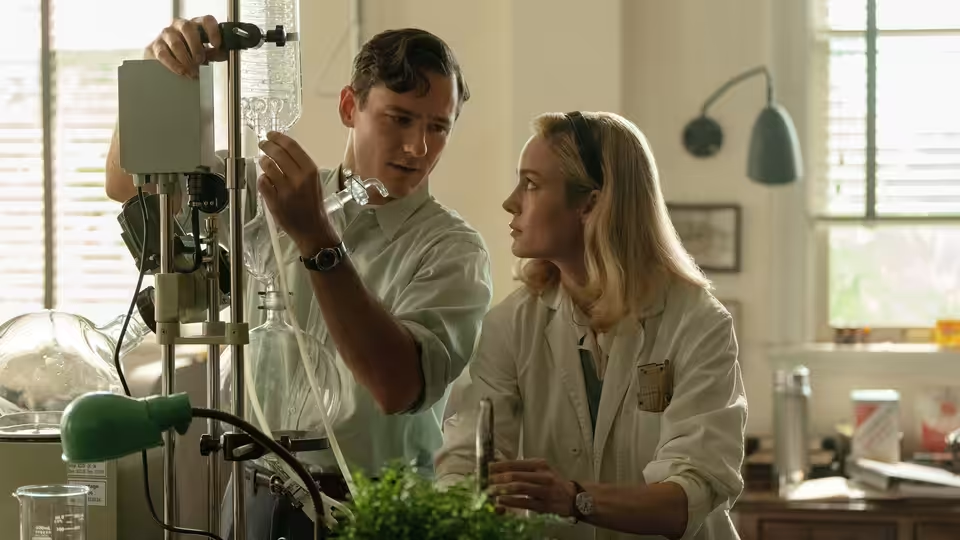
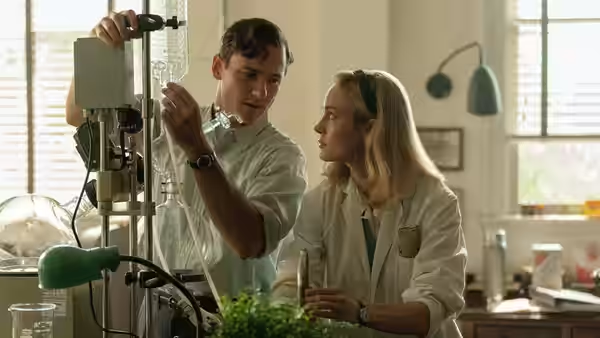
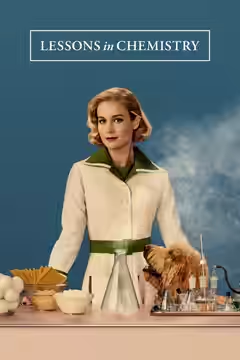
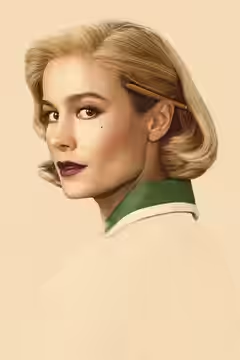
Brie Larson plays Zott with her chin up and her voice flat, a woman who has decided that if she is going to be disliked she may as well be disliked for being right. She does not smile because someone would like her to. It is a controlled performance and a funny one, funnier than the series around it. Lewis Pullman’s Calvin Evans, the institute’s celebrated chemist, is all elbows and apologies, a man who has had a laboratory to himself for so long that another person in it is a chemical event. Their courtship, conducted over an argument about whose beakers are whose, is the best thing in the first two episodes, and Larson and Pullman play it as two people slowly realising they are not, after all, alone.
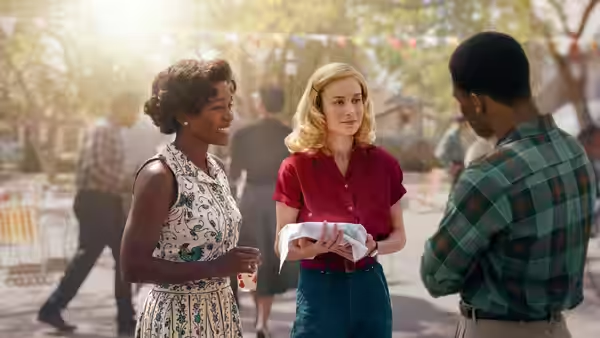
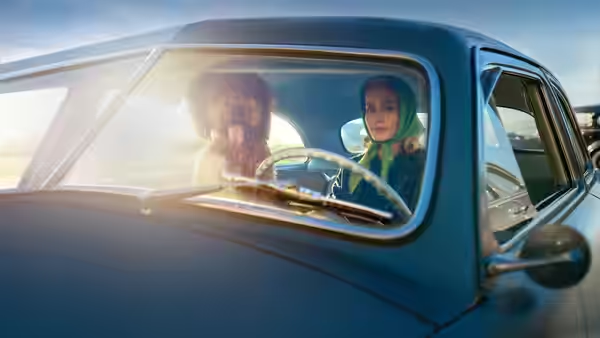
Aja Naomi King is the other reason to watch. Her Harriet Sloane, the neighbour who wants a freeway kept out of her street, has a patience that is plainly costing her something, and the scenes in which she has to explain, again, to a room of white men why her home matters got at us more than anything in the laboratory did. We had not expected that. The series knows what it has in King, and it still leaves her on the margins for long stretches while the plot attends to Elizabeth’s troubles, which are real but which are also, by then, being solved.
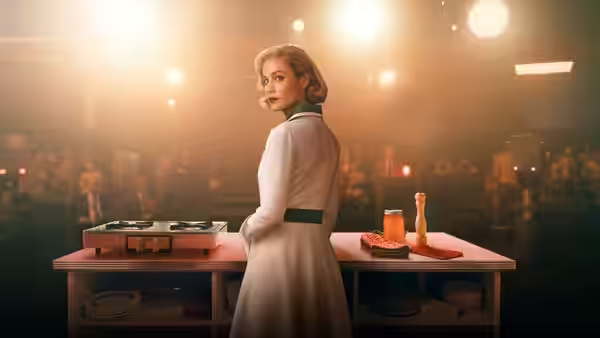
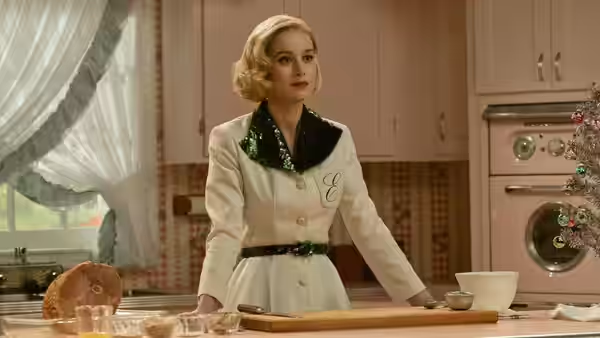
Zachary Galler and Jason Oldak shoot the period in warm, even light, so that the institute’s pale tiled corridors and Cat Smith’s rows of glassware look like a museum display of a laboratory rather than a place anyone sweated in. Smith’s best set is Elizabeth’s kitchen, refitted with burners and glass tubing until kitchen and lab are the same room, which is the whole series in one picture. Mirren Gordon-Crozier puts Elizabeth in trousers and plain shirts against the full skirts of the typing pool and lets the difference do the talking. Carlos Rafael Rivera’s strings arrive whenever a scene might have been allowed to sting and smooth it over. Six editors are credited, and the episodes have six slightly different rhythms.
The gentleness is the trouble. Derek Cecil’s Donatti and Rainn Wilson’s Phil Lebensmal, the station boss, are written so bluntly that they let every other man in the story off the hook; the sexism belongs to a couple of villains rather than to the air everyone is breathing. Then there is the dog. Six-Thirty narrates the novel, and the series wisely cuts most of that, then hands one stretch to his point of view anyway. We resented it, plainly: we were being asked to feel through a dog what the series had not let its women say out loud.
The series steadies when it reaches the television studio. Kevin Sussman’s Walter Pine, the producer, is warm and hangdog and out of his depth, and Larson’s Elizabeth treats the studio kitchen as a lecture hall and the housewives at home as colleagues, which is when the character finally gets to be as clever as we have been told she is. Stephanie Koenig’s Fran Frask thaws over the eight episodes in a way the script only half earns but Koenig sells.
Watch it for Larson and King, an episode or two at a time rather than in one go, because its virtues are of the kind that pall in bulk. Bring someone who has read the book; they will have things to say about the dog.