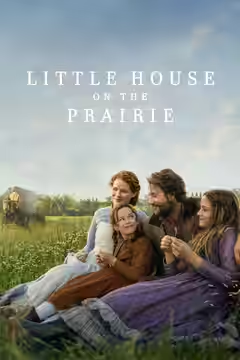
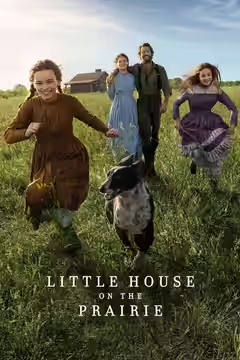
Rebecca Sonnenshine’s eight-part return to Laura Ingalls Wilder’s books is handsome, gentle and more honest about whose land this was than the books ever were. It is also too clean, too tidy and too careful to be much more than pleasant.
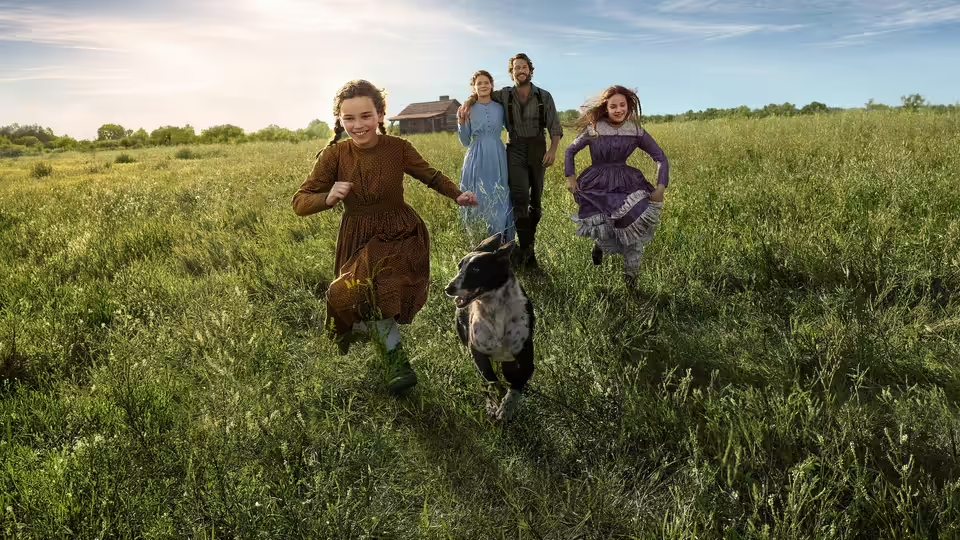
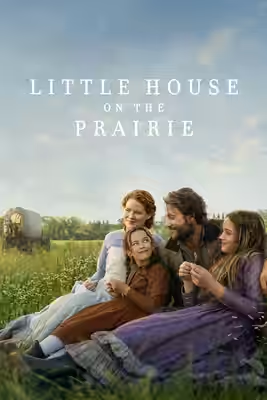
Rebecca Sonnenshine has gone back to Laura Ingalls Wilder’s books and made eight episodes out of them, with Charles and Caroline Ingalls (Luke Bracey and Crosby Fitzgerald) loading their daughters into a wagon and heading for open country that is not, whatever the deeds say, empty. That last clause is the point of the new version. The 1974 series took the family’s right to the land for granted; this one does not, and it is at its best whenever it remembers that. It is a pleasant, well-meaning, good-looking programme, and for long stretches it is also a little inert.
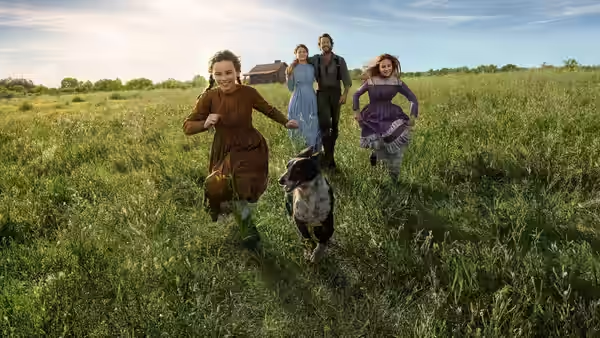
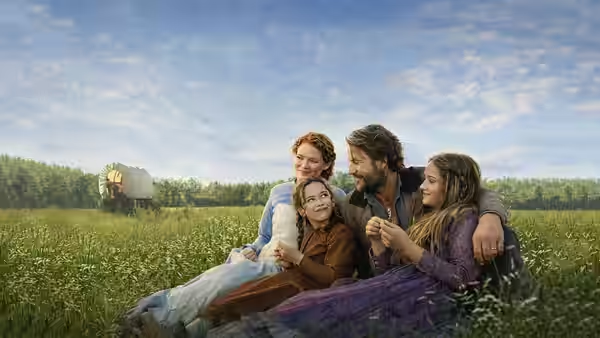
Alice Halsey’s Laura is the reason to keep watching. She plays the child as a noticer, always half a step outside the grown-ups’ conversation and hearing more of it than they think, and when the series lets her simply look at something for a while it comes close to the books. Skywalker Hughes has the harder job as Mary, the good elder sister whose goodness is a kind of armour, and the scenes between the two girls, bickering in the wagon bed or whispering after the lamp is out, are the warmest thing in it. Bracey is a big, easy, likeable Charles. Fitzgerald has less to write home about and does it carefully.
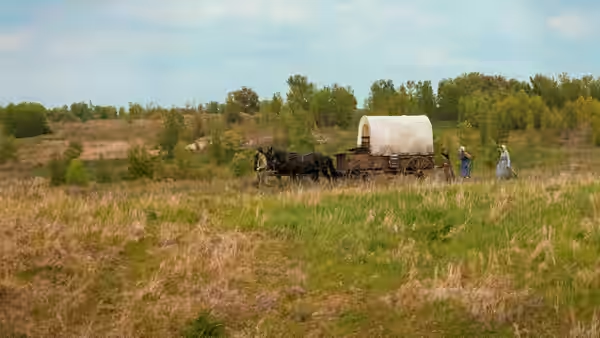
Three cinematographers, Ari Wegner, C. Kim Miles and Nathaniel Goodman, share the eight hours and we could not tell you where one stops and the next begins, which is a compliment and a diagnosis. The light is low and gold nearly always; the sky takes up two thirds of the frame; the grass moves when the scene needs it to. It is lovely, and by the third episode we found ourselves wanting a grey day. Mitchell Travers’s calicos are faded to exactly the right degree and never dirtier than that. Jonah Markowitz’s cabin looks freshly built, which in the story it is, but so does the town and so do the neighbours. Dan Romer’s score, fiddle over open strings, tells us the country is beautiful and the family will be fine, and it is right on both counts, which is not always what a scene needs to hear.
The Osage material is where the series stops being a nice thing to have on and becomes worth arguing about. Midway through there is a passage in which a scene we knew from the book is played again, without comment, from the other side of the creek, and the wagon that has been our home for four hours is suddenly an arrival nobody asked for. It caught us unprepared, and it moved us more than we expected; the show had earned a small shock by being so gentle for so long. That is the version of this series we wanted more of. It arrives, does its work, and then the camera goes back inside the cabin and the fiddle starts again.
Five directors are credited, and Erica Tremblay’s episode is the one to point at. It slows down, holds on faces, lets a silence run to the end, and has the best writing for the adults in the run. Elsewhere the hours have a summary quality, as if each had been handed a list of incidents from the books and told to get through them by the credits. Sonnenshine’s writers (Tom Hanada, Eleanor Burgess, Adam Starks, P. Carter Kristensen, Francesca Butler among them) give everyone clear, sensible things to say and almost nothing to hide. On this frontier nobody is hungry for long, nobody is cold for long, and dirt is something that happens to boots.
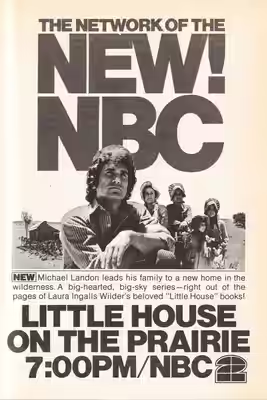
The 1974 series was sentimental and long and knew what it was. This one is short and not sure. The reviews so far are split almost down the middle, and we can see why: the same episode can look like an honest reckoning or a tidy one depending on how much you came wanting from it. We came wanting a bit more than we got.
Watch it with a child of nine or ten, who will take the Osage scenes seriously and the wagon seriously and not notice how clean the wagon is. On your own, you may find yourself admiring the light and counting how many episodes are left. There are eight.