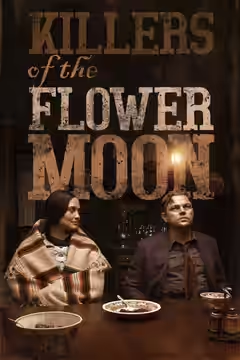
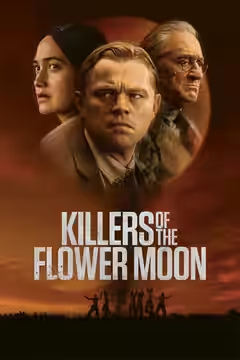
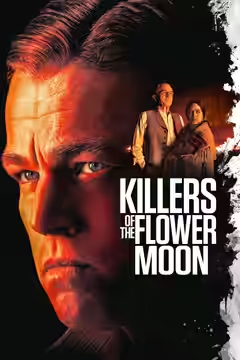
Scorsese’s account of the Osage murders is long, plain and appalling in the right way: it shows the killings in daylight and tells us who did them from the start. Lily Gladstone holds it together, and it is weaker when she is off screen.
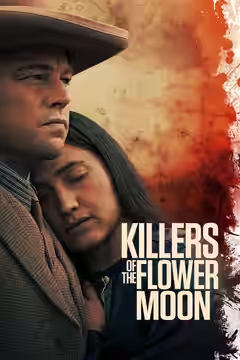
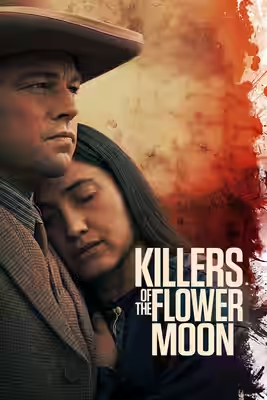
Martin Scorsese has made a film about the Osage murders from the side of the men who did the killing. Everything else follows from that. There is no mystery: within half an hour we know who is arranging the deaths and why, and the remaining three hours watch it happen while the town carries on buying motor cars. It is long, plain and quietly appalling. We recommend it, with the caveat that it is built to be sat through rather than enjoyed. The poster asked whether you could find the wolves in the picture. You can. They are paying for the coffins.
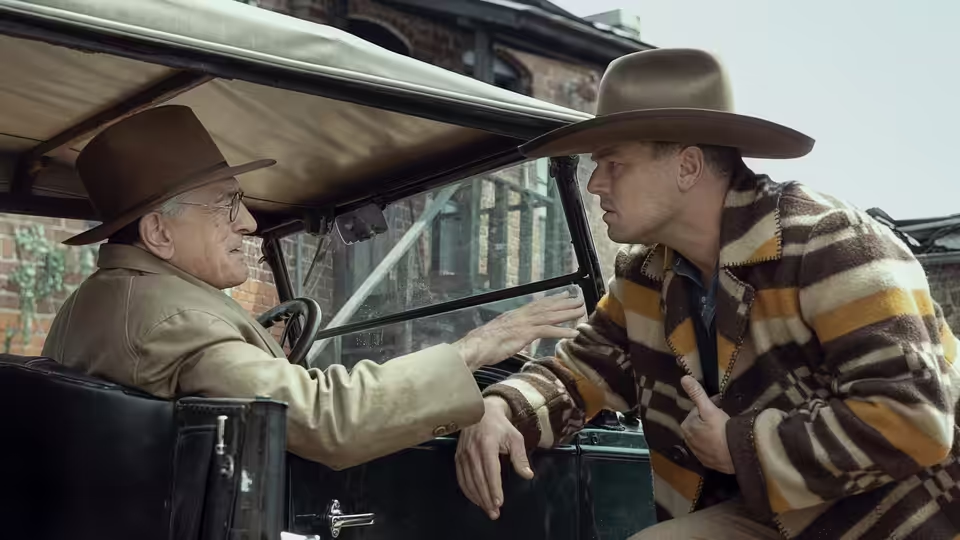
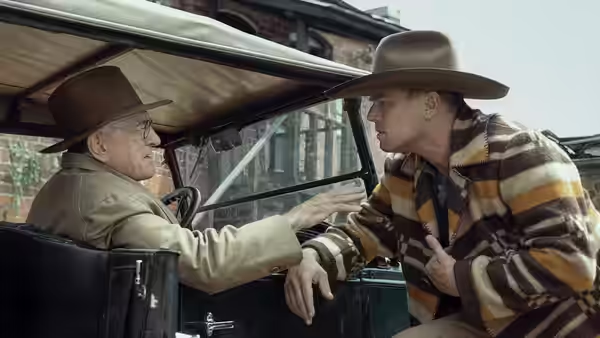
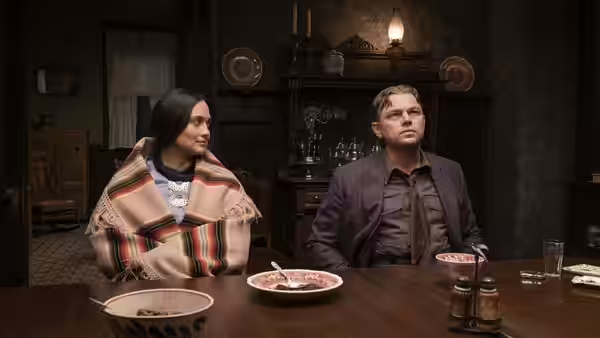
Robert De Niro’s William Hale is the reason it works. Hale is a cattleman who speaks Osage, takes his hat off at Osage funerals and asks to be called King. The voice is soft and reasonable, the face is patient, and we kept waiting for the mask to slip; it never does, because there is no mask. Leonardo DiCaprio, as the nephew Ernest, goes the other way: jaw pushed forward, mouth turned down, the walk of a man told he is stupid so often that he has stopped arguing. It is the least he has asked of an audience in years and we liked him more for it.
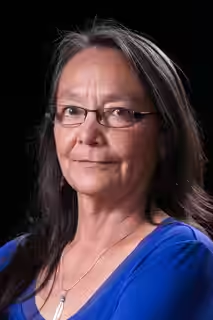
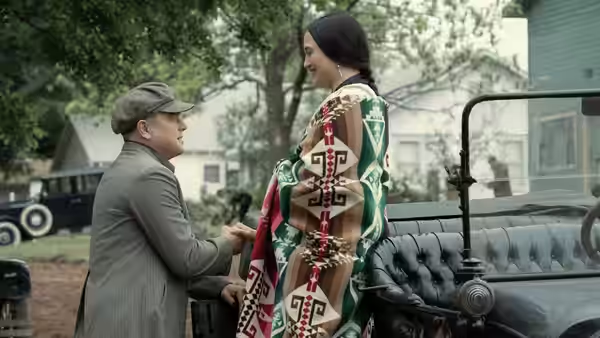
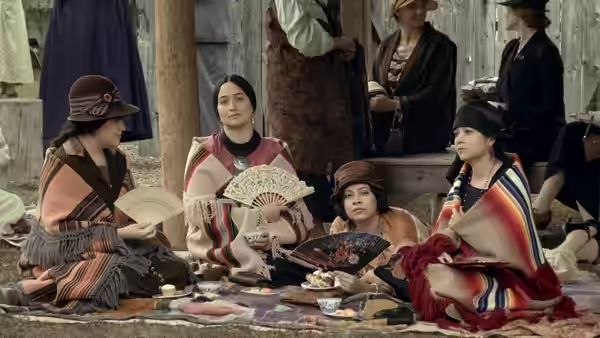
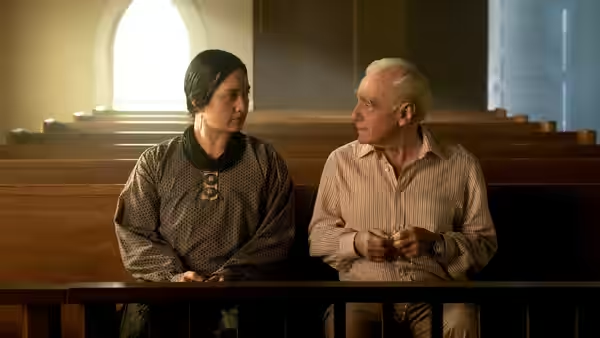
Lily Gladstone is Mollie, the Osage woman Ernest courts for her money and then, to his own inconvenience, comes to love. Gladstone does almost nothing and it is enough. She lets him talk, calls him a coyote and smiles. When a storm comes over the house she tells him to sit still and be quiet, because the rain is powerful, and he does. That scene got at us more than we expected: it is the last time in the film anybody is at peace, and Scorsese lets it run in near silence. Jacqueline West wraps her in Osage blankets over 1920s dresses. Tantoo Cardinal, as her mother Lizzie Q, watches the white men with a face that needs no subtitles, and Cara Jade Myers as her sister Anna is drunk, funny and afraid of nobody present.
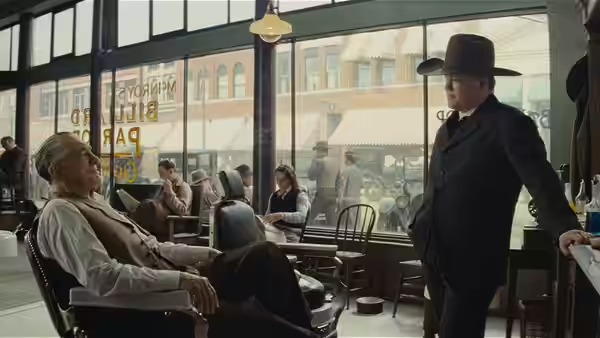
The killings are shown flat. Rodrigo Prieto films them in daylight and at a middle distance, and Thelma Schoonmaker cuts away almost before the body has hit the ground. Nobody runs. The camera does not push in. We were horrified, and the horror came from how little fuss anyone on screen made about a man shot on open ground in the afternoon. Robbie Robertson’s score is a heartbeat on a bass drum and a slow electric guitar, and it keeps the same tempo whether someone is dancing or being buried. Jack Fisk’s town is a wide dirt street of new brick banks with the paint barely dry. In places Prieto drops into the washed colour and jittering frame rate of old newsreel, and for a few seconds the film looks like evidence.
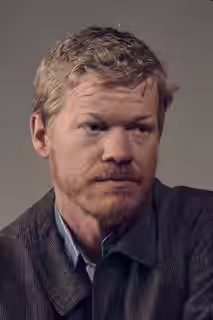
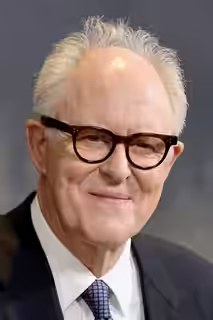
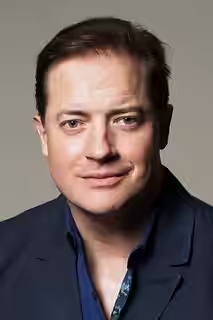
The flaw is the shape. Mollie is the centre of the film and for a long stretch of the last third she is off screen, and without her it becomes a story about white men being dealt with by other white men. Jesse Plemons arrives as Tom White, a government man with a mild voice and a hat he never knows where to put, and the temperature drops when he walks in. John Lithgow and Brendan Fraser turn up in scenes we will not describe, and Fraser plays his lawyer at a volume the film has spent three hours refusing. At 206 minutes it is not padded, but there are twenty minutes in the middle where we knew what the next scene would be and were right.
Against Scorsese’s own work it sits nearer Silence and The Irishman than Goodfellas: a late film, slow, with no interest in making its criminals attractive. The last ten minutes take a form we will not describe. Most critics have called it the boldest thing in the film; we admired the nerve of it and were not sure we needed it.
See it in a cinema if you can. At home the length asks more of you, and the temptation to split it over two evenings is real and would ruin it. The 15 certificate is fair. Nothing is lingered on. Nothing needs to be.