Built by hand and moved by hand, this prequel to the 1982 film is lovelier than almost any fantasy television around it, and it spends ten hours where six would do. Stay for the Skeksis, who eat, scheme and rot with real relish.
Louis Leterrier’s ten-part prequel goes back to Thra, the world of Jim Henson and Frank Oz’s The Dark Crystal (1982), and it goes back the hard way: with puppets, moved by people, filmed on sets you could walk through. It is the most beautiful fantasy television we have seen in years. It is also two or three episodes longer than it needs to be, and it knows a great deal more about its own history than it can comfortably say aloud.
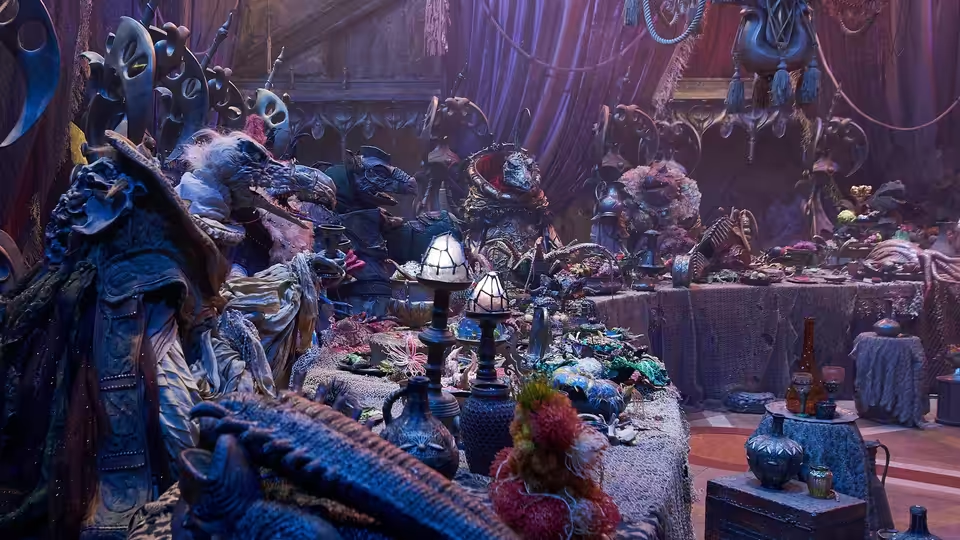
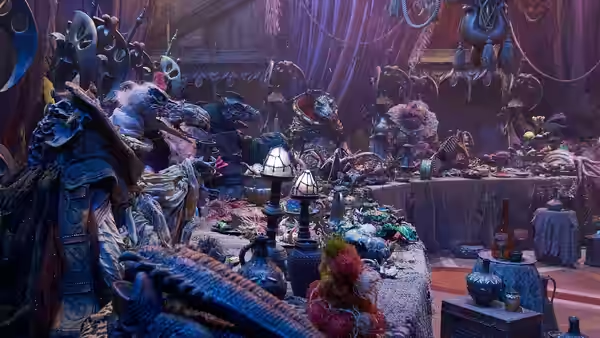
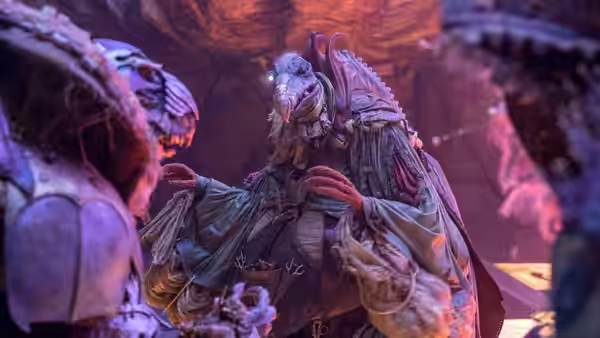
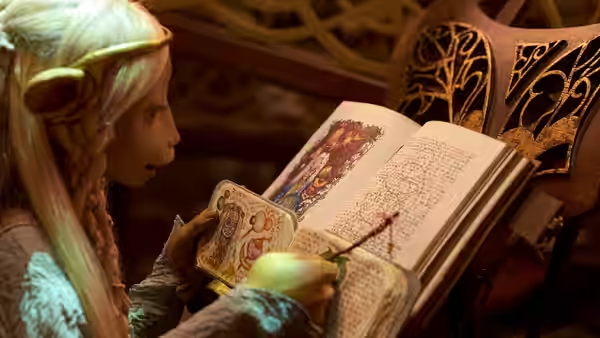
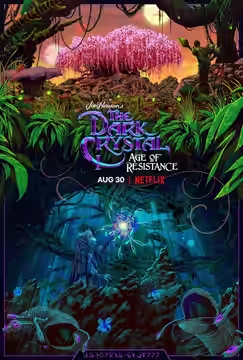
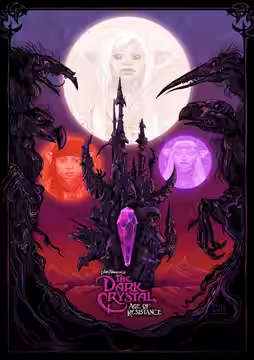
Gavin Bocquet’s sets are the first thing you notice and the last thing you forget. The Castle of the Crystal is a place of black stone, dripping pipes and a throne room lit from beneath by the Crystal itself; the Gelfling city of Ha’rar is pale and airy and looks like a seashell someone has moved into. Brian Froud’s costumes give the Skeksis robes of brocade and rot, layered like compost, so that every lord looks as if he has been dressed by a slow flood. Erik Wilson keeps the camera down at puppet height and lets it move, gliding through corridors and across banquet tables, and the effect is to make you forget how tall the performers under the floor must be.
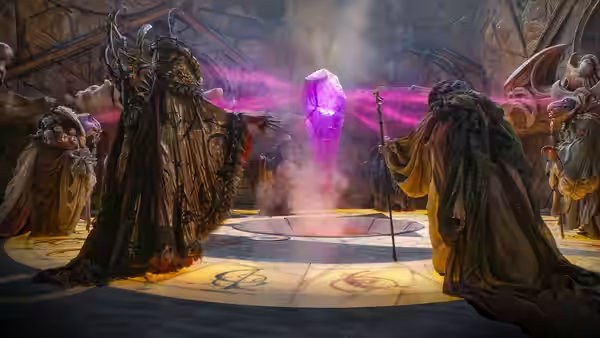
The Skeksis are the reason to watch. Jason Isaacs plays the Emperor skekSo as a ruler who gave up on dignity long ago and misses it, and Ralph Ineson gives the Hunter skekMal a voice like gravel under a boot. They eat with their whole heads. And in the first episode they do something worse: the castle’s scientist straps a young Gelfling guard into a chair before the Crystal, draws a light out of her until she is grey, and pours what is left into a vial for the Emperor to drink while the others crowd round asking for a sip. We were horrified, more than a PG certificate led us to expect, and what did it was not the draining but the appetite. Nobody in the room is troubled. They are hungry.
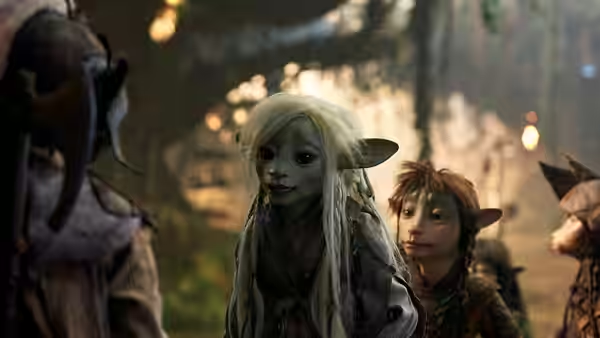
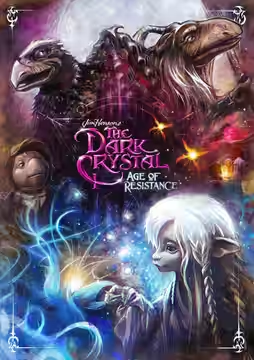
The Gelflings have a harder time. Taron Egerton, Anya Taylor-Joy and Nathalie Emmanuel give Rian, Brea and Deet clear, likeable voices, but the faces they are speaking through can blink, tilt and widen their eyes and not much else, so the actors carry the emotion in their throats and sometimes push too hard. The bigger problem is the script. Jeffrey Addiss and Will Matthews, with a writing team that runs to nine names, have built a whole history for Thra, and they want us to have all of it. Characters explain the seven clans, the Darkening and the meaning of the Crystal to one another in scenes that exist for no other purpose. We started to feel like students who had missed the first week.
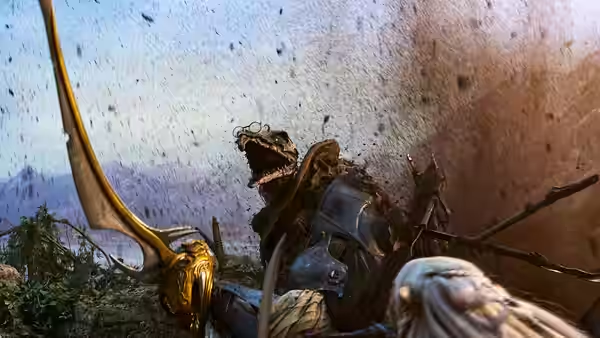
Ten episodes is the length of the trouble. Andrew MacRitchie, Kate Baird and Jesse Parker cut the individual scenes well enough, but the middle of the run keeps three separate journeys going at walking pace, and by the sixth episode we caught ourselves counting how many were left. Leterrier’s fights are the other weak point. He shoots the puppets close and cuts fast, which is how you hide the fact that a puppet cannot throw a punch, and the result is a blur in which it is hard to tell who is winning or where anyone is standing.
What holds it together is the people you never see. Dave Chapman, Olly Taylor, Helena Smee, Damian Farrell and Katherine Smee are credited for various characters, which undersells them; they are the lead performers here, and the small things they do, a hand hesitating over a table, a Skeksis settling his robes before speaking, are what make the world feel lived in rather than displayed. Daniel Pemberton and Samuel Sim’s score is large and choral and rarely quiet, and it suits the castle better than the caves. Donna Kimball’s Aughra, waking from a long dream and bad-tempered about it, is the one character who seems to find the whole business as absurd as we sometimes did.
Set against the 1982 film, this is warmer, busier and far more talkative. Henson’s picture was strange and sparse and trusted you to be lost; this one worries that you might be. Watch it two episodes at a time, with children old enough for the chair, and skip nothing in the castle. The Gelflings will be fine without you for a while. They have a lot to explain.