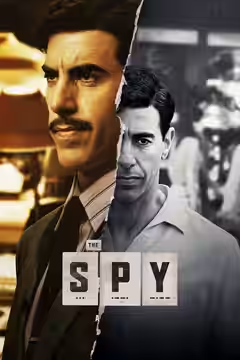
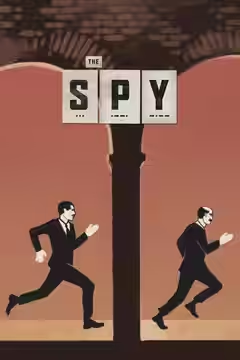
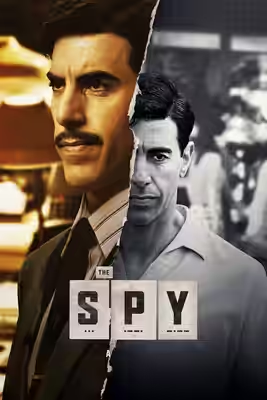
Sacha Baron Cohen plays Eli Cohen with real discipline, and Gideon Raff’s six-part account of his years in Damascus is handsome and respectful to a fault. It is history told as a memorial, and memorials do not move.
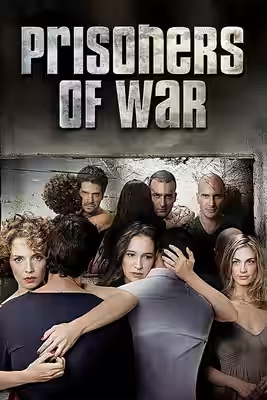
Gideon Raff, who created Prisoners of War, the Israeli series that became Homeland, has made a six-part account of Eli Cohen, the Mossad agent who lived in Damascus in the early 1960s as a Syrian businessman called Kamel Amin Thabeth. Sacha Baron Cohen plays him, and plays him straight, which is the first thing anyone will want to know. The second is whether the series is any good. It is well made and well meant, and across six hours it is slow in a way a true story this remarkable should not be.
The setup is the best stretch. Cohen begins as a man who feels, and is made to feel, like a second-class citizen in his own country, and Baron Cohen plays those early scenes with a stiff politeness that hides a good deal of want. Dan Peleg (Noah Emmerich) recruits him, trains him and plainly dislikes himself for it. Emmerich, who spent six seasons of The Americans on the other side of this transaction, does more with a sigh and a cigarette than the script gives him on the page. When Cohen is sent to Buenos Aires to become Kamel, and we watch him practise the walk, the accent and the easy generosity of a rich man, the series has a tension it never quite recovers.
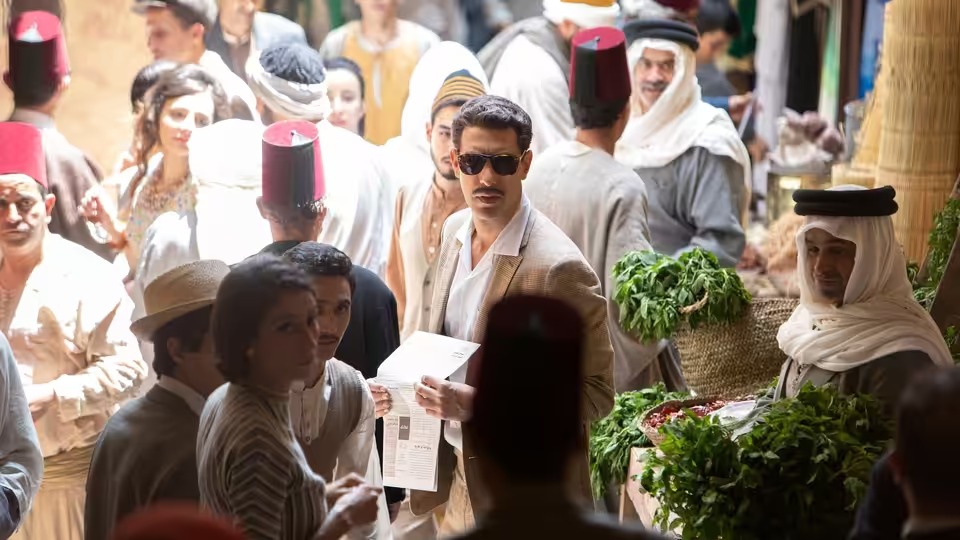
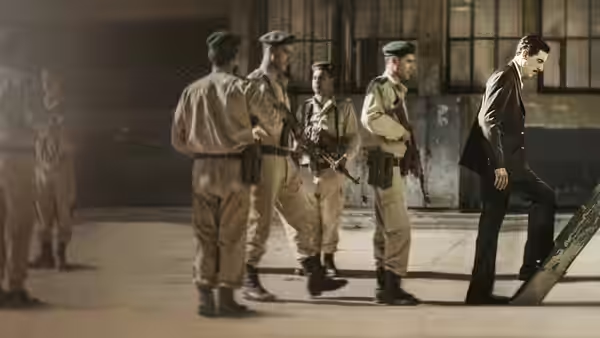
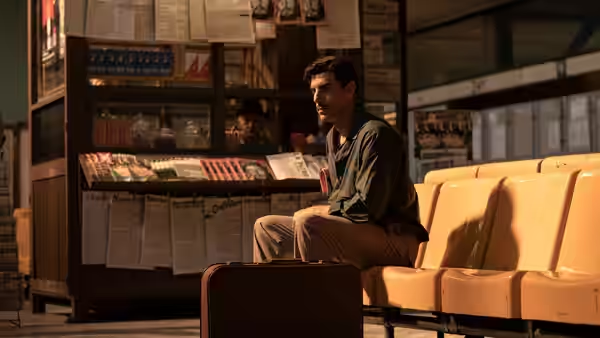
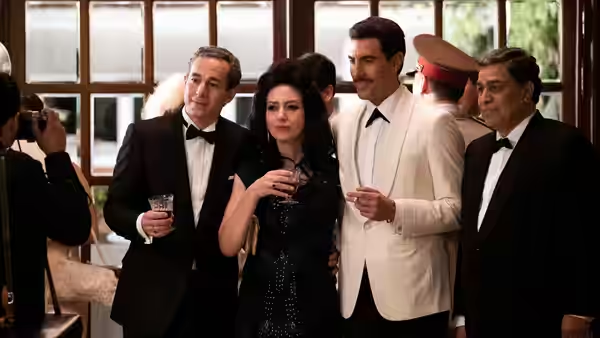
Itai Ne’eman shoots the two countries as two different films. Israel is drained almost to grey, concrete and dust and strip lighting; Damascus is amber, sun through shutters and brass on every table. It is a clear idea, cleanly done, and it tells us where the series’ interest lies before anyone has said a word. Michel Barthélémy gives Kamel a flat with a balcony that looks straight onto the Syrian army headquarters, and the series knows how to use that view. Olivier Bériot dresses Baron Cohen in suits that get sharper as the lies get bigger, and sends Hadar Ratzon Rotem’s Nadia to the school gate in the same two cardigans.
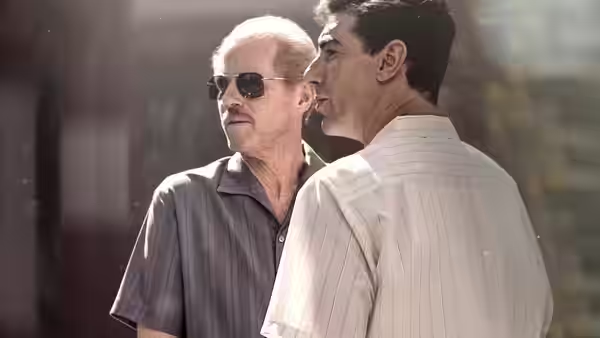
Nadia is where the writing, by Raff and Max Perry, thins out. Ratzon Rotem is good, patient and hurt without a speech to say so, but she is given one note, waiting, and asked to hold it for six episodes. The Damascus side is better served. Alexander Siddig’s Ahmed Suidani, the security chief who does not like Kamel’s story, is the one character who seems to be thinking in every scene he is in, and Waleed Zuaiter’s Amin al-Hafez is a soldier flattered by a friend he should have checked. Simon Herman cuts between the dawn transmissions in the flat and Peleg’s listening room in Tel Aviv, and the first time he did it we held our breath. The fourth time we noticed we were waiting for it.
That is the trouble with the series as a whole: it has one rhythm. A party, a transmission, a telephone call to Nadia that goes badly, a shot of Baron Cohen alone with his face doing nothing. Guillaume Roussel’s score, strings over a ticking pulse, insists that something is at stake in every one of these, and after a while we stopped hearing it. By the fourth episode we were bored, and then we were annoyed, because the real Cohen’s life was not boring and the series had the material to prove it.
Baron Cohen is better than the role. He has built a career on faces that never crack, and he uses that here, in a low voice, with his shoulders held slightly too high, to play a man who is tired of being somebody else and cannot stop. The best acting in the series is wordless: Kamel alone at the transmitter before dawn, listening to the street wake up below him. The script around him treats Cohen as a figure on a stamp. He is brave, he is loyal, he is lonely, and he is never once allowed to be unpleasant, which is an odd choice for a story about a professional liar.
Prisoners of War understood that the person who comes home from a lie is not the person who left. The Spy keeps gesturing at that idea and then cutting away to another party. The second half heads where history says it must, and we will leave it there. If you know nothing of Eli Cohen, this is a clear, handsome introduction, and it will send you to read more. If you came for the spycraft, there is a fine hour of it in the first two episodes, and then a lot of waiting.