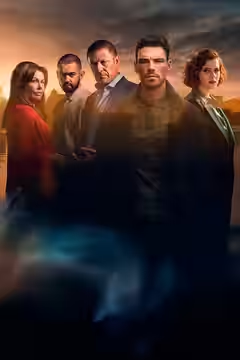
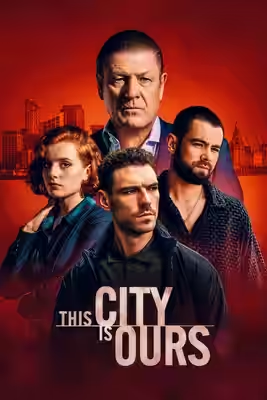
James Nelson-Joyce makes this Liverpool crime drama worth the familiar gangland manoeuvring. Michael and Diana’s relationship gives it a reason to hold our attention when the business of betrayal starts to feel routine.
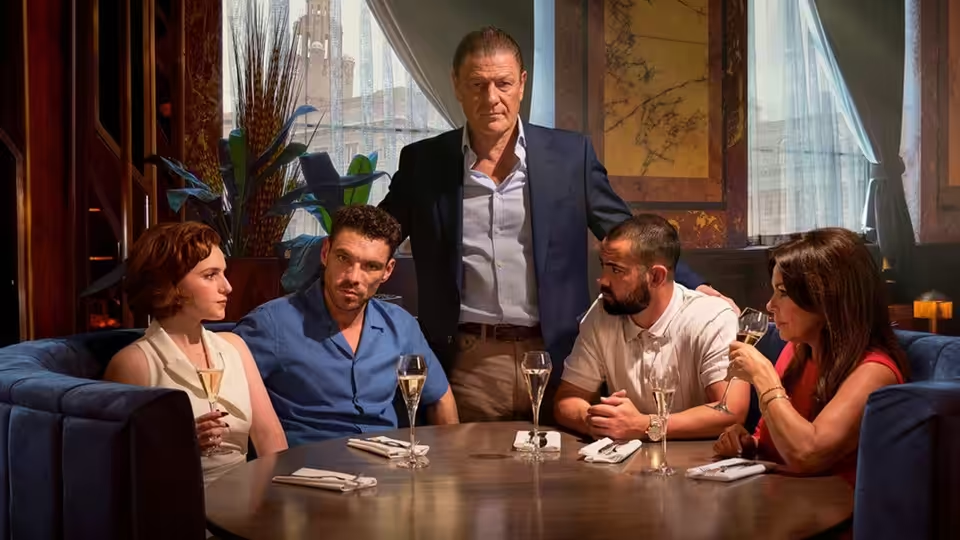
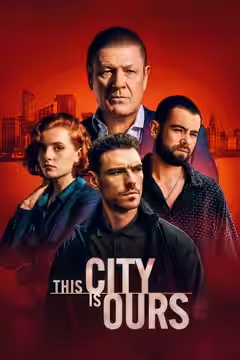
Stephen Butchard’s This City Is Ours is worth starting for James Nelson-Joyce, and worth staying with for the relationship at its centre. The Liverpool cocaine business supplies the family tensions, divided loyalties and reasons to suspect almost everyone. We have seen plenty of this before, and the criminal plotting is not consistently fresh enough to disguise it. Butchard gives Michael Kavanagh enough to want in his private life that the next business complication need not carry the whole programme.
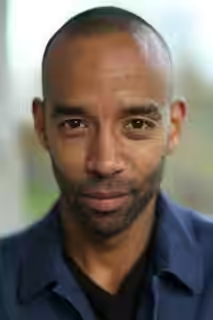
Michael’s relationship with Diana Williams, played by Hannah Onslow, is where the writing becomes more particular. Their fertility struggles make the prospect of an ordinary family life difficult in a way that criminal influence cannot readily fix. We were moved more than we expected by Michael’s hurt. Nelson-Joyce makes that openness convincing without making Michael’s occupation easier to excuse. Onslow gives Diana enough presence for her stake in their future to matter too.
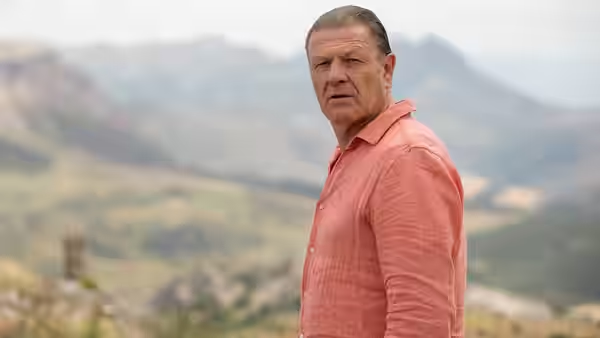
Sean Bean’s Ronnie Phelan provides the threat, and Bean’s authority remains useful even when the situation is familiar. Julie Graham’s Elaine Phelan is another good reason to pay attention to the family scenes; the performance gives them weight that the gangster plotting does not always earn. These are actors who can make us take a character seriously before the script has quite justified it. That helps, but it also makes the less convincing stretches of Butchard’s writing more noticeable.
Saul Dibb and Eshref Reybrouck direct, with Joel Devlin’s cinematography giving the criminals’ affluence an appreciable appeal. That matters in a genre that can treat enjoying the money as a lapse in seriousness. Here, the comfort helps explain the attachment to the business and the fear of losing it. The family relationships also benefit from this sense that there is a life being lived between the threats.
Sarah Peczek and Andrew MacRitchie’s editing keeps the criminal pressures close to the couple’s private difficulties across eight episodes. That connection is useful: Michael’s worries matter because the programme continues to make room for them alongside the business. Rael Jones’s music supports the tension, though it is the possibility of someone admitting a weakness that holds our attention most securely. We could have used fewer reminders that loyalties in this line of work are unreliable.
The limitation is how often the crime story relies on our existing appetite for powerful families behaving badly. Butchard’s dialogue has wit, and the attention to the cocaine trade as a business gives the dealings some substance. Even so, the betrayals do not all feel equally necessary, and familiarity sometimes does the work that a more persuasive chain of decisions should do. Anyone already tired of gangland family disputes and wounded male pride will find stretches that test their patience.
Give it a try if you want a crime drama that spends time on what its men struggle to say at home. The price is some plotting that will hold few surprises for regular viewers of this genre. If Michael and Diana do not interest you, eight episodes of the business around them may be more commitment than is sensible.