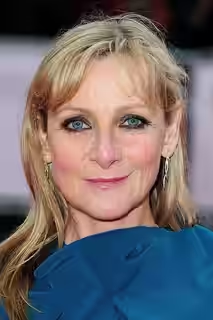
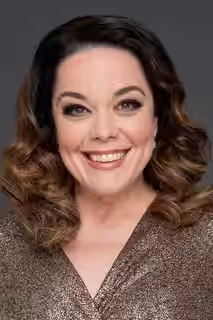
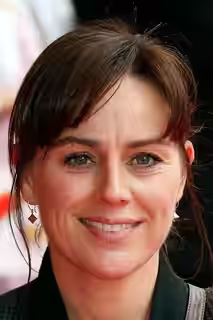
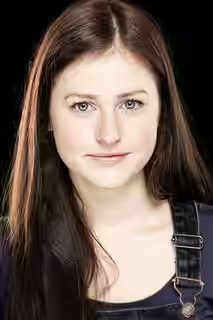
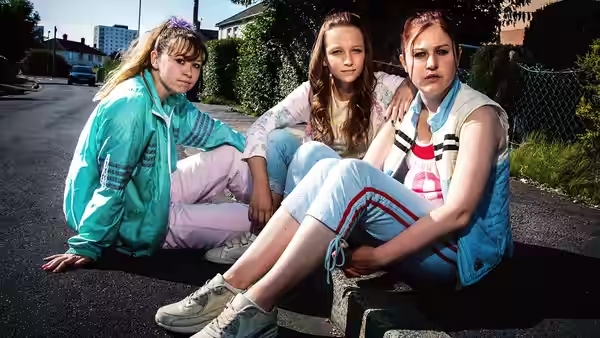
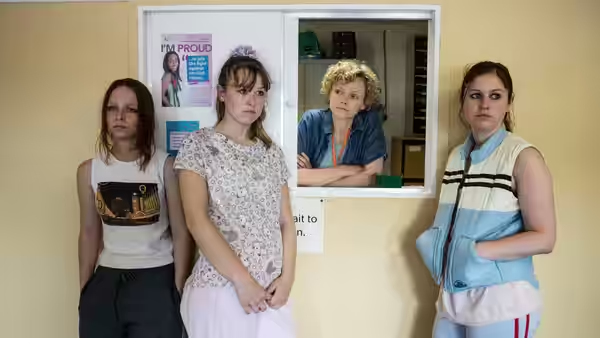
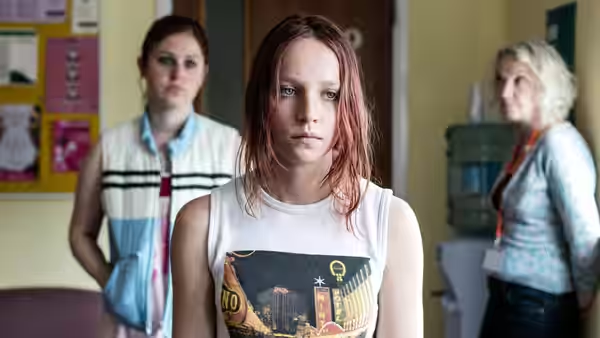
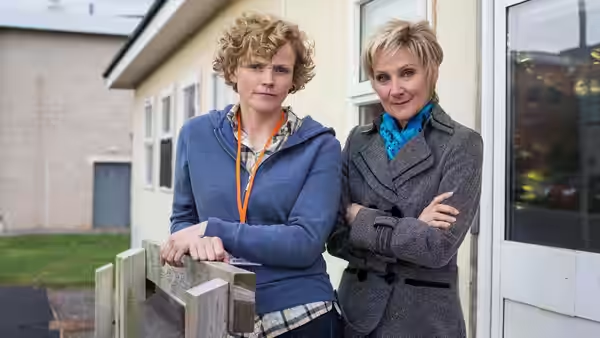
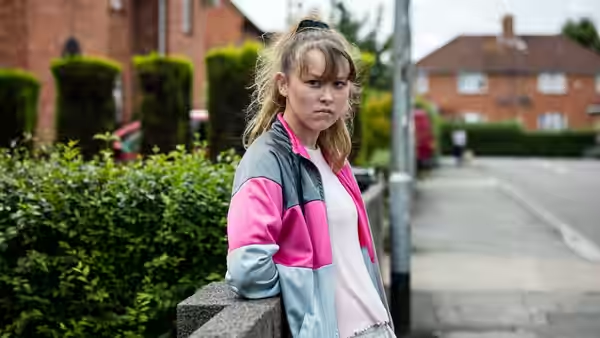
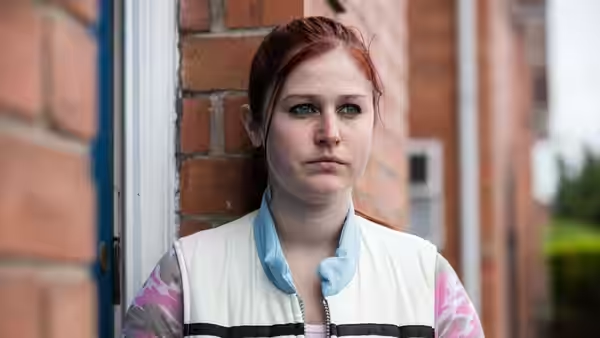
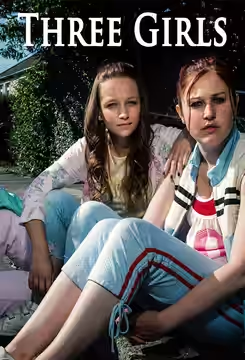
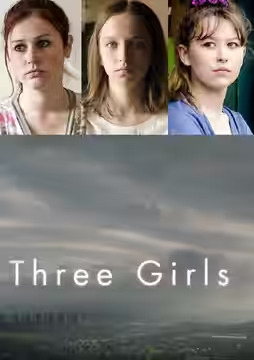
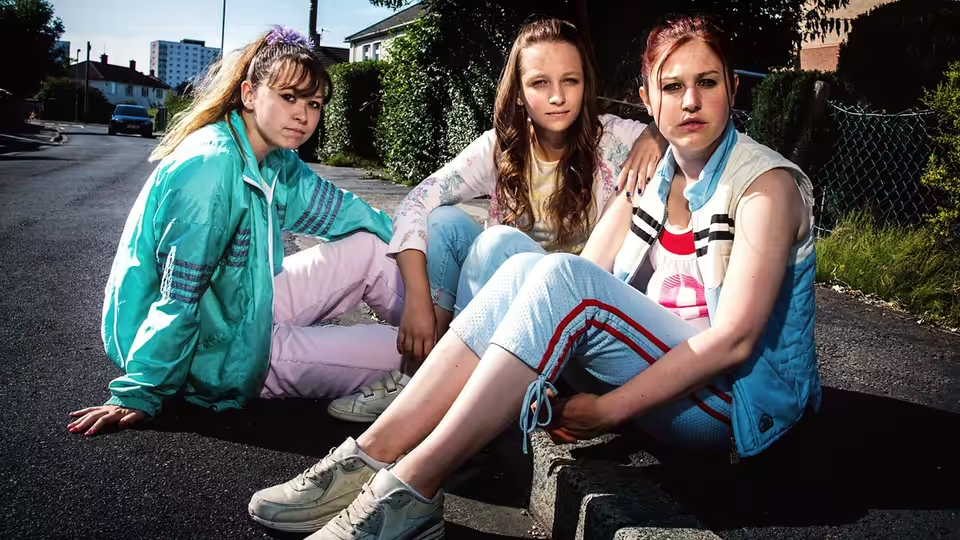
A scene from Three Girls
Series review

Three Girls

2017 · Created by Philippa Lowthorpe · Series · 1h 00m · MPA NR

In a sentenceThree children tell the truth for years and every report is filed in the right drawer

Holly Winshaw (Molly Windsor) has just moved to Rochdale with her parents, Jim (Paul Kaye) and Julie (Jill Halfpenny), and wants somebody to sit with. She finds sisters Amber (Ria Zmitrowicz) and Ruby Bowen (Liv Hill), whose mother Lorna (Lisa Riley) has stopped noticing when they come home. The three spend their evenings at a takeaway where older men hand out free chips, vodka and lifts, then start asking for something back. Sara Rowbotham (Maxine Peake), who runs the town’s sexual health service for young people, sees the pattern and sends report after report to the police. Holly goes to the police herself, and the first episode ends with her statement in a file.

Plays from YouTube when you press play; nothing loads from them until then.

Fi1m review

Philippa Lowthorpe’s three-part drama about the Rochdale grooming scandal keeps its camera on the girls and on the adults who should have listened. It is patient and hard to sit through, and Molly Windsor and Maxine Peake carry it without once asking for our sympathy.

Nicole Taylor’s script makes one decision in the first ten minutes and holds it for three hours. The camera stays with the girls and with the adults whose job it was to protect them. The men who did the abusing are barely characters at all: a face behind a takeaway counter, a car pulling up, a hand refilling a plastic cup. Some viewers will find that a dodge. We think it is the point. The series is not interested in why these men did what they did. It wants to know why, when three children said so, nobody with a warrant card cared.

Molly Windsor’s Holly arrives sullen and new, and Windsor never lets her become a symbol. She wants friends, a laugh, somewhere to be that is not her parents’ front room. Ria Zmitrowicz plays Amber loud and brittle, the one who knows the men’s names and thinks that makes her in charge. Liv Hill’s Ruby is younger and slower and does what her sister does. The first episode does not spare us what happens to Holly, but Philippa Lowthorpe films it from her face, in a room Melanie Allen has furnished with a mattress and almost nothing else, and the camera never goes where a tabloid would.

What horrified us was not that scene. It was the one after it, in a police station, where Holly tells a detective what was done to her and he writes it down in the tone of a man taking a lost-property report. Úna Ní Dhonghaíle holds these interview scenes far longer than television usually dares, so we sit through the pauses, the pen, the tape being changed. A police officer calls what is happening to these girls a lifestyle choice, and the series lets the phrase sit there without underlining it. We were angry, and we were meant to be.

Maxine Peake plays Sara Rowbotham tired, quick and rude, a woman who has sent the same report so many times she has stopped expecting a reply. It is not a showy performance and it does not need to be; the rawness is all in the young cast, which is where it belongs. Once or twice Taylor hands Sara a speech that says what the scene has already shown, and Peake is good enough that we noticed the script doing it rather than her. That is the closest the series comes to lecturing.

Matt Gray shoots Rochdale in flat overcast daylight, handheld and close, and the takeaway under strip lighting the colour of weak tea. Emma Fryer puts the girls in tracksuits and scuffed school shoes, so they look like what they are, children, and not the young women the paperwork calls them. Natalie Holt’s score is mostly a single held string note, and it knows when to stop. Nothing here is pretty and nothing is dressed up to be ugly either.

The later episodes bring in Lesley Sharp’s DC Margaret Oliver and Ace Bhatti’s Nazir Afzal, and the drama moves into offices and interview rooms. The air goes out of it a little; watching adults finally do the paperwork properly is not the same as watching a child in a takeaway, and the third hour is the most conventional. Sharp is given less room than she deserves. Lisa Riley’s Lorna is drawn with a thick pencil, a mother who cannot be bothered, though Riley finds a flicker of shame in her. Paul Kaye and Jill Halfpenny, as Holly’s parents, are decent, baffled people who keep asking the wrong question, and Kaye’s Jim is the only man in the series we are asked to understand.

British television makes a lot of dramas from real cases, and most of them reach for a tidy shape by the last episode. This one runs three hours across three parts and leaves the shape untidy on purpose. The men are not explained. The institutions are not forgiven. The girls are not healed for our benefit.

Watch it in one sitting if you can bear to. The second hour is the hardest, and the third is the reason to stay.

Critical consensus AI synthesised

79
Positive
5
Mixed
0
Negative
0
Radio Times
16 May 2017 · Alison Graham
80*

Nicole Taylor’s devastating script is a coruscating, brutal and unflinching three-part dramatisation of the Rochdale child grooming and sexual abuse scandal. Holly (an extraordinary performance from Molly Windsor) is vulnerable and easy prey after a falling out with her parents, with sexual health worker Sara Rowbotham (Maxine Peake) as her only ally against uninterested police who dismiss it as a “lifestyle choice”.

Read the full review →
The Guardian
17 May 2017
80*

The powerful three-part drama focuses on the victims of the Rochdale grooming scandal rather than the abusers. It highlights the institutional failures that allowed the abuse and praises the performances of the young actresses, especially Molly Windsor as Holly.

Read the full review →
The i Paper
16 May 2017 · Rebecca Monks
80*

The critic describes the series as harrowing yet necessary and sensitively told, highlighting how it exposes systemic failures in protecting the victims. Maxine Peake's urgent performance as Sara Rowbotham is singled out for praise.

Read the full review →
The Telegraph
18 May 2017 · ★★★★
80

The gruelling but essential drama about the Rochdale child sexual abuse scandal is hard to watch but must be seen. It delivers unflinching realism through strong performances from the young cast and Maxine Peake, directed with care by Philippa Lowthorpe.

Read the full review →
The Times
19 May 2017 · Andrew Billen
75*

The difficult but necessary true-crime drama extends dramatic imagination by making the audience empathise with the victims. It succeeds in its purpose of showing that nothing human is alien.

Read the full review →

Straight answers AI written, from our review

Is Three Girls worth watching?
Three Girls is worth watching for anyone who can sit through three hours about the Rochdale grooming scandal, and we scored it 84. Molly Windsor and Maxine Peake carry it without asking for sympathy, and the police interview scenes are the ones that made us angry. The third episode is the most conventional, but it is the reason to stay.
How long is Three Girls, and what is it rated?
Three Girls has episodes of about 1h 00m and is rated NR by the MPA in the US. It is a drama and crime series.
Where can I watch Three Girls in the US?
Three Girls is streaming on Peacock, Amazon Prime Video, Tubi and The Roku Channel in the US, and it is also available to buy from Apple TV. Availability is checked daily; the links above go straight to each service.
How violent or frightening is Three Girls, and is it suitable for children?
Three Girls is not suitable for children; it carries no UK certificate, but it is a drama about the sexual abuse of underage girls and does not spare the viewer what happens to them. The abuse itself is filmed from the victim's face rather than shown explicitly. The hardest scenes are in police stations, where children are not believed.
How does Three Girls compare to Spotlight?
Three Girls keeps its camera on the abused children and the adults who ignored them, where Spotlight stays with the reporters chasing a cover-up. The film is the easier evening and the tidier piece of storytelling; the series is harder to sit through and, we think, the more honest about who pays when institutions file things away. Watch Spotlight if you want a procedural, Three Girls if you can bear the girls themselves.

Cast

Awards

BAFTA Television Awards, 2018

Won
British Academy Television Awards

If you liked this, try…

Unbelievable poster

Unbelievable

2019 · An American rape case told twice, once ignored and once believed; the contrast is the drama.

Spotlight poster85

Spotlight

2015 · Reporters in Boston chase a cover-up one filing cabinet at a time; quiet and furious.

Fish Tank poster85

Fish Tank

2009 · An Essex teenager, a mother who is not looking, and a man who is; Arnold does not flinch.

Ladybird Ladybird poster

Ladybird Ladybird

1994 · Loach on a mother against social services; the system at its most well-meaning and most cruel.

Appropriate Adult poster

Appropriate Adult

2011 · A volunteer sits in on police interviews with Fred West; the horror is in the politeness.