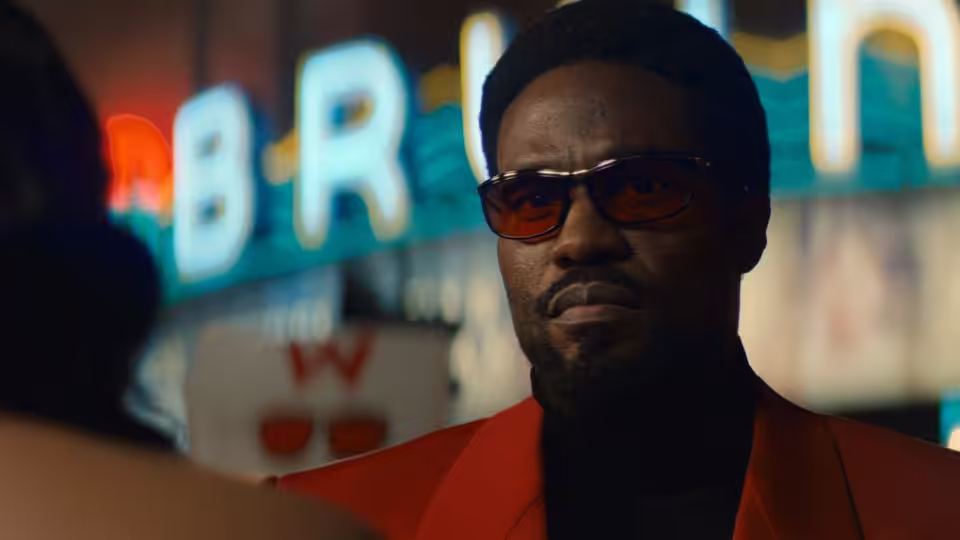
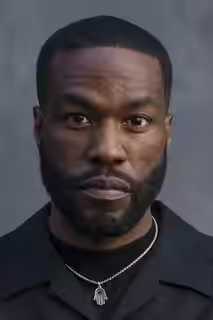
Wonder Man is a warm, funny showbusiness comedy whose chief pleasure is Yahya Abdul-Mateen II and Ben Kingsley’s rapport. The industry satire could be sharper, but the series gives its actors enough space to make us care.
Wonder Man works because it takes an actor’s hopes seriously, even when those hopes are funny. This is an engaging comedy-drama, and its strongest reason to watch is the pairing of Yahya Abdul-Mateen II’s Simon Williams with Ben Kingsley’s Trevor Slattery. The superhero business is there, but it does not make the ordinary business of wanting work and company seem trivial. Across eight episodes, the series allows those concerns to hold our attention without continually apologising for its modest stakes.
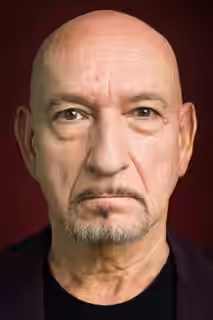
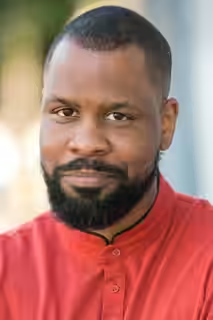
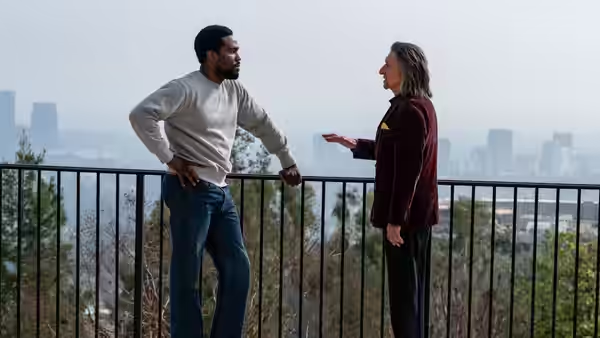
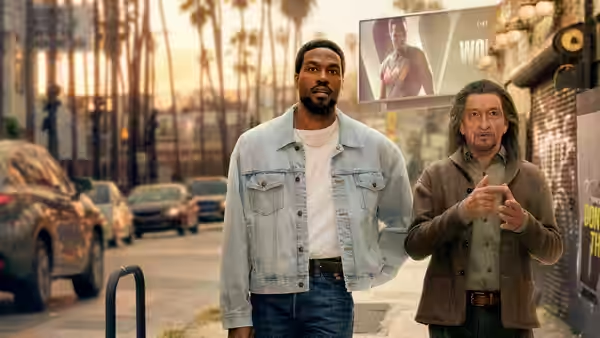
Abdul-Mateen and Kingsley are persuasive company, and the show has the sense to recognise that their rapport is worth time in itself. We were more touched by Simon and Trevor’s friendship than we expected to be. The actors make affection between men in a competitive profession feel ordinary and worth taking seriously, without reducing it to embarrassment or a joke. Their scenes together are the reason the small scale works: we care how these two people get along.
Andrew Guest is among the writers, and the writing is strongest when it treats performing as work that people care about. The film-industry detail gives the comedy something more useful than a collection of familiar complaints about Hollywood. We would have welcomed a little more bite, though, particularly when the fondness for performers softens the scrutiny of the business around them. Anyone coming for a ruthless account of the industry may find the satire too comfortable.
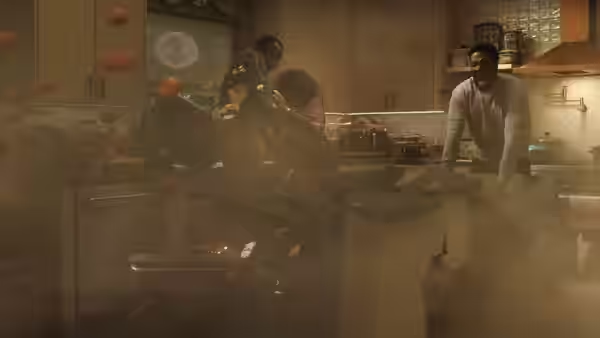
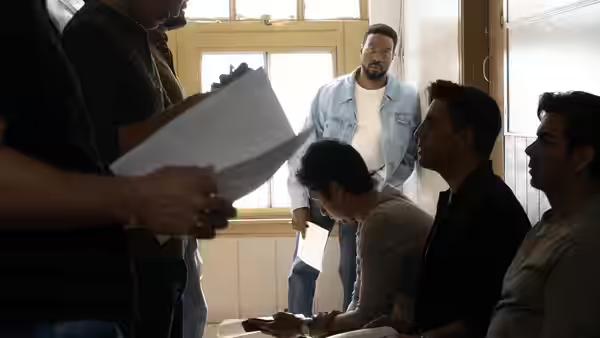
That interest in the working environment also gives the visual craft a useful purpose. Cinematographers Armando Salas and Brett Pawlak, alongside production designers Cindy Chao and Michele Yu, help make the film business a credible setting for small human concerns. We get more from the sense of people pursuing a profession than from the prospect of superhero spectacle. The setting matters because the characters want to belong there, and the series makes that desire understandable even when we might question the wisdom of it.
Gina Sansom, Cassie Dixon and Nena Erb share the editing credits; Joel P. West provides the music. We value the overall restraint here, although neither the cutting nor the score makes as strong an impression as the performers. The low-key pace suits the companionship, but it also lets the gentler comedy occupy more space than it merits. A little less indulgence would have helped without requiring anyone to put on a cape.
Directors Destin Daniel Cretton, Stella Meghie, Tiffany Johnson and James Ponsoldt keep the emphasis on character, which gives the series a clear place within superhero television. It is for people who still enjoy the genre but would like its inhabitants to have interests beyond preventing catastrophe. That is a modest ambition, and the show meets it with enough feeling to justify the smaller scale. It need not be sold as a correction to every other superhero programme to be worth watching.
The caveat is that its friendliness limits how far the showbusiness comedy can go. Even so, Abdul-Mateen and Kingsley make these characters worth spending time with, and we recommend the series for the care it takes over their friendship. Come for the actors, and do not expect Hollywood to suffer much damage.