Film review

A Beautiful Mind

2001 · Directed by Ron Howard · 2h 15m · MPA PG-13

In a sentenceRussell Crowe is convincing enough without the music repeatedly asking us to care

DramaRomance

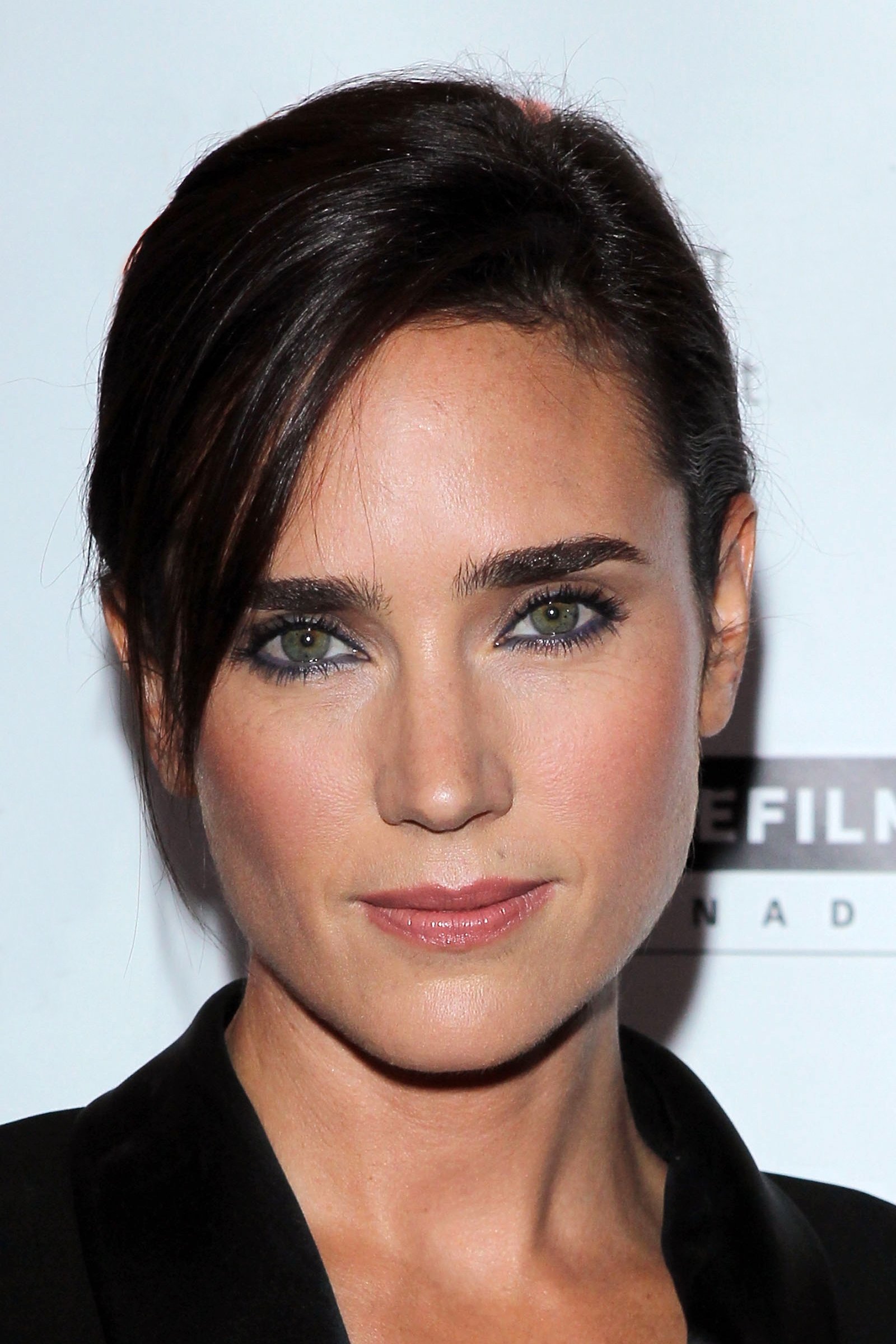
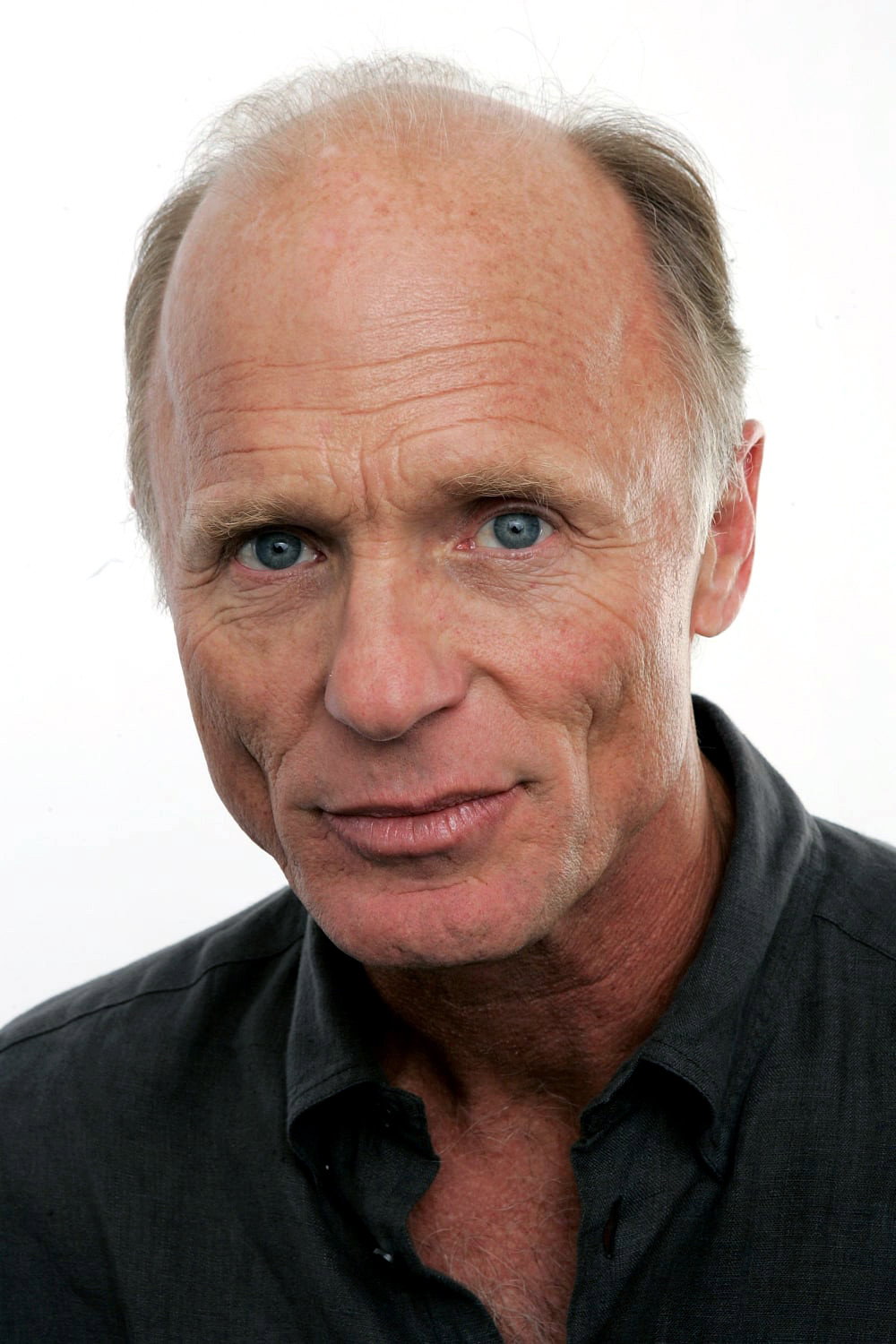
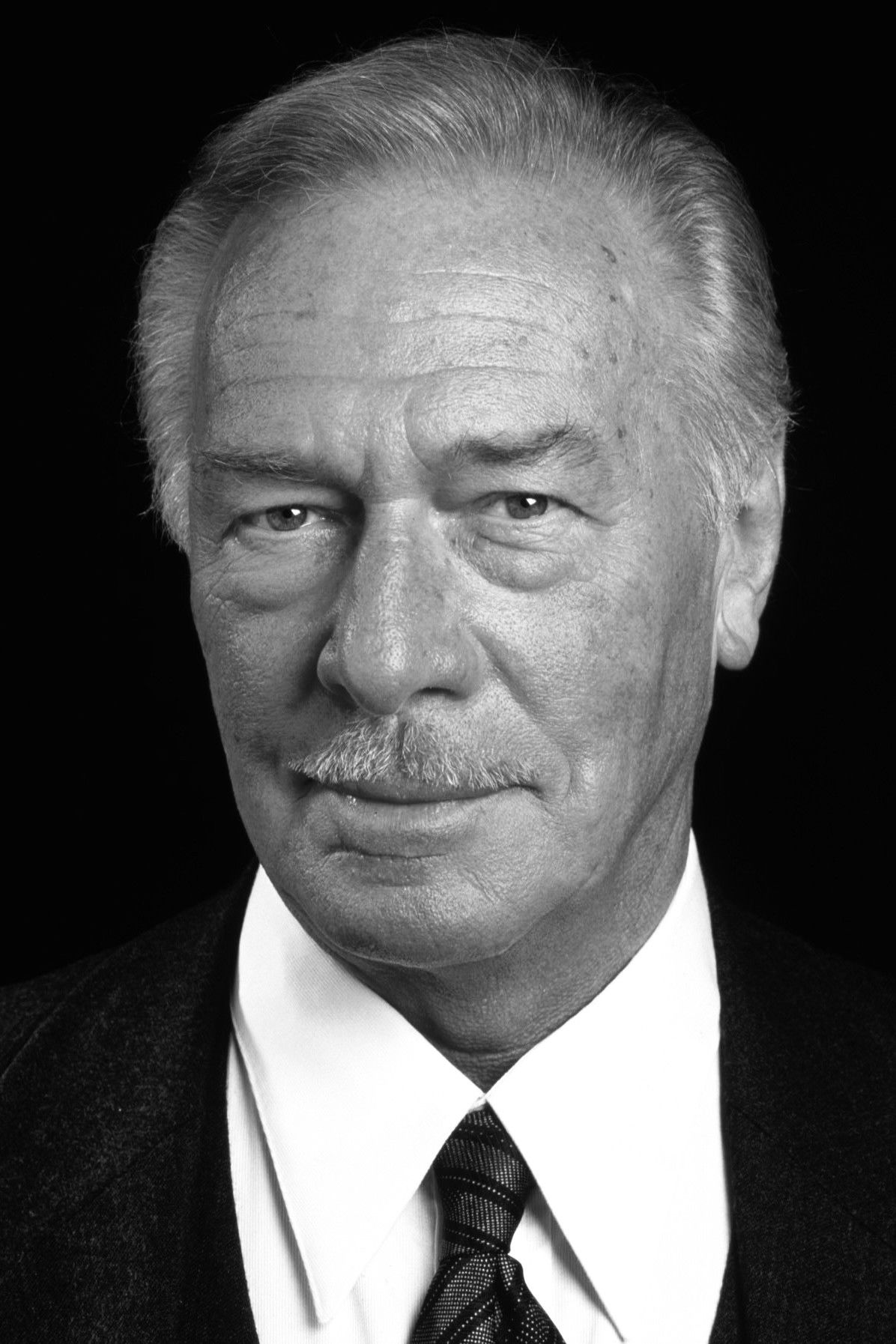
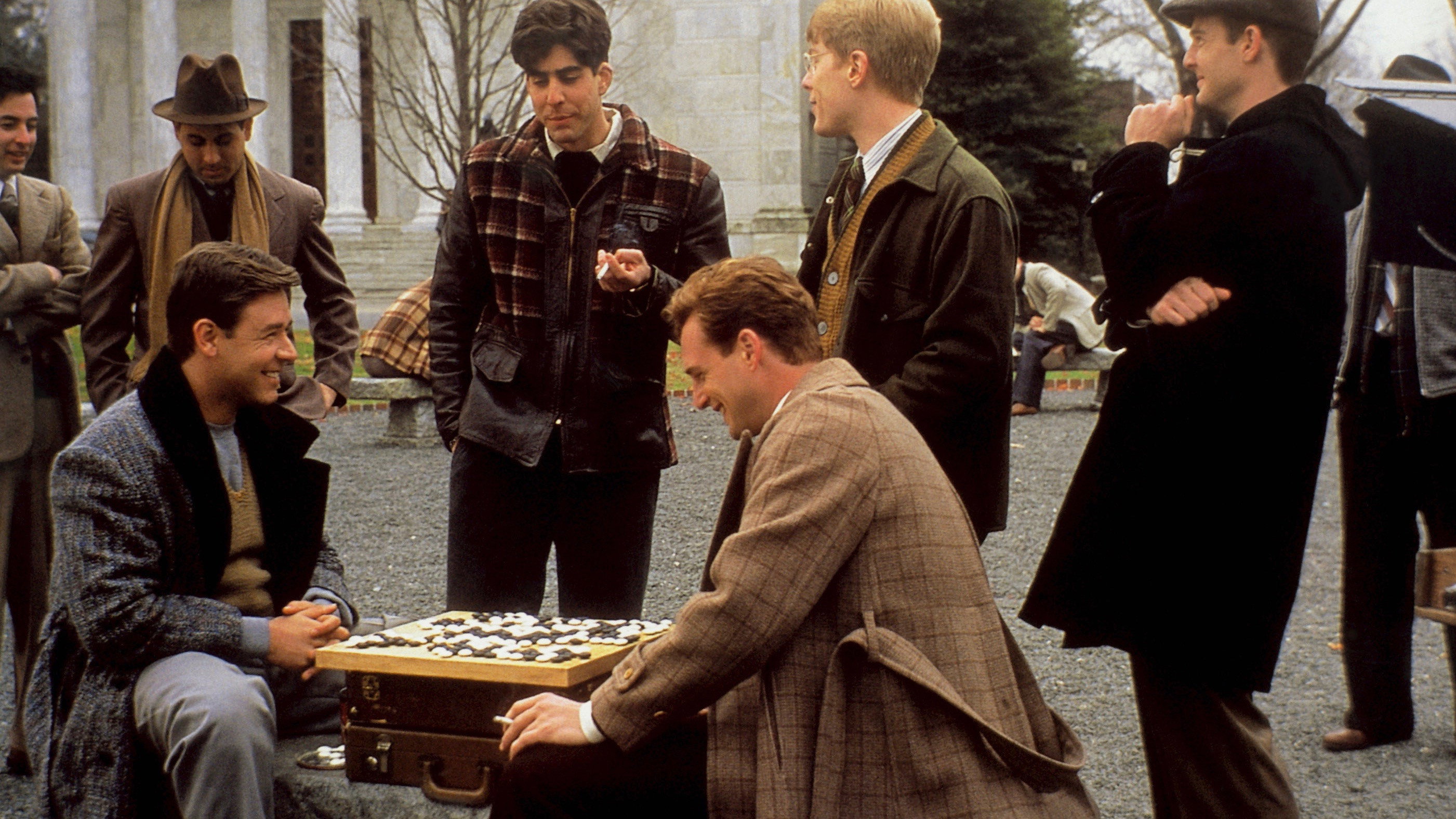
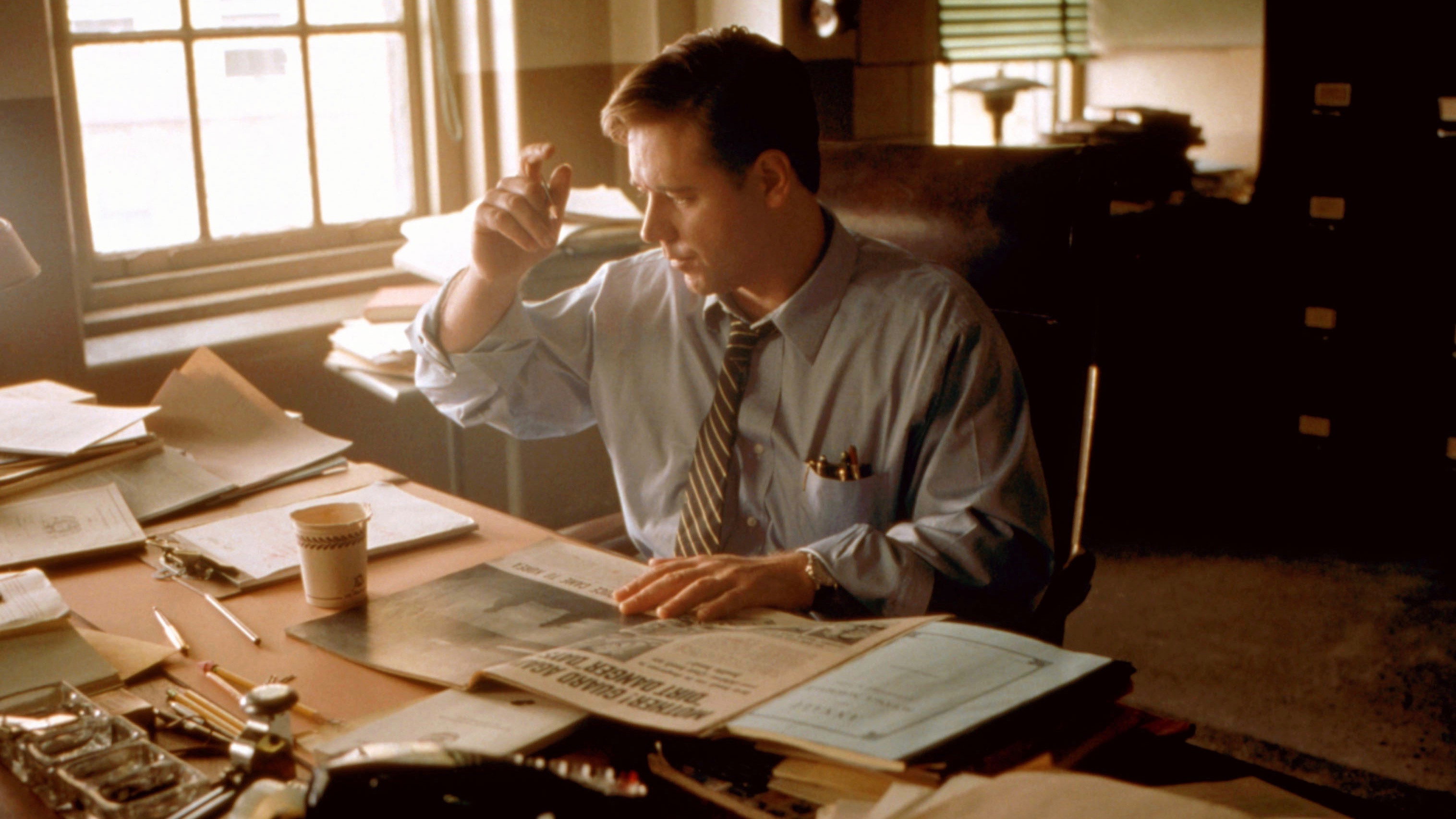
John Nash (Russell Crowe) is a mathematician whose work and private life are complicated by schizophrenia. His relationship with Alicia (Jennifer Connelly) brings the demands of marriage into a life already occupied by intellectual ambition and illness. Ron Howard’s dramatised biography follows Nash’s pursuit of his work alongside the strain felt by those closest to him. Paul Bettany plays Charles Herman, Ed Harris plays William Parcher and Christopher Plummer plays Dr. Rosen, as the story moves between Nash’s understanding of the world and the people trying to share it.

Plays from YouTube when you press play; nothing loads from them until then.

Fi1m review

Russell Crowe and Jennifer Connelly make Ron Howard’s softened biography worth watching for its domestic scenes. The film’s insistence on being reassuring leaves too little room for the difficulties it raises.

Ron Howard’s A Beautiful Mind is worth watching for the two people at its centre, provided we accept how much their story has been softened. This is a biography of mathematician John Nash that wants to make intellectual brilliance and schizophrenia comprehensible to a broad audience. That is a reasonable ambition, and Howard approaches it with patience and sympathy. But he is so determined to reassure us that the difficult questions receive less attention than the feelings.

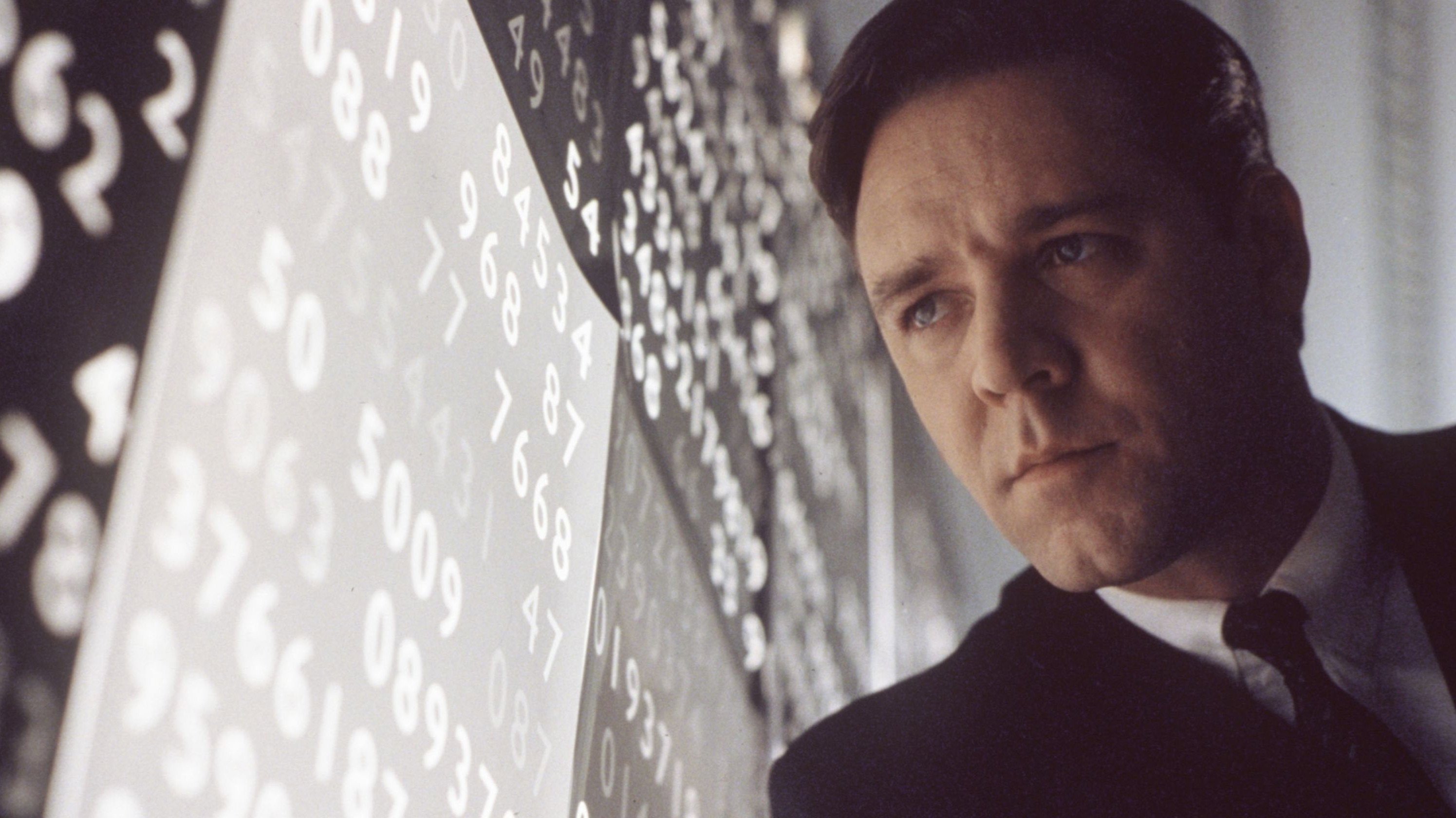
Russell Crowe gives Nash enough awkwardness to stop the part becoming simply an invitation to admire a gifted man. The effort in the performance can be conspicuous, but we can feel the frustration beneath it rather than merely being told that Nash is exceptional. Crowe makes the domestic passages matter because his intelligence offers so little help with the person beside him. He is at his most convincing when the film gives him a relationship to negotiate.

Jennifer Connelly, as Alicia Nash, gives those passages their weight. We were moved by the strain in the marriage, because Connelly makes Alicia’s effort to understand Nash feel like work that has to be done again tomorrow. Her performance allows affection and exasperation to occupy the same scene without demanding that either cancel the other. Akiva Goldsman’s screenplay does not always give her comparable room, too often treating her as reassurance for Nash when her own experience deserves our attention.

Roger Deakins’s cinematography is persuasive about Nash’s unusual perception. The images let us share some of his concentration and confusion, instead of simply watching an actor indicate them, and this helps Howard draw us into an experience that dialogue alone would struggle to convey. Wynn Thomas’s production design contributes to the picture’s orderly, comfortable appearance. That polish suits Howard’s conventional biography, although it makes the uncertainty of Nash’s experience harder to feel.

Daniel P. Hanley and Mike Hill’s editing makes the broad sweep of the biography easy to follow, but the transitions can feel too ready to move us towards the next lesson. James Horner’s score applies similar pressure, urging a response that Crowe and Connelly are already capable of earning. We do not need the emotional instructions repeated quite so insistently. Across 135 minutes, Howard gives sentiment more space than it needs and leaves the harder aspects of Nash’s life underexamined.

As a biographical drama, this has a familiar fondness for perseverance and a marked reluctance to complicate an admirable central figure. Goldsman gives us too little sense of why the mathematics matters beyond establishing Nash’s exceptional ability. We need not ask for a lecture to want some understanding of what keeps a person at his work. The film spends considerably more effort making Nash sympathetic than making his thinking comprehensible.

There is enough in Crowe and Connelly’s work to justify an evening for anyone drawn to the marriage as much as the mathematics. The domestic scenes allow uncertainty and weariness to interrupt Howard’s good intentions, and they are better for it. We would have welcomed more of that ordinary difficulty and less encouragement. Come for the performances, with modest expectations of how much the film will explain.


Critical consensus AI synthesised

51
Positive
1
Mixed
4
Negative
2

The reviews lean towards a mixed assessment of A Beautiful Mind, with the strongest agreement centring on the performances. Russell Crowe’s portrayal of John Nash is repeatedly credited with giving the film conviction and emotional force, while Jennifer Connelly provides another frequent point of praise. Several critics find the domestic scenes affecting, and some admire the way the film draws viewers into Nash’s experience of schizophrenia. Even sympathetic accounts, however, tend to acknowledge the conventional shape of Ron Howard’s biopic.

The main reservations concern the simplification of Nash’s life, the sentimental treatment of his illness and the limited attention paid to his mathematics. The spread is wide: RogerEbert.com finds the emotional core powerful, while Slant Magazine regards the treatment as manipulative and reductive, finding little compensation beyond Connelly. The central disagreement is over whether the performances and emotional involvement justify the film’s liberties with a complicated life.

Time Out
10 September 2012 · TCh
65*

The critic discusses the film's dramatic liberties with Nash's biography, noting inventions and omissions, but praises how it sucks the viewer into the mind of a genius through inventive cinematography, though it reverts to sentimentality at the end.

Read the full review →
Los Angeles Times
21 December 2001 · Kenneth Turan
60*

Strong lead performances by Crowe and Connelly elevate the film at times, but Ron Howard's tidy directing tendencies make it a mixed, overly conventionalized biopic despite its serious ambitions.

Read the full review →
Screen Daily
7 January 2002
60*

The review highlights the film's earnest middle-brow approach to the story of John Nash's struggle with schizophrenia, praising Russell Crowe's bravura performance and the domestic chapters while noting issues with structure, tone, omissions from the real life, and an overdose of sentimentality.

Read the full review →
The New Yorker
31 December 2001 · Anthony Lane
50*

The film simplifies and conventionalizes Nash's story for redemption and inspiration, though Jennifer Connelly and Paul Bettany provide highlights amid overly earnest Hollywood treatment.

Read the full review →
The AV Club
21 December 2001 · Scott Tobias
40*

The film sanitizes John Nash's story into formulaic inspirational fare that prioritizes broad appeal over depth or accuracy. Crowe’s committed lead performance provides the main drive, though the script and direction ultimately fail to explore the complexities of schizophrenia or genius.

Read the full review →
Slant Magazine
7 November 2001 · Ed Gonzalez
10*

Ron Howard’s biopic is condescending, manipulative Oscar bait that reduces a complex life to schmaltzy Lifetime-movie clichés and visual gimmicks. The direction is lifeless and reductive, with only Jennifer Connelly’s presence offering any mitigating factor amid the overall insult to intelligence and authenticity.

Read the full review →

Cast

Stills

Awards

Academy Awards, 2002

Nominated
Best Actor
Nominated
Best Film Editing
Nominated
Best Makeup and Hairstyling
Nominated
Best Original Score
Won
Best Director
Won
Best Picture
Won
Best Supporting Actress
Won
Best Writing, Adapted Screenplay

Dallas-Fort Worth Film Critics Association Award for Best Film, 2001

Won
Dallas-Fort Worth Film Critics Association Award for Best Film

If you liked this, try…

An Angel at My Table poster87

An Angel at My Table

1990 · A more searching portrait of a difficult life shaped by creativity.

Proof poster

Proof

2005 · Mathematics, grief and family tensions, with more room for doubt.

Shine poster82

Shine

1996 · Another performance-led drama about exceptional ability and the cost of expectation.

The Man Who Knew Infinity poster

The Man Who Knew Infinity

2015 · Another mathematician’s life, with the strain of intellectual companionship brought forward.

Ikiru poster92

Ikiru

1952 · For the human feeling, without requiring an extraordinary mind at the centre.