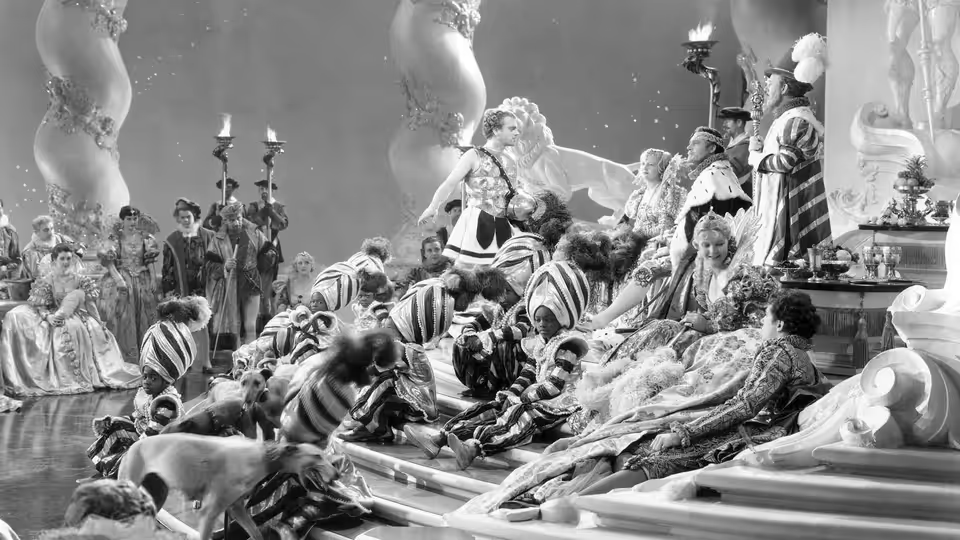
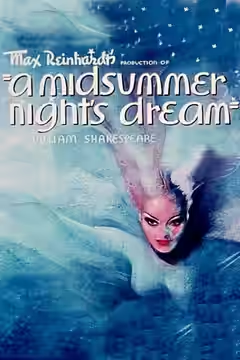
Max Reinhardt and William Dieterle’s Shakespeare is a Warner Bros. spectacle, all glitter and gauze, and the fairy scenes are lovely to look at. The lovers are stiff and Puck is loud. Worth an evening, for James Cagney’s Bottom and the wood at night.
Max Reinhardt and William Dieterle share the director’s credit on this Warner Bros. Shakespeare, and the studio gave them its contract players to fill the parts. The result is 143 minutes of Shakespeare spoken by people better known for gangster pictures and musicals, with Felix Mendelssohn’s music underneath nearly all of it. It is a good film in patches, and the patches are the ones in the wood.
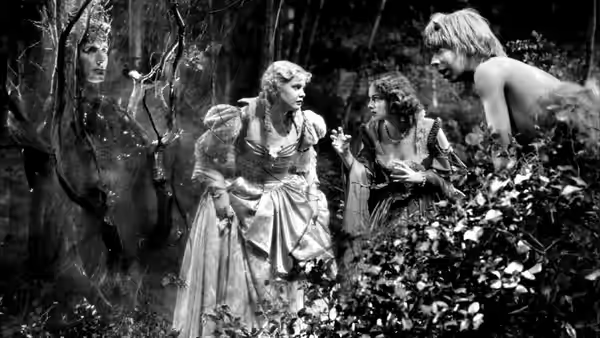
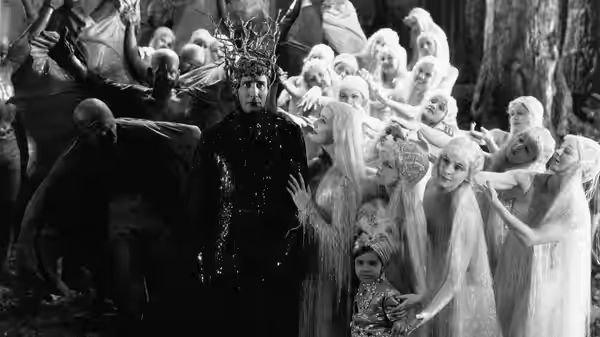
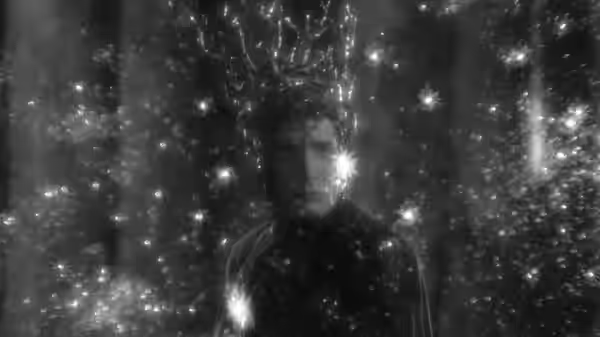
Hal Mohr shoots the forest through gauze, so that every branch carries a rim of light and the trees seem to glitter as if wet with frost. The fairies come down a shaft of light in a slow spiral, small figures in tulle, and Milo Anderson and Max Rée dress them in sequins and cobweb so that the whole troupe sheds light as it moves. There are long stretches with no dialogue at all, only Mendelssohn and dancing. The moment that got us comes near dawn, when a dark, hooded train gathers the fairies up and carries them away into the black behind the trees. Nothing is said. It is Mohr’s light, Mendelssohn’s horns and a great deal of chiffon disappearing, and it moved us more than a fairy ballet in a 1935 studio picture has any business doing.
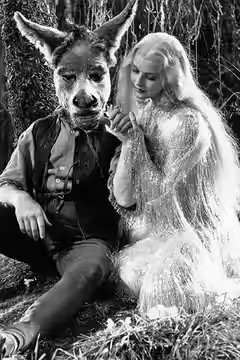
James Cagney is the reason to stay for the rest. His Bottom is a small-town ham who corrects everyone and wants every part, and Cagney plays him at speed, all elbows and certainty. When Puck gives him the donkey’s head, Cagney does something we did not expect: he catches sight of himself, and for a few seconds the mugging stops and he is frightened. Then the ham comes back. Joe E. Brown, as Flute, complains at being made to play Thisbe and then, in the play performed at the wedding, dies at a length that made us laugh out loud. Frank McHugh’s Quince, the company’s harassed director, is the third good clown, and the play-within-the-play is the funniest quarter of an hour in the film.
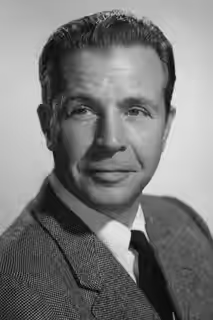
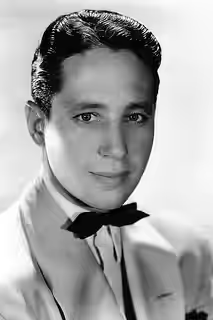
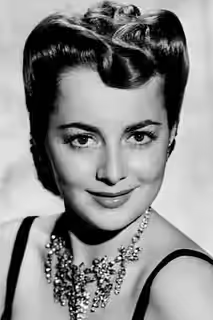
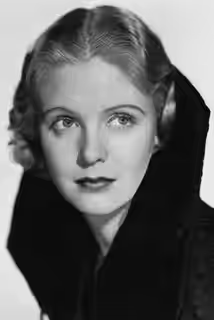
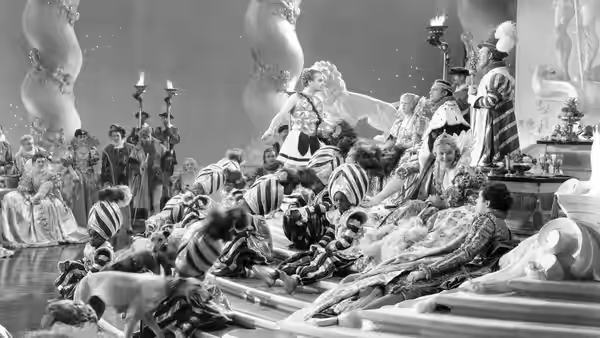
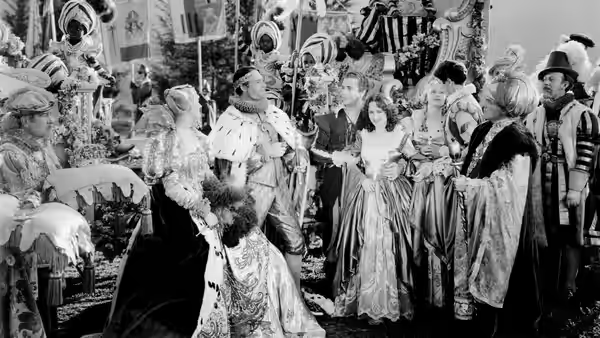
The lovers are the trouble. Dick Powell says Lysander’s lines as if reading them off a telegram, and Ross Alexander’s Demetrius is only a little easier. Olivia de Havilland, young here, is the one of the four who sounds as if she means what Hermia says, and Jean Muir’s Helena is tall and plaintive and gets her laughs. But the four-way quarrel in the wood, which ought to be the play’s best comic scene, is the stretch where we found ourselves wondering how much was left. Ian Hunter’s Theseus and Verree Teasdale’s Hippolyta are stately in a white palace and little more.
Then there is Puck. He is played as a feral thing, shrieking, cackling and rolling on the ground, and his laugh is a klaxon. We winced at it the first three times. Then we came round, because his is the only performance that treats the fairy world as dangerous rather than pretty, and Oberon, low-voiced and glaring at the centre of the night scenes, backs him up. Between them they give the wood a threat the design does not.
Charles Kenyon and Mary C. McCall, Jr. cut the text without breaking its shape, and the verse that survives is mostly the verse you would want. Ralph Dawson, editing, is more indulgent; the dances run long, and the second ballet is where we were bored and then irritated about being bored, because the film had just shown us it could do better. Henry Blanke produced, and the money is on the screen in every shot of the forest.
Set against the film’s own ambition, it is half a success. Reinhardt wanted a Shakespeare that looked like nothing else, and in the wood he got it. He also wanted it spoken well, and the studio gave him Cagney, Brown and de Havilland and then several people who could not do it. Watch it late, with the lights off, forgive the lovers, and wait for the tradesmen’s play.