Clint Eastwood’s slow, roomy chase film belongs to Kevin Costner and the boy beside him, and on the road it is close to fine. Every cut back to Eastwood himself, parked up with the police, lets the air out.
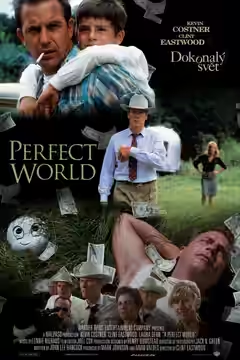
Clint Eastwood follows Unforgiven with a film that takes a convict, a lawman and a child, puts the two men at opposite ends of a chase across open country, and then declines to make a thriller of it. A Perfect World is a slow film in which the pursuer and the pursued barely share the screen, and it is good, sometimes better than good, whenever Kevin Costner is behind the wheel. Whenever it goes back to Eastwood, parked up with the police, it stalls.
The setup is quick. Butch Haynes (Costner) and Terry Pugh (Keith Szarabajka) come out of prison, break into a house and leave with a boy, Phillip Perry (T.J. Lowther), whose mother Gladys (Jennifer Griffin) has kept him from most of what other children are given. Terry wants the boy as something to hide behind. Butch does not know yet what he wants him for. Szarabajka plays Terry as a plain brute, and the film is rid of him early, which takes the only visible menace off the road and leaves Costner to supply it himself.
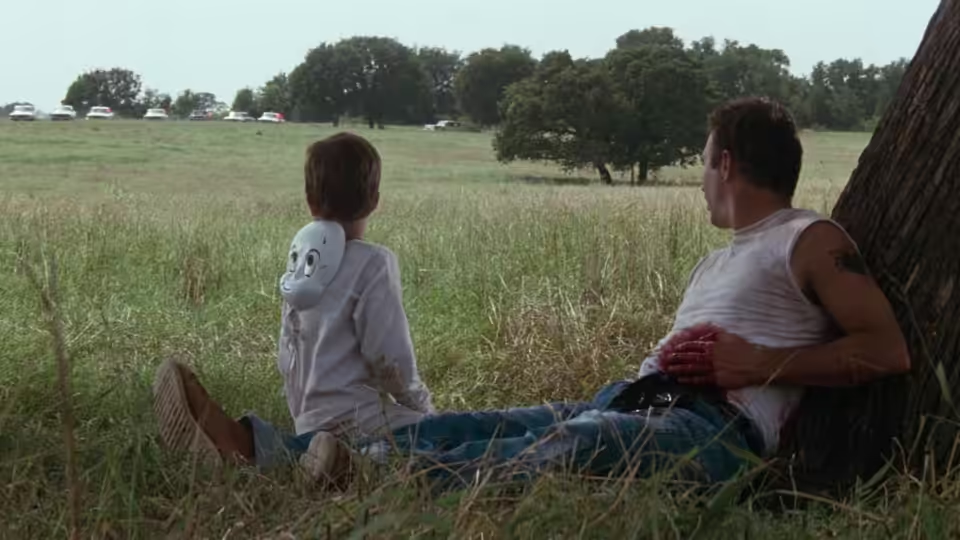
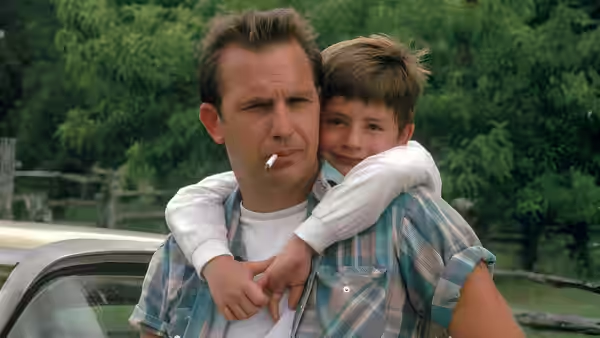
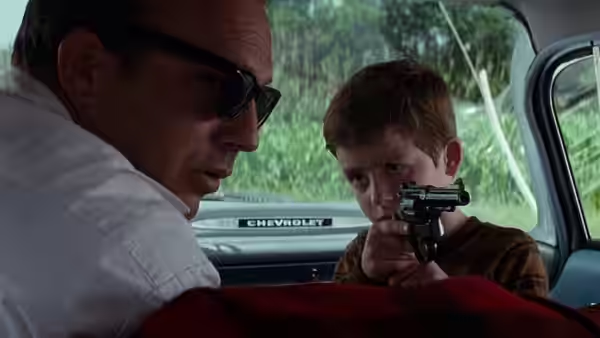
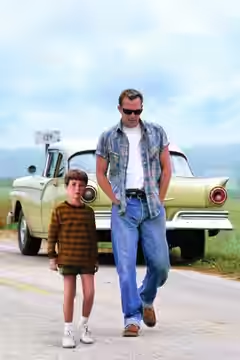
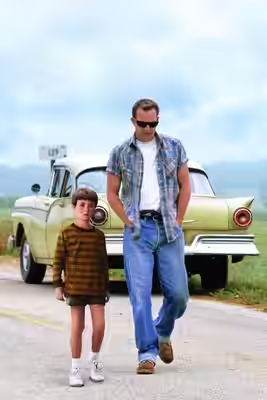
He supplies it quietly. Costner holds a gun as if he would rather be holding a coffee, talks to the boy as to a colleague, and lets a temper arrive with no warning at all, so that a scene in a shop or a farm kitchen can turn on a single sentence. Lowther barely seems to act: he watches Butch, reaches conclusions about him, and keeps them to himself. The small thefts Butch commits on the boy’s behalf, so he can have the things he was never allowed, are the film’s best idea, and Erica Edell Phillips dresses the pair in clothes that look picked up along the way, which is the point. We laughed when the boy, asked to list the things he has never done, comes up with such small ones, and we were caught off guard, later, by how much of the film turns out to be about that list.
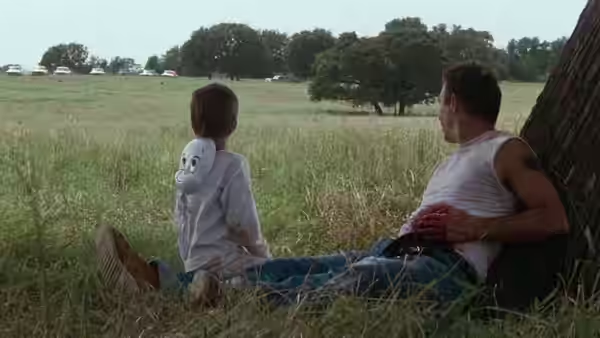
Jack N. Green shoots the country flat and wide, in low yellow light, with the stolen car a small bright thing on roads that have nothing on either side of them. Henry Bumstead’s farmhouses and filling stations look lived in rather than dressed, and he gives the police almost nothing to look at, which suits them. Lennie Niehaus writes a soft, spare score and is seldom asked to play it; most of what we hear is the car radio, and that is the right call.
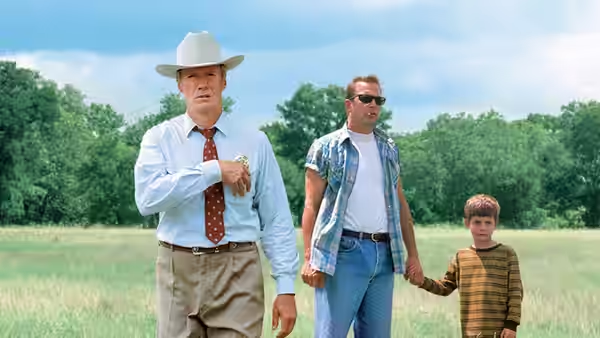
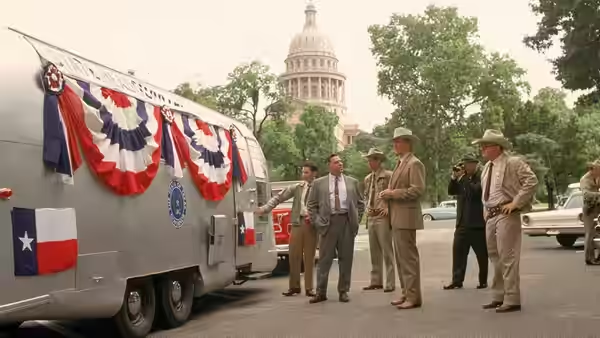
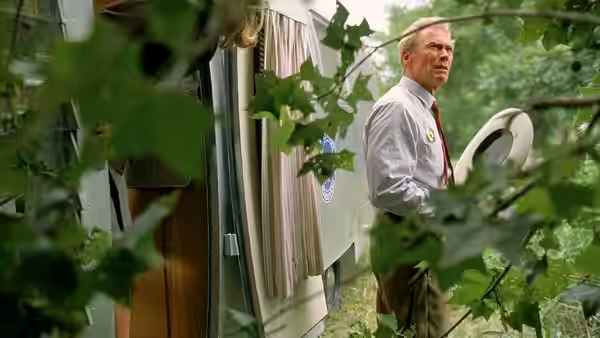
The trouble is everyone on Garnett’s side of the chase. Eastwood gives himself Chief Red Garnett, the man running the hunt, and plays him as a tired man with something on his mind he is not saying, which would be enough if the scenes around him had anything else to do. Laura Dern’s Sally Gerber is written as the person who is right and is told she is wrong, several times an hour, and Dern does what can be done with that. Bradley Whitford’s Bobby Lee is a sneer with a rifle. The editors, Joel Cox and Ron Spang, cut back to these people far more often than the story needs, and each time the film has to get itself moving again. It runs 138 minutes, and we felt about twenty of them with the police.
Unforgiven was about an old killer who could not stop. This is about a younger one who might have become something else, and Eastwood directs it with the same patience and less nerve. He is fonder of Butch than John Lee Hancock’s script has quite earned, and the film’s treatment of the boy’s mother and her strictness, as a joke and an obstacle, is the one cheap thing in it.
The last half hour takes the story somewhere we will not describe. We can say that it moved us more than we had expected, that it is Lowther’s face that does it and not the music, and that Green shoots it wide and nobody talks over it. It is a long way to travel for that half hour. If you like your chases slow and your outlaws polite, it is worth the drive. Sit through the police scenes, and keep your eye on the boy.