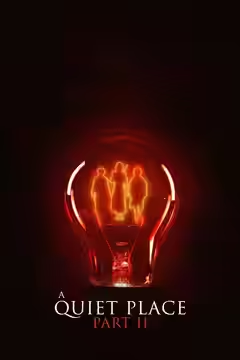
A tense, skilfully staged sequel, carried by Millicent Simmonds and an exacting use of sound. John Krasinski is less sure of the wider story, where contrived choices and hurried character development weaken the family’s hold on us.
John Krasinski has made a sequel that still knows how to make us sit still. A Quiet Place Part II is a tense, well-acted creature thriller, with enough care in its staging to survive some thin writing. Its attempt to take the Abbott family’s struggle into a wider world is less persuasive than its immediate business of getting people through danger. At 97 minutes, it does not waste much time, though the family sometimes needs more of it.
The opening invasion is the strongest stretch, with enough confusion to be frightening and enough clarity to keep us involved. We were frightened by the restaurant attack; the familiar setting makes the violence harder to keep at a distance. Jess Gonchor’s production design helps here, making the restaurant feel like somewhere people use rather than somewhere prepared for a scare. Polly Morgan’s cinematography gives us a clear sense of the space around the people once the panic starts. We can work out where someone might go next, and worry about their getting there.
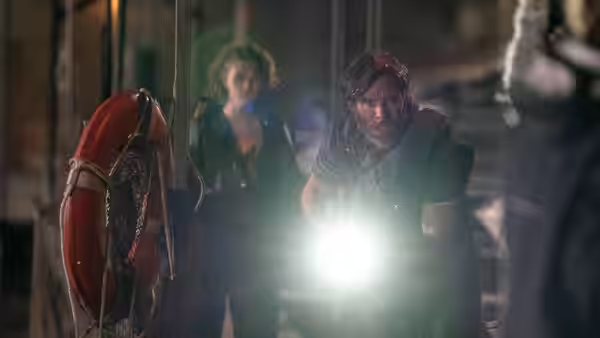
The sound is just as carefully judged. Small noises demand attention, and the shifts into Regan Abbott’s experience make listening an uncertain way of knowing what is happening. Marco Beltrami’s score increases the pressure without doing all the work for the creatures. There are moments when the sound gives a familiar scare more force than the writing deserves, but that is a useful skill in a horror film. We keep listening even when the next development seems fairly obvious.
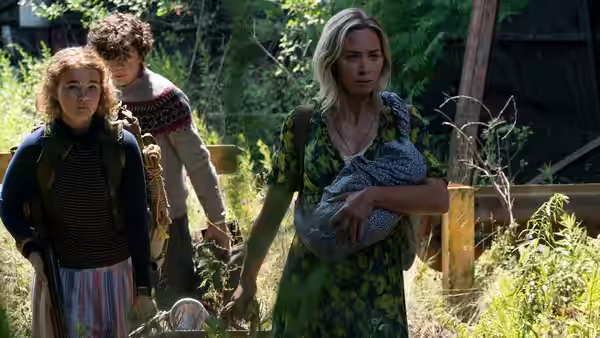
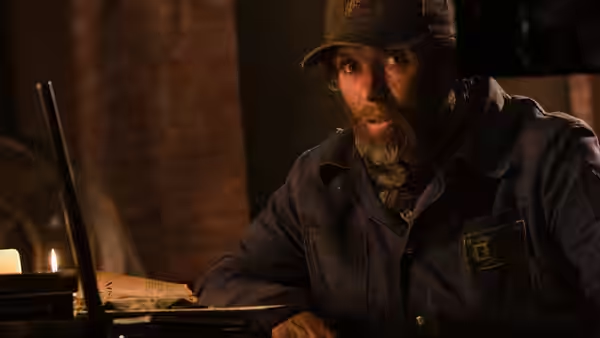
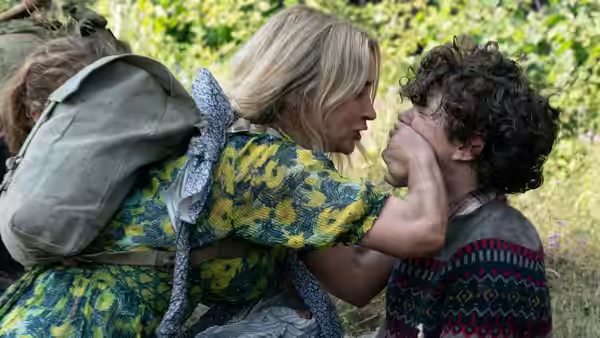
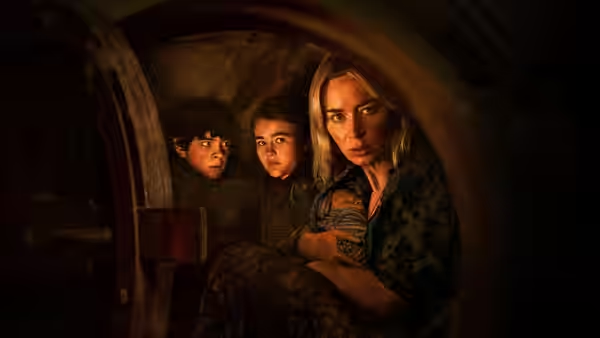
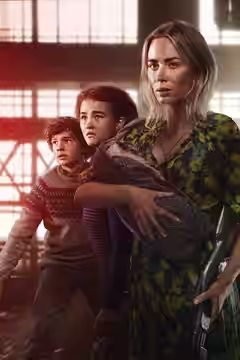
Millicent Simmonds gives Regan Abbott the firmness the story needs. She makes decisions feel considered, and makes the danger matter without continually advertising fear. Cillian Murphy, as Emmett, is an effective partner: their scenes hold our attention before anything threatening enters them. Emily Blunt’s Evelyn Abbott and Noah Jupe’s Marcus Abbott keep the family feeling vulnerable, although the writing gives its actors too little room between emergencies. The younger performances supply much of the emotional weight that the script leaves them to find.
Michael P. Shawver’s editing keeps the separate lines of action clear, carrying anxiety from one to another. The cross-cutting is skilful, although being moved briskly between predicaments sometimes makes the people feel as though they are waiting for their next turn. John Krasinski’s script also relies on choices that seem arranged to get another suspense sequence started. The wider threats are not all given enough attention to become interesting in themselves. These weaknesses seldom stop a scene working, but they leave less to think about once the immediate danger has passed.
By the standards of a creature thriller, the basic suspense is handled with care. The action does sometimes press too hard, giving the creatures enough exposure to make them less frightening. And the wider story has little to add about a family we still want to follow. If the genre is yours, Millicent Simmonds and the precision of the scares are good reasons to accept the thinner story. Save the conversation for afterwards.