Michael Sarnoski’s prequel is the smallest film in the series and the best, a sad and tender two-hander carried by Lupita Nyong’o. The monster sequences are the least of it, and by the second half they have started to repeat themselves.
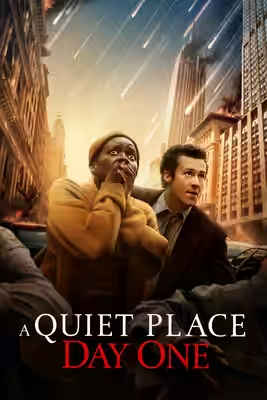
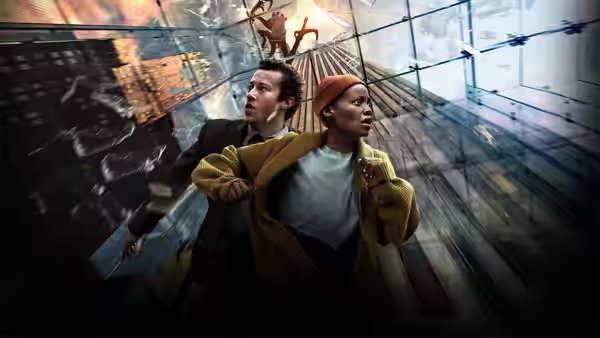
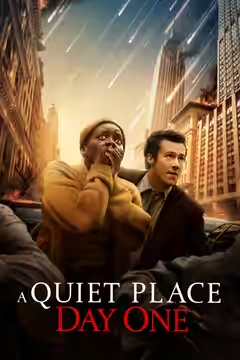
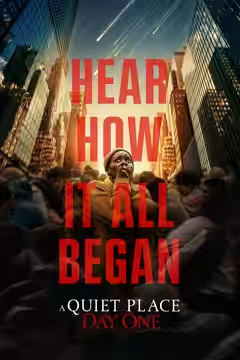
Michael Sarnoski’s prequel goes back to the first day of the invasion and puts it in New York, the loudest city it could have chosen. Samira (Lupita Nyong’o) is dying of cancer and living in a hospice; she agrees to a trip into Manhattan with the other patients, her cat in a bag, on condition that there is pizza afterwards. There is no pizza. Things fall from the sky, the bridges are blown to keep the creatures on the island, and the film’s 100 minutes become a walk uptown with a stranger. It is the smallest of the three films and the best, and its faults are the ones the series has always had.
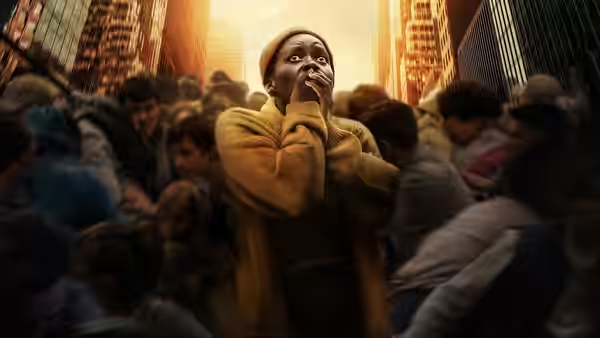
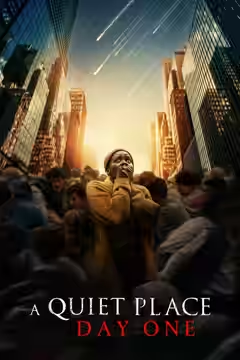
The first attack is the strongest thing in it. Pat Scola shoots the street at midday in flat, ordinary light, and then the ash comes down and the light goes with it, so that for a long stretch we are watching grey figures move through grey air. Sound is where this series lives and Sarnoski understands the trick: the noise of the city, crowds and horns and a helicopter overhead, cuts out, and what is left is breathing and a cat’s bell. We flinched at the first kill and then held still for ten minutes, and we were not the only ones in the cinema doing it.
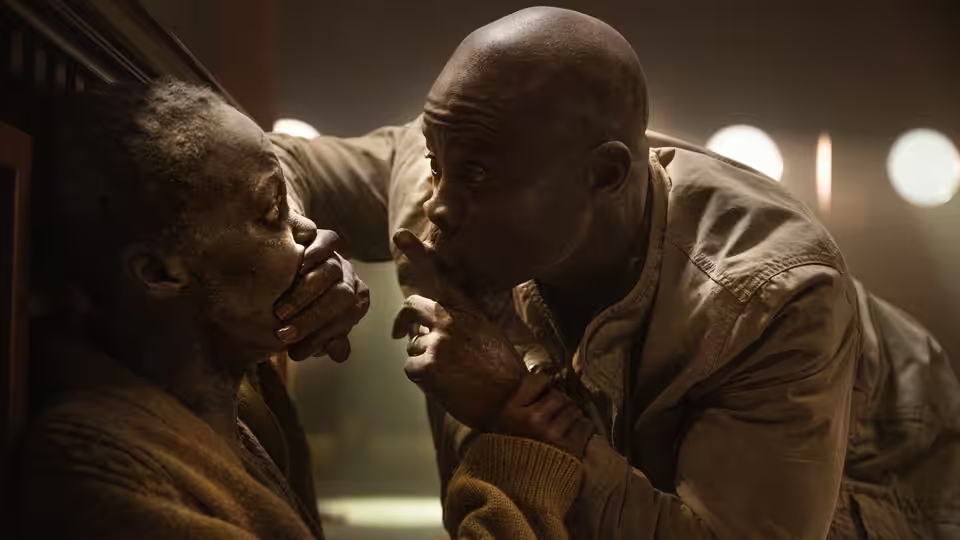
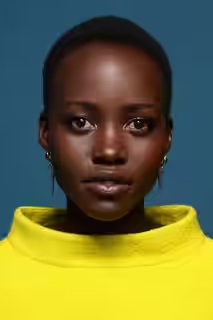
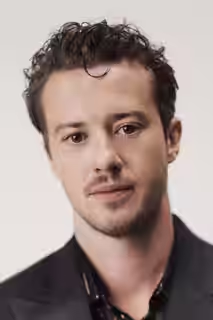
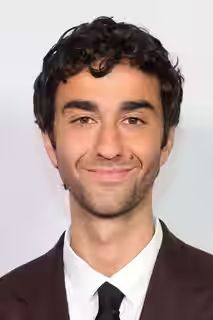
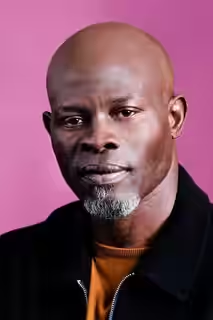
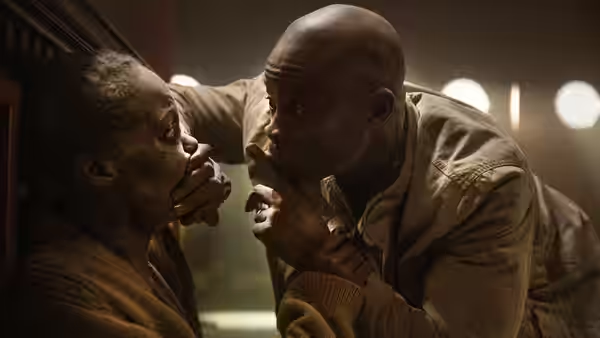
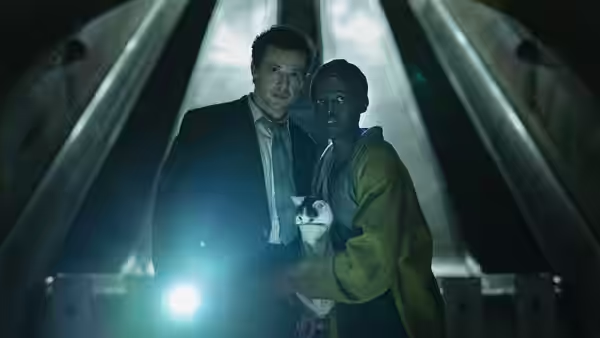
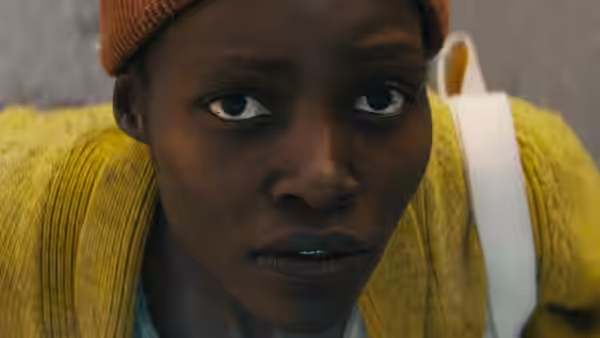
Nyong’o plays Samira as someone who has already done her grieving and is irritated to be asked to do more. She is impatient, funny in a way the script barely allows, and every so often the pain arrives and her face closes. It moved us more than we expected, and not the dying, which the film handles quietly and mostly off screen. What got us was the smallness of what she wants, one thing from before, on a day when everyone else is running for the river. Joseph Quinn’s Eric is soaked and frightened and useful, and Quinn plays the fear without the film having to write it for him. Alex Wolff, as the nurse Reuben, is warm for the time he is given. Djimon Hounsou, as Henri, is there to point at boats.
The cat is on screen for most of the film and never once does anything that would get everyone killed, which is either good training or a screenplay that needed him alive. He is also, plainly, the reason half the audience is there, and Sarnoski knows it and uses him for most of the laughs.
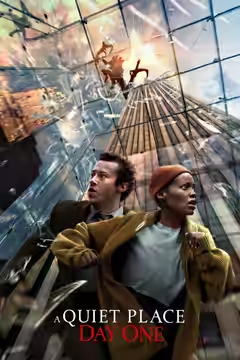
The trouble is the middle. Once the shape is set, the film needs the creatures to turn up every fifteen minutes, and each arrival goes the same way: a noise, a chase, a hiding place, a near miss. Gregory Plotkin and Andrew Mondshein cut these fast and close, and in the darker sequences, an escape through a flooded underground passage in particular, we lost track of where anyone was and which direction was safe. We were not frightened in these stretches; we were waiting for them to end so the two people could talk again. Simon Bowles’s wrecked city, dust-coated shopfronts and a church full of people not speaking, is better than the action staged in front of it. Alexis Grapsas’s score knows when to stop, which is rarer than it sounds, and when it is allowed to play it is mostly strings, low and sad.
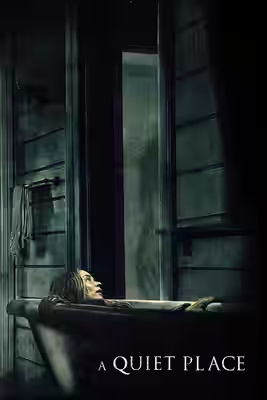
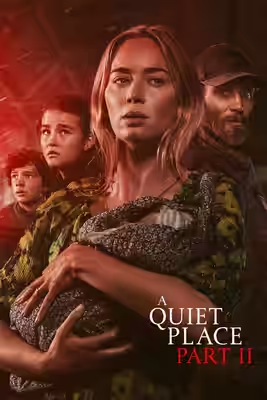
John Krasinski’s A Quiet Place (2018) was a family film in disguise, with a farmhouse and a cornfield and the rules written on a whiteboard. A Quiet Place Part II (2021) opened with a first-day sequence in a small town that was the best thing in it, and this film is that sequence stretched to feature length and given a better lead. Sarnoski, whose first film was Pig (2021), cares more about the people than the creatures, and it shows both ways. The aliens are still dull to look at, and the film tells us nothing new about them.
Michael Bay is one of the producers, which is the sort of fact that explains the helicopters. Watch it at home with the volume up and the lights off; it is a film about listening, and it does not outstay its welcome. It runs 100 minutes and carries a 15.