Richard Linklater’s traced-over adaptation of Philip K. Dick’s novel stays close to the book and is funny, sad and slow. Robert Downey Jr. is the reason to sit through the middle hour; the last twenty minutes are the reason it stays with you.
Richard Linklater films his actors in the ordinary way, has every frame traced over by hand, as he did in Waking Life (2001), and points the result at Philip K. Dick’s 1977 novel about a narcotics officer ordered to spy on himself. Bob Arctor (Keanu Reeves) lives in a sagging suburban house in Anaheim with two fellow addicts, takes Substance D with them, and reports to his superiors as Fred, inside a scramble suit that hides him from them too. Linklater stays close to the book, and to the sofa and kitchen where Dick set it. That is mostly a good thing, and it is why the middle hour is slow.
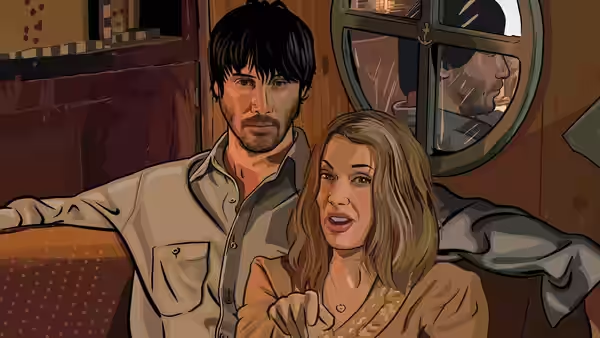
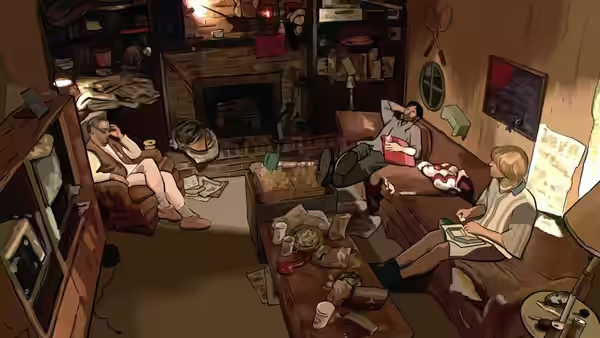
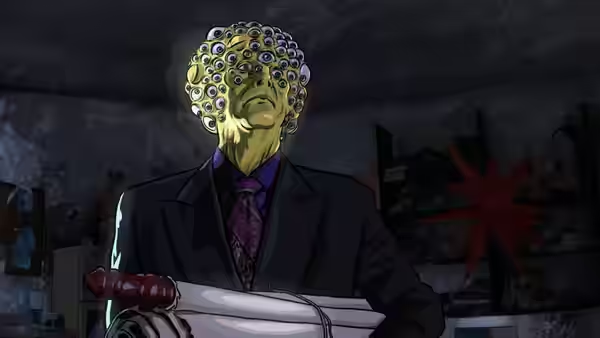
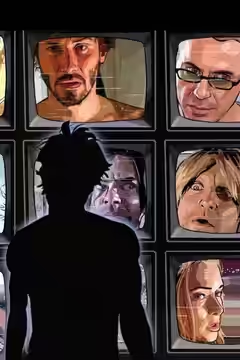
The tracing is the film. Walls breathe a little, shadows slide when nobody moves, and a face will hold still while the hair around it drifts, so that everything looks about two hours from coming apart. Shane F. Kelly’s photography underneath is plain and daylit, which is right: the strangeness is all in the drawing. The scramble suit is where the technique pays off most, a flickering skin of borrowed eyes and mouths and sleeves, a different stranger every fraction of a second. Bruce Curtis gives the house a brown sofa, brown blinds and litter on every surface, and the New-Path clinics a clean whiteness that is somehow worse.
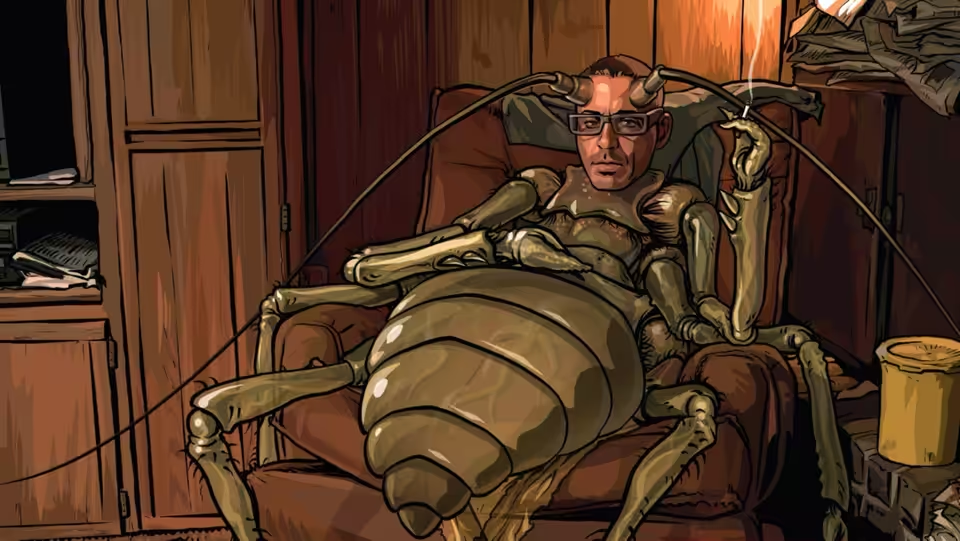
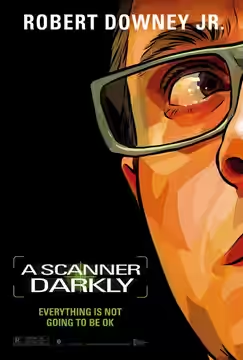
Robert Downey Jr. plays James Barris as a man who believes he is the cleverest person in every room and has never once been right. Kari Perkins puts him in glasses and a jacket with too many pockets, and he talks like a lecturer who has lost the thread but not the confidence. The scene in which Ernie Luckman (Woody Harrelson) brings home a bicycle and Barris works out, with a pen, that it has fewer gears than advertised is the funniest scene in the film, and a small tragedy, because it lasts as long as it would in life. Rory Cochrane’s Charles Freck opens the film in the shower combing aphids out of his hair, then out of the dog, and we were horrified, and then more horrified when we understood there were no aphids and the drawing had made us see them anyway. That is what the animation is for: the hallucination is as solid as the wall.
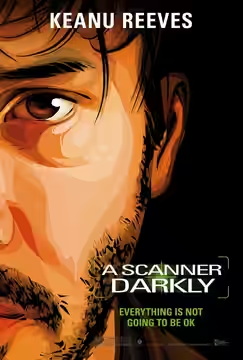
Reeves is well cast, which is not always said of him. Arctor is a man whose feelings arrive late and muffled, and the tracing flattens his face further, so the performance lives in the voice, and the voice is quietly good. Winona Ryder’s Donna Hawthorne is the only warmth in the house, a dealer who loves him a little and will not be touched. The trouble is the talk. Linklater’s screenplay keeps Dick’s dialogue nearly whole, which is why the film is funny and why it drifts; the fourth conversation about whether Barris is an informer is no sharper than the first. Sandra Adair lets scenes run to their natural end, and around the hour mark that patience costs the film its grip. Graham Reynolds’s score is a few nervous strings kept low, and it never tells us what to feel.
Then there is the scene in the living room. Fred sits in the suit and watches a recording of Arctor on the sofa, talking, and cannot follow what Arctor is saying, and Reeves does nothing with his face. It moved us more than we expected, and not because of the paranoia. What it shows is ordinary forgetting, a man losing himself at the speed of a household, and the film is at its best when the science fiction falls away and it is simply about that.
The big Dick adaptations each took a premise and built a chase around it: Blade Runner (1982), Total Recall (1990), Minority Report (2002). This one stays on the sofa. Most critics have landed about where we have, admiring the look and wishing the middle moved. We would add that the slowness is how the sadness gets in, and we did not mind waiting. It runs 100 minutes, carries a 15, and is best watched late, at home, with someone who has been to a house like that one.