Film review

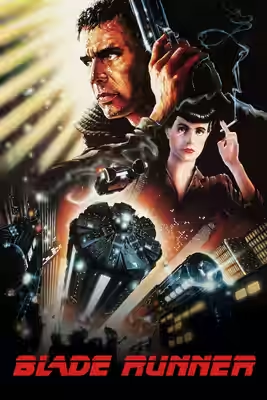
Blade Runner

1982 · Directed by Ridley Scott · 1h 58m · 15

In a sentenceThe future has perfected neon lighting and made no progress on cheering anyone up

Science FictionDramaThriller

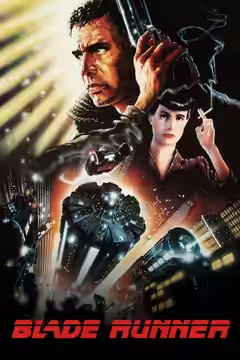
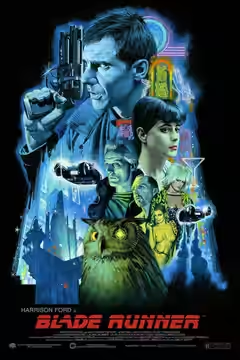
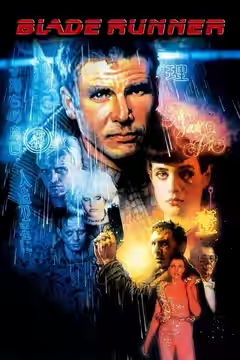
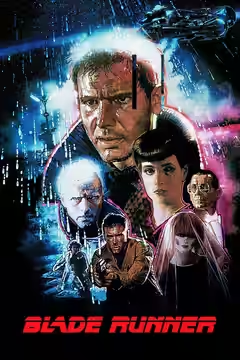
In a future Los Angeles, Deckard (Harrison Ford) is drawn into a detective story that raises questions about what it means to be human. Batty (Rutger Hauer) and Rachael (Sean Young) stand at the centre of those questions, as the city mixes technological sophistication with grime and decay. Ridley Scott directs this science-fiction thriller from a screenplay by Hampton Fancher and David Webb Peoples, adapted from a novel by Philip K. Dick. Daryl Hannah plays Pris, with Edward James Olmos as Gaff and M. Emmet Walsh as Bryant.

Plays from YouTube when you press play; nothing loads from them until then.

Fi1m review

Ridley Scott’s Blade Runner makes its bleak future so persuasive that the thin detective story nearly ceases to matter. We recommend it for the city, Vangelis’s music and Rutger Hauer, with patience for its chilly pace.

Ridley Scott’s Blade Runner deserves the time it asks us to spend in its bleak future, though its detective story can be frustratingly thin. We recommend it warmly, with that reservation. Scott makes technological sophistication look perfectly compatible with a miserable existence, and he is persuasive enough to make the slow pace feel mostly justified. The city holds our attention even when we would welcome a little more from the people moving through it.

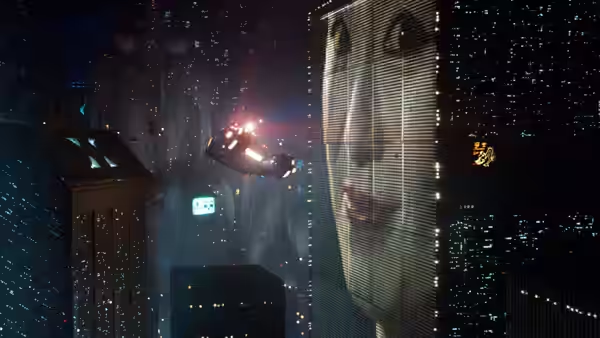
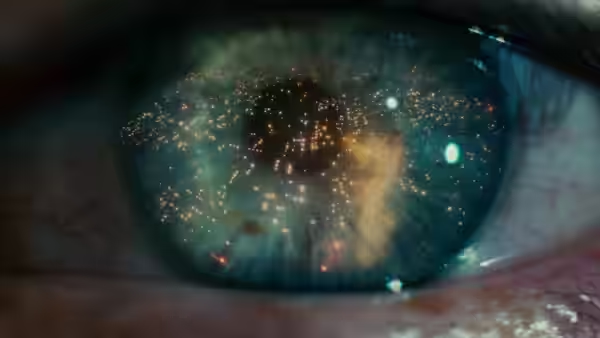
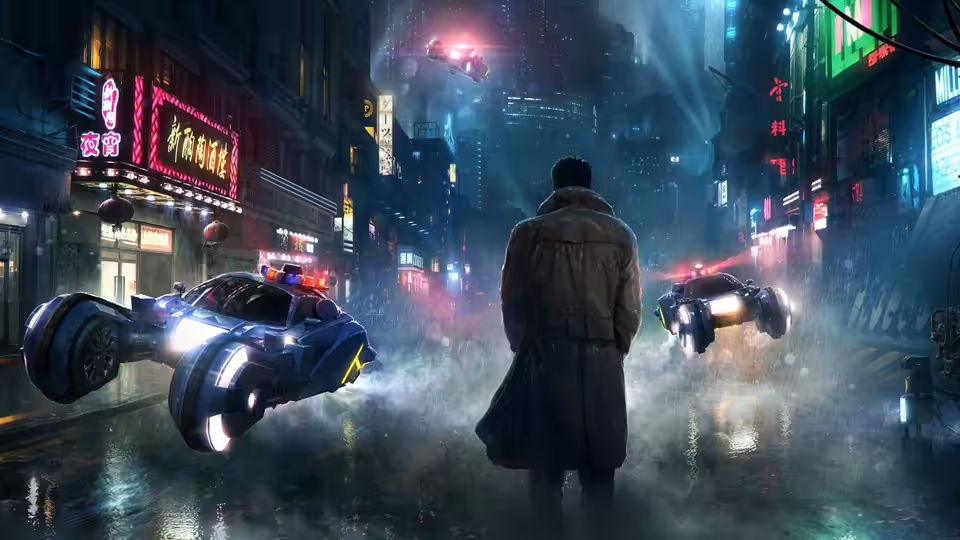
Lawrence G. Paull’s production design gives this Los Angeles its uneasy mixture of sleek surfaces and grime. Nothing about the sophistication of the place suggests that anyone has become happier. Jordan Cronenweth’s cinematography makes the neon oppressive, keeping the city from becoming a collection of attractive things to look at. We felt lonely watching it; the light promises excitement, but the dirt and bleakness make the prospect of living there dispiriting. That response matters because Scott needs us to feel the unpleasantness beneath the spectacle.

Vangelis’s music gives the film much of its sadness, and makes its coldness easier to bear. It helps the long stretches of atmosphere hold our interest when there is little urgency in the investigation. Marsha Nakashima’s editing gives that music room, allowing the slow pace to become part of the pleasure. Some passages would benefit from a firmer cut, but at 118 minutes this never feels like a film that ought simply to have been made faster.

Harrison Ford’s Deckard is an awkward centre for all this. Ford’s reserve suits the film’s chill, but it also makes an already spare detective story harder to care about. We understand the attraction of withholding easy charm in a thriller about humanity; the difficulty is that Deckard can leave a scene feeling scarcely more interesting than when he entered it. Sean Young’s Rachael benefits more from the same coolness, because her composure makes us want to look for what is troubling her.

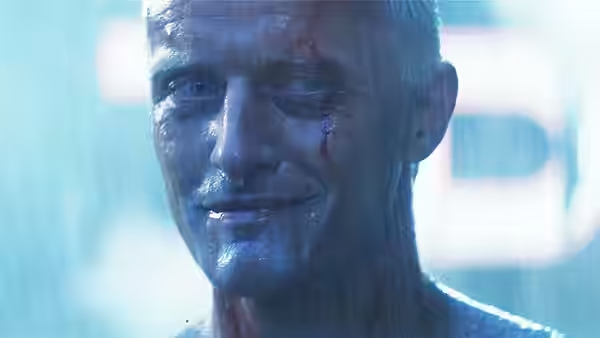
Rutger Hauer makes Batty the more absorbing presence. There is an alertness in his performance that makes the film seem more urgent whenever he is present, even when the pace remains deliberate. He makes its questions about humanity feel personal, without requiring us to stop and formulate an answer. That helps Hampton Fancher and David Webb Peoples’s screenplay considerably, since its interest in what makes someone human is not always matched by its attention to what makes an investigation compelling.

Scott’s future belongs to the untidy end of science fiction, where technology has not resolved the problems of living alongside other people. The grime matters because it makes progress look uneven and gives the polished surfaces something unpleasant to sit against. The city suggests plenty about how people might live there without needing the detective story to explain it all. Even when Fancher and Peoples’s storytelling falters, the surroundings keep supplying reasons to pay attention.

Give it an evening when there is no need to hurry it along. The lighting and the music deserve attention, and a distracted viewing will leave the thinness of the plot unusually exposed. If tonight calls for a brisk case to solve, choose something else.

Critical consensus AI synthesised

80
Positive
6
Mixed
1
Negative
0

Most critics respond warmly to Blade Runner, with praise concentrated on its densely detailed future city, production design and special effects. The reviews repeatedly return to the mix of sleek surfaces, grime and neon, crediting Ridley Scott with making the setting compelling even when the detective story is less persuasive. Rutger Hauer’s performance also draws particular praise, while several critics find lasting substance in the film’s questions about humanity and its bleak atmosphere.

The main disagreement concerns how well the storytelling holds up beside the images, with responses ranging from qualified admiration to strong enthusiasm. RogerEbert.com and The New York Times both argue that the effects overwhelm the story, with the latter offering the most mixed assessment. Time Out’s enthusiastic response specifically concerns the restored Director’s Cut, which it finds clearer and emotionally richer; the different versions therefore matter to how these reviews judge the film.

Time Out
10 September 2012 · NF
90*

This restored Director's Cut removes the studio-imposed voice-over and happy ending that marred the original theatrical version. The result is a flawless masterpiece that clarifies the story and deepens its emotional and thematic layers.

Read the full review →
The Hollywood Reporter
21 June 2016 · Robert Osborne
85*

The critic finds the film a cold, bold, bizarre and mesmerizing futuristic detective thriller that is a triumph for Scott. He singles out the strong sense of style and relentlessness, along with breathtaking production design and special effects.

Read the full review →
Empire
1 January 1982 · Andrew Collins
80*

The critic notes the film's initial commercial failure leading to cult status and later critical reappraisal upon re-release. He highlights its compelling vision of a future blending sleek and ugly elements alongside its rich allegory.

Read the full review →
RogerEbert.com
2 June 1982 · ★★★/4 · Roger Ebert
75

The film is a stunning visual achievement in its futuristic world-building and special effects but fails as a story, with the technology overwhelming the characters and narrative.

Read the full review →
The New York Times
25 June 1982 · Janet Maslin
60*

Ridley Scott's film offers a meticulously detailed and mesmerizing view of a bleak future Los Angeles but is muddled, with special effects running away with the story.

Read the full review →
Collider
3 August 2022 · A · Rae Torres
95

The critic calls the film a visual and atmospheric masterpiece whose slow pace and philosophical questions about humanity still resonate decades later. Particular praise goes to the iconic 'Tears in Rain' monologue and Rutger Hauer's performance, though the sex scene is noted as dated.

Read the full review →

Cast

Stills

Awards

Academy Awards, 1983

Nominated
Best Production Design
Nominated
Best Visual Effects

BAFTA Film Awards, 1983

Nominated
Best Editing
Nominated
Best Makeup and Hair
Nominated
Best Original Music
Nominated
Best Sound
Nominated
Best Special Visual Effects
Won
Best Cinematography
Won
Best Production Design

Golden Globes, 1983

Nominated
Best Original Score

Hugo Awards, 1983

Won
Best Dramatic Presentation

Saturn Awards, 1983

Nominated
Best Director
Nominated
Best Science Fiction Film
Nominated
Best Special Effects
Nominated
Best Supporting Actor

Los Angeles Film Critics Association Award for Best Cinematography, 1982

Won
Los Angeles Film Critics Association Award for Best Cinematography

If you liked this, try…

Metropolis poster

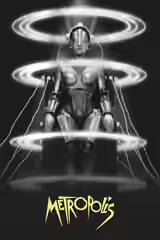
Metropolis

1927 · A divided future city gives its questions about labour and humanity physical scale.

Alphaville poster

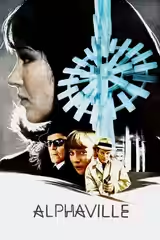
Alphaville

1965 · A colder, stranger detective story for anyone drawn to science fiction’s moral unease.

Ghost in the Shell poster

Ghost in the Shell

1995 · Artificial bodies and troubled identities, with action that never makes the questions disappear.

Gattaca poster

Gattaca

1997 · Another carefully controlled future where being human comes with an administrative qualification.

Solaris poster

Solaris

1972 · For the patient viewer, more science fiction that makes memory feel painfully personal.