David Cronenberg makes writing look diseased, absurd and oddly compelling. Naked Lunch is worth seeing for Peter Weller’s deadpan performance and its creatures, though the wandering story can become a chore.
David Cronenberg treats William S. Burroughs’s novel as permission to make a film about writing, addiction and the trouble of knowing what is real. Details from the author’s life mingle with his fiction, without the reassurance of a conventional biography. Naked Lunch is funny, repellent and worth seeing if strange creatures and uncertain realities are your sort of evening. It also wanders enough to test that appetite. Cronenberg has found a persuasive way to film a writer’s obsessions, but he sometimes seems too satisfied simply to put another one on display.
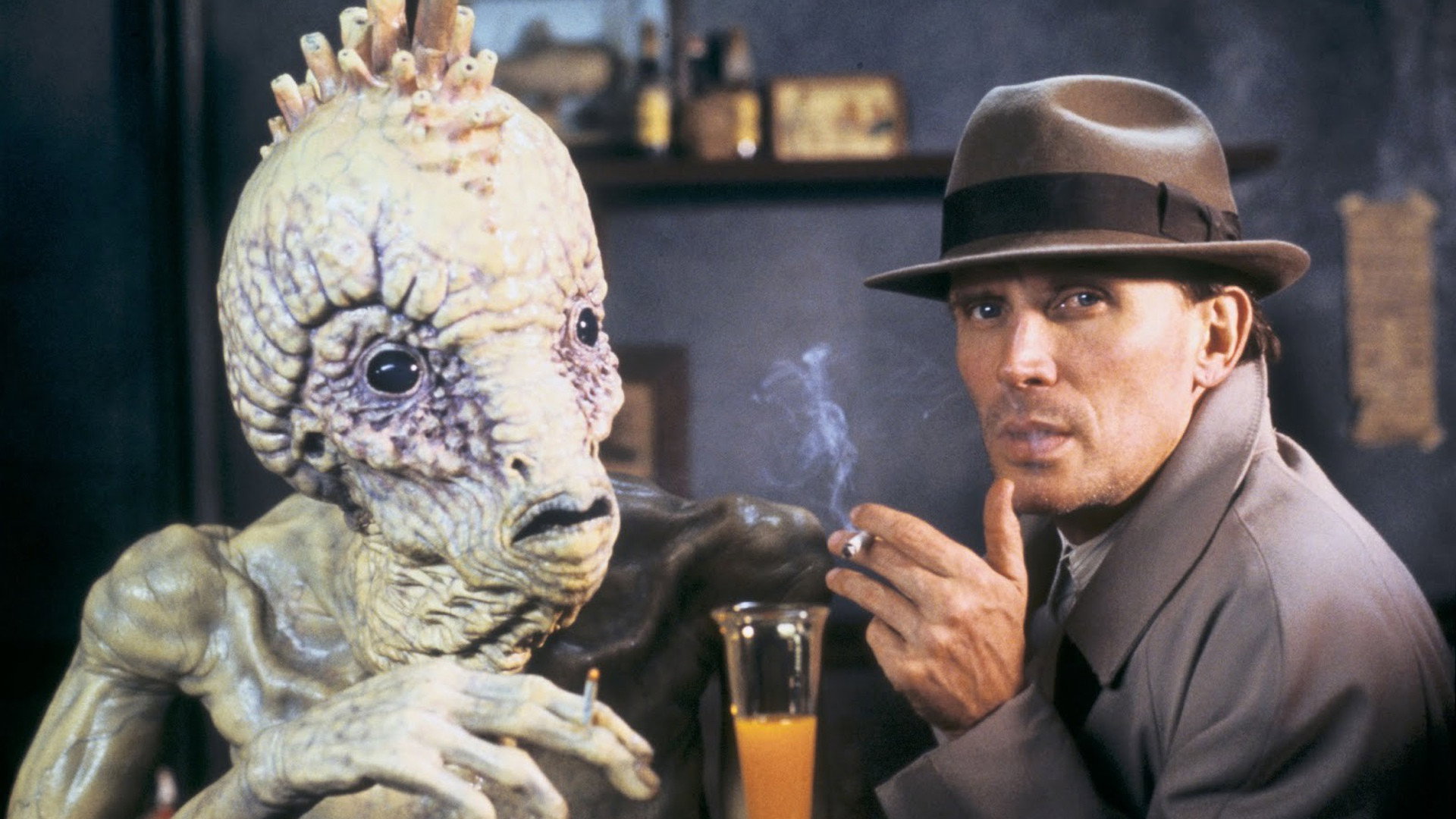
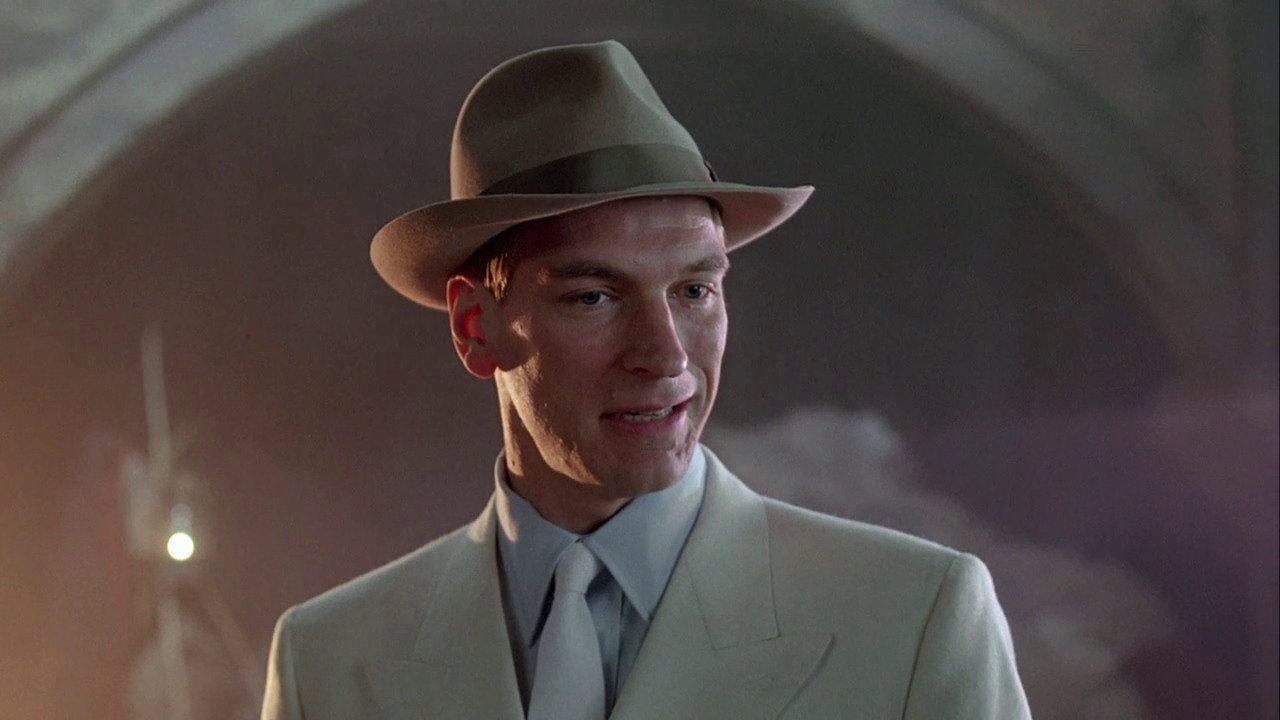
Peter Weller holds it together as Bill Lee, an exterminator who enters the hallucinatory Interzone. His deadpan delivery lets the absurdity remain matter-of-fact, without signalling that we should congratulate the film on its daring. A more demonstrative performance would make the creatures seem like illustrations of a man’s distress. Weller gives the impression that the distress has become ordinary, which is considerably less reassuring. At times that reserve makes Lee hard to care about, but it keeps the humour dry.
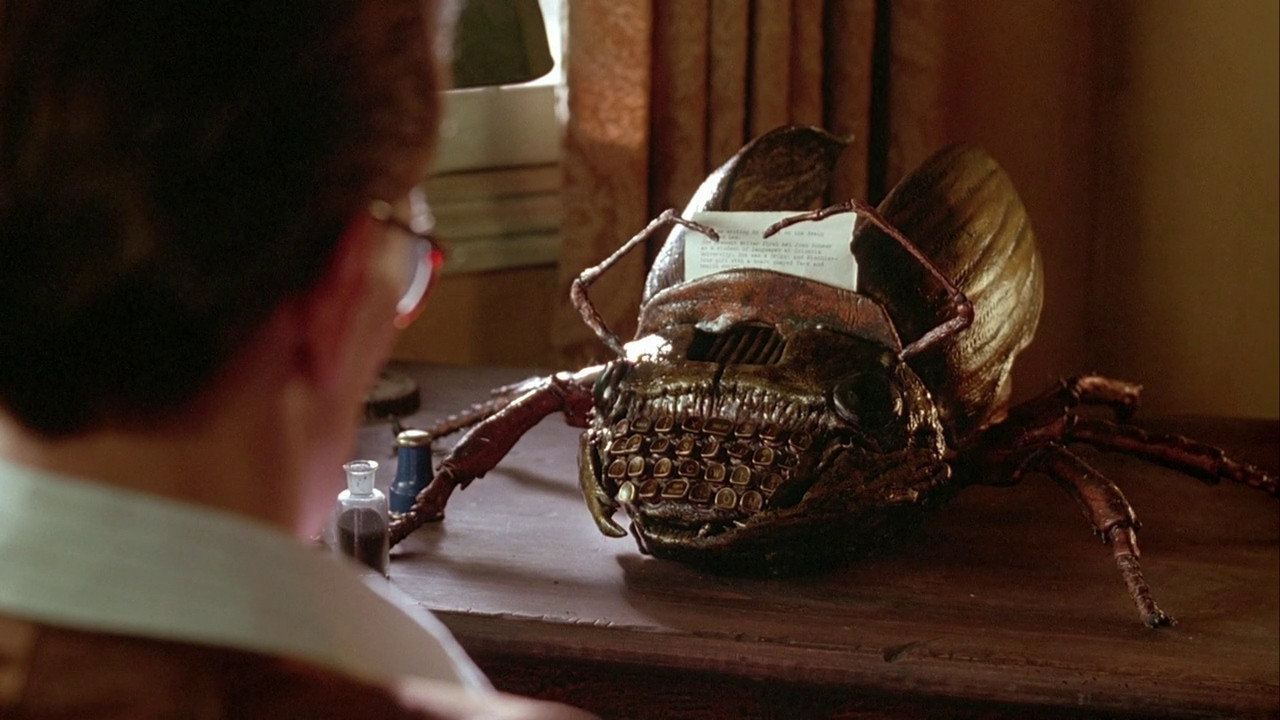
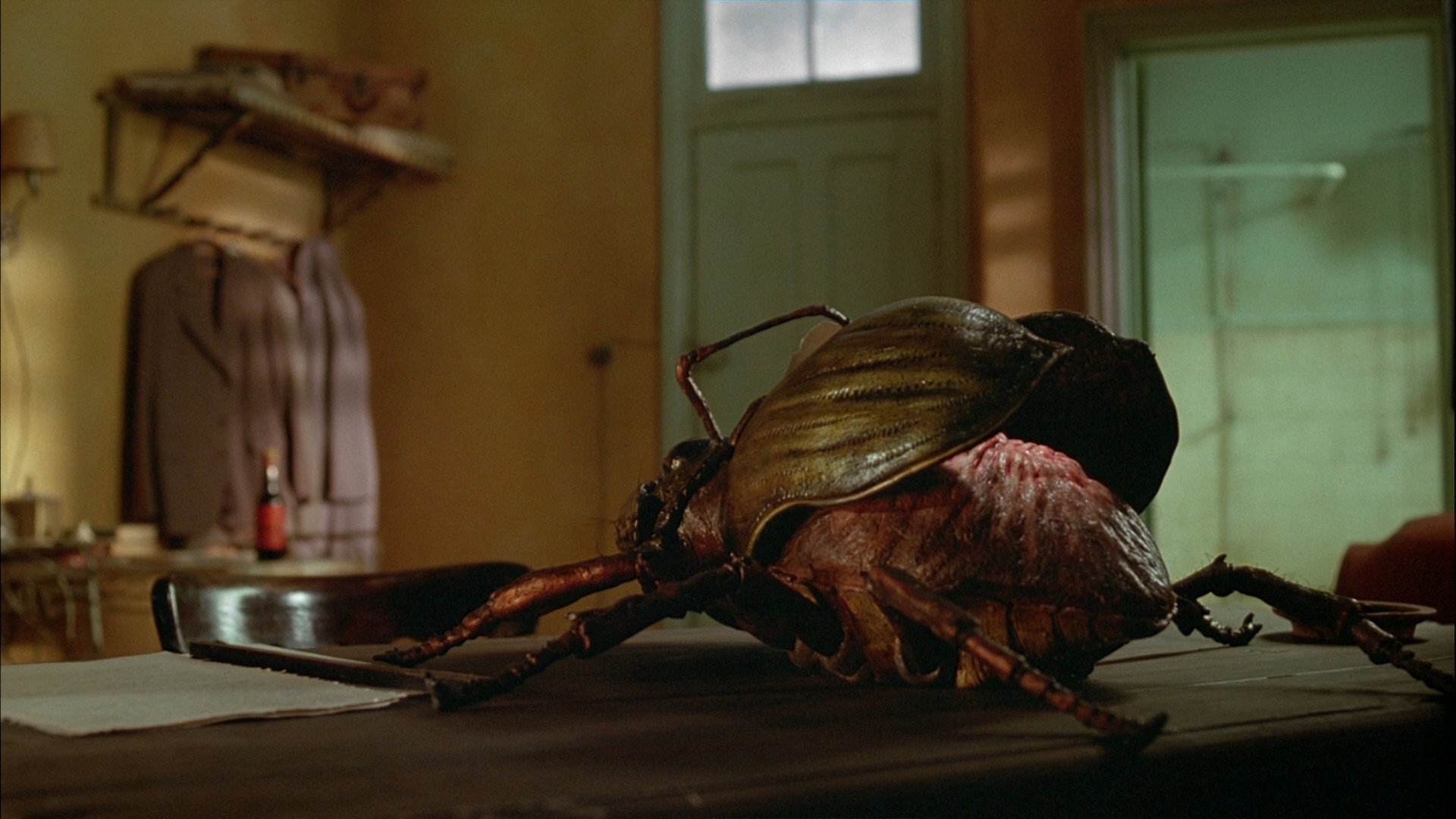
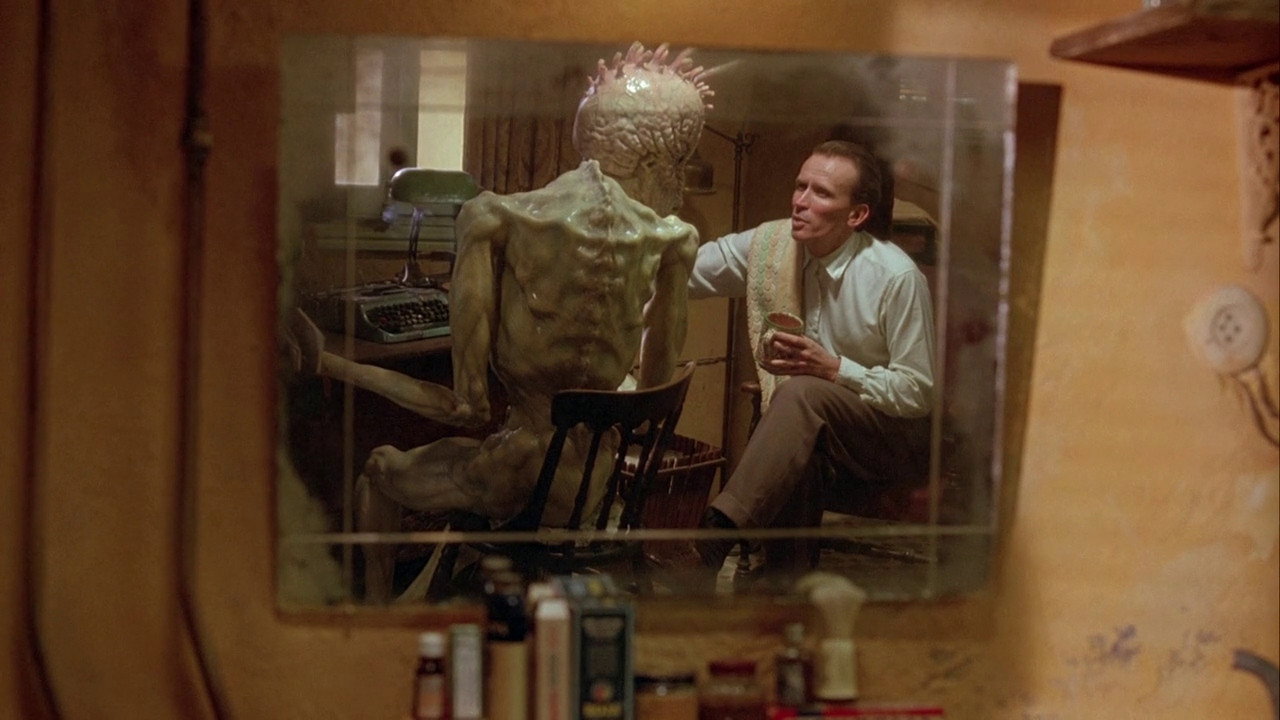
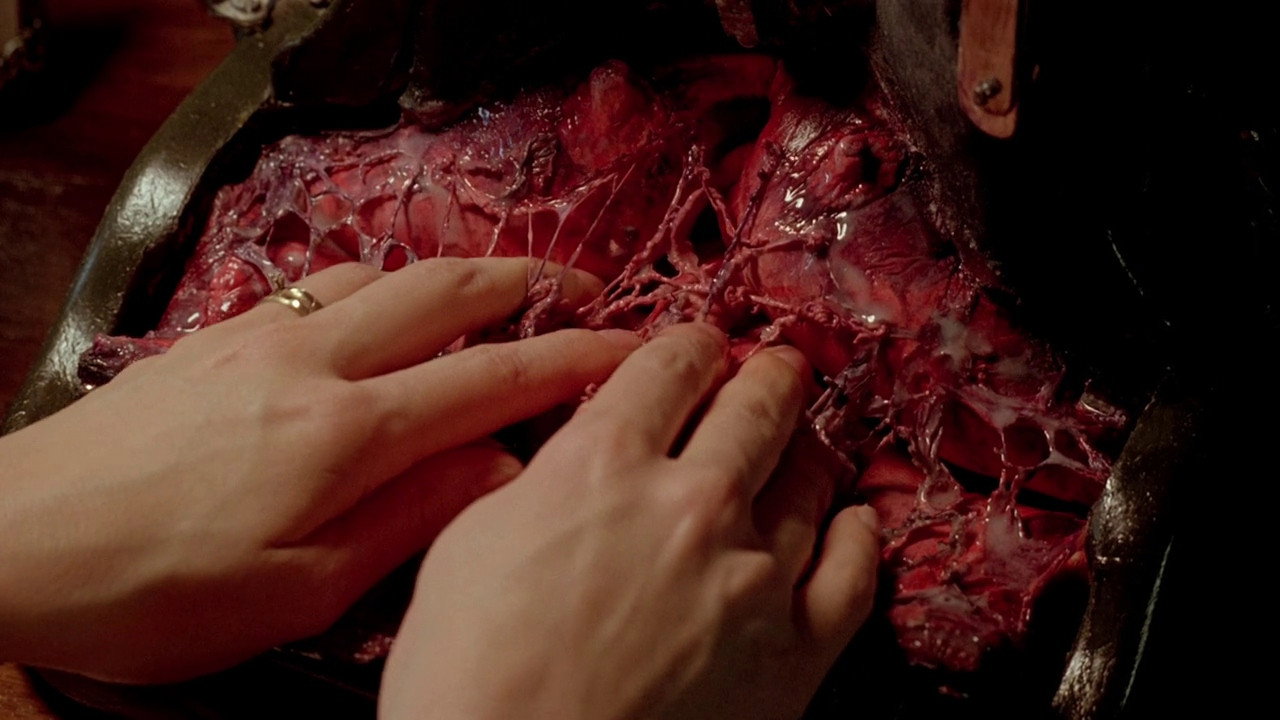
We laughed at the talking typewriters; the prospect of a writer’s equipment joining the conversation is an excellent nuisance. The giant insects made us recoil. Their animatronic bulk gives disgust something definite to work on, even when their meaning remains obscure. Carol Spier’s production design makes Interzone look manufactured, and the lack of a convincing everyday world suits Lee’s hallucinations. The creatures seem at home in these spaces, and that makes them harder to dismiss.
Peter Suschitzky’s cinematography gives those creatures enough physical solidity to survive close attention. We can inspect what repels us, and that is essential to the film’s peculiar humour. The music by Howard Shore and Ornette Coleman is just as important to keeping the experience uneasy. It offers little comfort, though its restlessness becomes a pleasure of its own. The score holds our attention through passages where another grotesque invention would have been less welcome.
Following Lee becomes less rewarding as the film goes on. Cronenberg the screenwriter keeps returning to addiction and the fear that writing might be destructive, but the repetitions do not always deepen either idea. Ronald Sanders’s editing allows the hallucinations to occupy the film without much relief; eventually the next strange encounter starts to feel predictable. Some passages need the patient pace, particularly when the absurdity is still sinking in. Elsewhere, the film seems reluctant to leave behind an invention simply because it has run out of things to do with it.
As body horror, this has the advantage of making an ordinary activity seem physically unhealthy. The typewriter is an everyday tool made troublesome, and the joke works without a knowledge of Burroughs. Cronenberg is less convincing when he makes the artist’s destructive behaviour seem profound simply because it feeds the work. Weller’s reserve is more persuasive than these suggestions of what writing costs a person. This is one to watch with someone who does not need every oddity explained before going to bed.