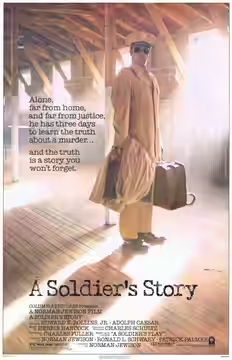
Norman Jewison films Charles Fuller’s play as a plain, well-acted whodunit, and the mystery is the least of it. Adolph Caesar’s Sergeant Waters, killed before the story starts, is the reason to watch; the flashback machinery around him creaks.
Norman Jewison’s film opens on a Louisiana road at night in 1944. A Black sergeant, drunk, staggers in dress uniform, shouts at nobody that they still hate you, and is shot. Charles Fuller, adapting his own play, then sends a Black captain from Washington to find out who did it, into a base full of men who know more than they say and a white command that would rather he went home. It is a whodunit in shape; its real business is the dead man, and it is a good film, with the seams of the stage still showing.
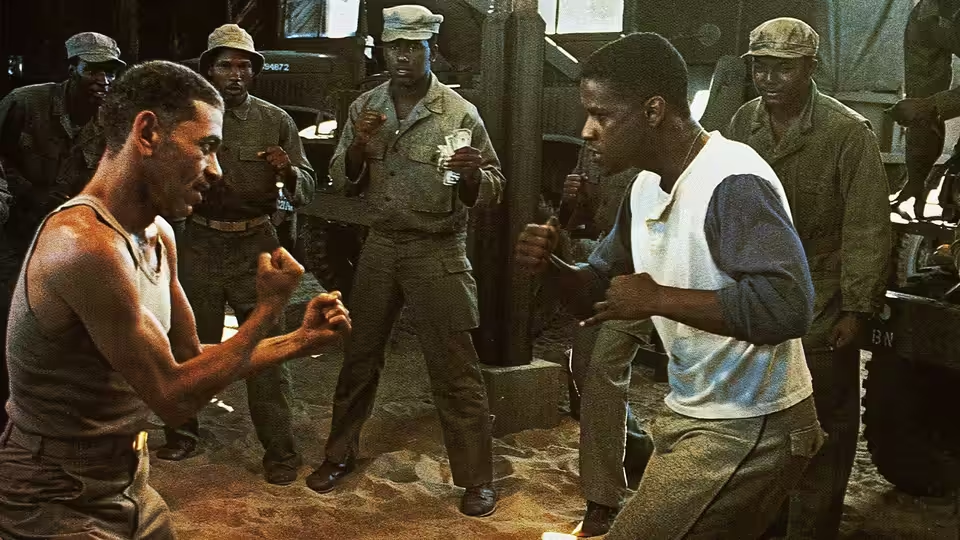
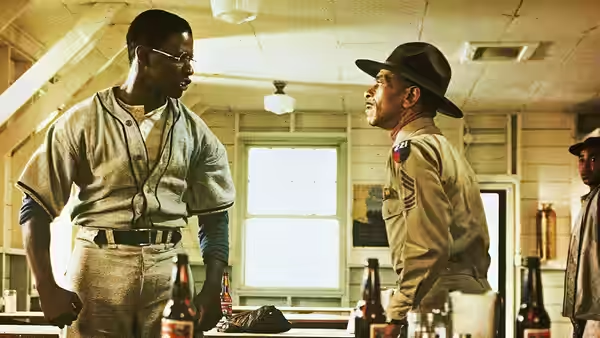
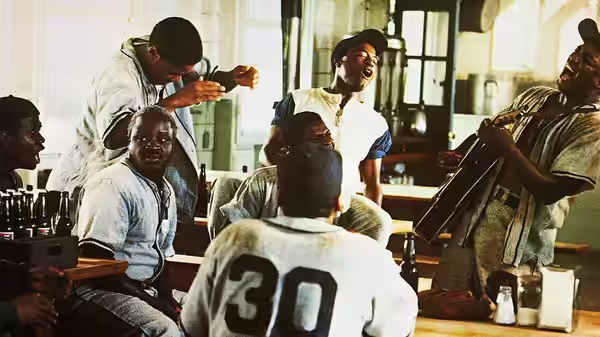
Adolph Caesar gives Sergeant Waters a parade-ground bark, a small, hard body held stiff as a rifle, and a contempt for the southern-born men under him that he expresses with an ugly word and means as a diagnosis. Waters believes the race will be judged by its worst and has set out to weed them out, starting with Larry Riley’s C.J. Memphis, who sings, drinks and plays ball and cannot understand what he has done wrong. We found Caesar frightening, and not in the shouting. It is a quiet scene with Wilkie in which he explains, reasonably, almost kindly, what he has in mind for men like C.J., and we realised he had taken his enemies’ opinion of him and made it his own.
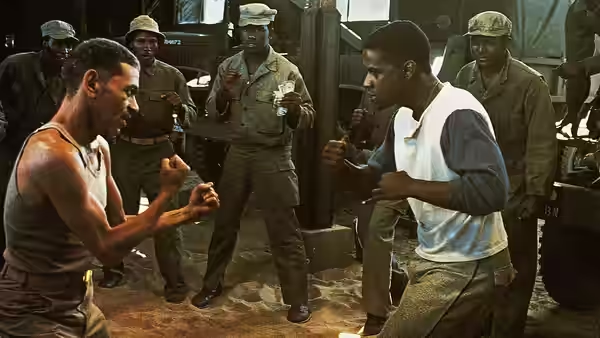
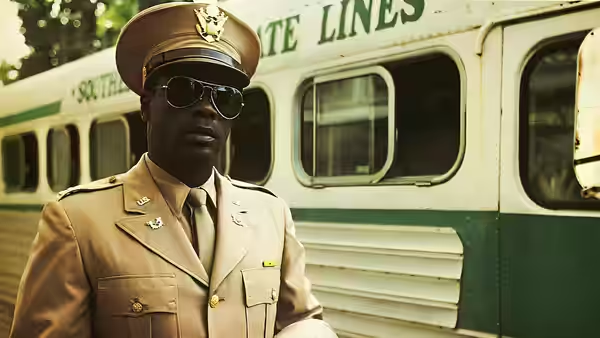
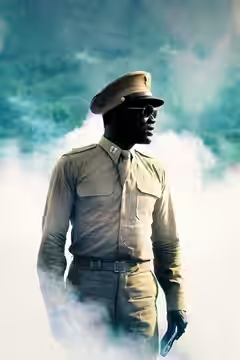
Howard Rollins plays Davenport behind dark glasses and a clipped Washington manner, and the film wants him as a witness rather than a man: a rank, a briefcase, a principle, and little else to want. Dennis Lipscomb’s Captain Taylor, who assumes the Klan did it, is not a villain; he is a decent officer who thinks a Black investigator will get his men hurt, and the film lets him be half right about the danger and wrong about the man. Denzel Washington’s Peterson is the one private who will square up to Waters and take the beating for it. Art Evans’s Wilkie, stripped of his stripes, gives the smallest and most exact performance, mostly with his eyes.
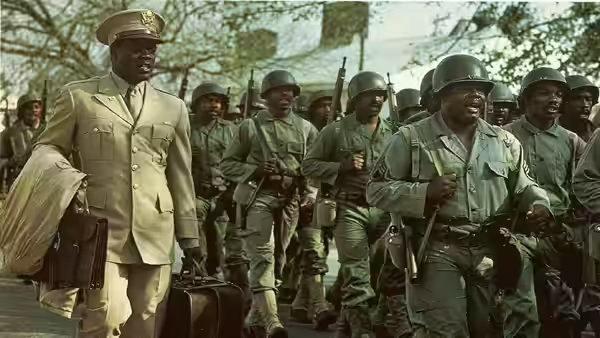
Russell Boyd shoots the base in dust and late sun: the barracks in amber, the ballfield bleached white, the road where Waters dies a cold blue. Walter Scott Herndon’s Fort Neal is clapboard, screen doors and one bar off the post, Big Mary’s, where Patti LaBelle sings and rank is forgotten for an evening. Herbie Hancock’s score keeps its head down, brass and blues in the period’s colours, and rightly; the talk is the music here. Caroline Biggerstaff and Mark Warner cut each interview so it dissolves into what the man remembers and back, and by the fourth time we could feel the switch being thrown.
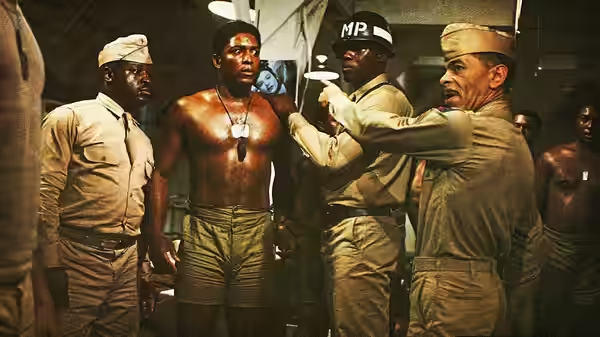
That is the film’s trouble, and one prominent review called it mechanical, not unfairly. The structure is a stage structure, sit down, remember, stand up, and the ballgames, marching and jeeps Jewison adds do not disguise it. The film is about segregation and shows little of it: white faces staring at Davenport’s captain’s bars when he arrives, a bar full of hard looks, and the rest in what the men say. And when the answer comes, which we will not describe, it is tidier than the man it explains. Waters is a knot; the solution is a bow.
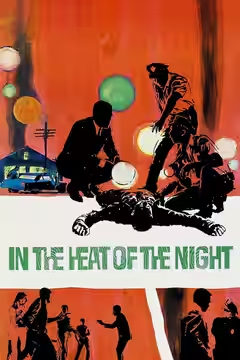
Jewison had been here before. In the Heat of the Night (1967) also sent a Black detective into a Southern town that did not want him, against a white policeman who came round slowly. That film had Sidney Poitier and Rod Steiger; this has less wattage in the lead and a harder subject, because what Davenport uncovers is not only the sheriff’s kind of hatred. Jewison is less showy here and more honest about how little one good man’s arrival fixes.
It runs 101 minutes. See it for Caesar, who is dead in the first scene and owns the film anyway; stay for Evans and Riley; forgive the joins between interview and memory, because what they carry is worth the creak. It plays well at home, where the stage bones matter less and the faces are closer.