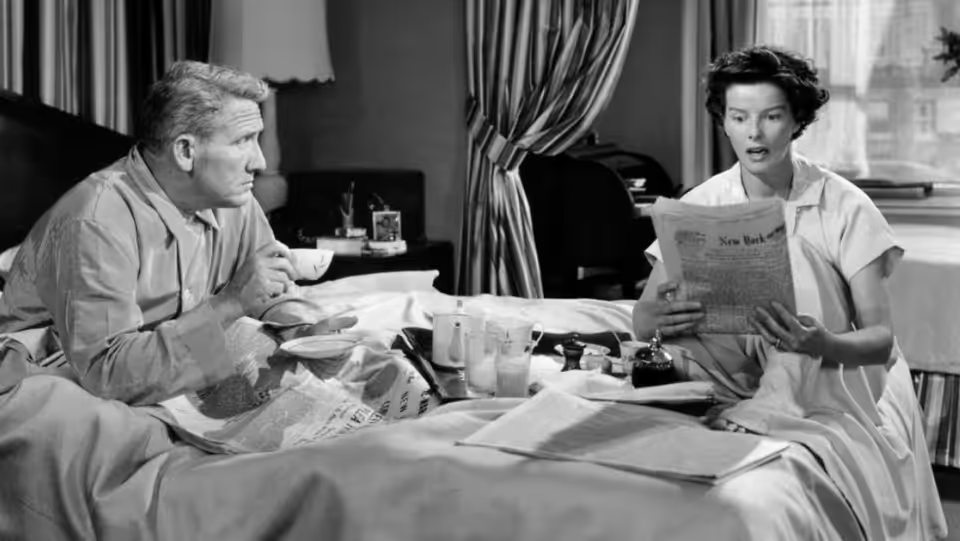
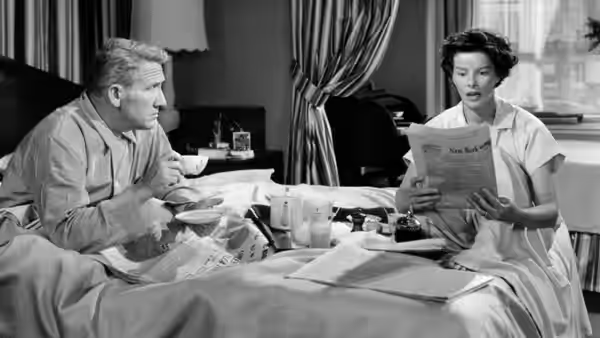
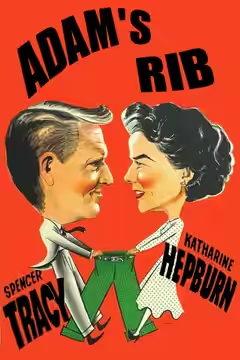
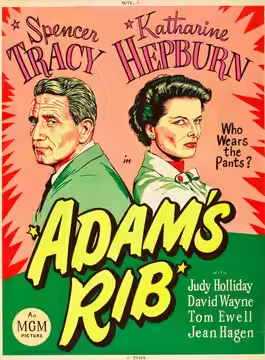
George Cukor’s marital comedy gives Spencer Tracy and Katharine Hepburn sharp dialogue and a worthy opponent in each other. We recommend the sparring, though its discussion of equality sometimes gives the husband an easier hearing than the wife.
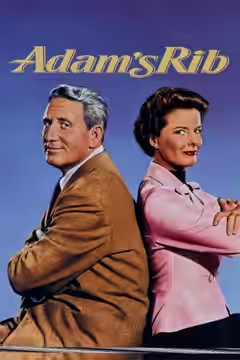
Adam’s Rib is a sharp, affectionate comedy, and we recommend it with one reservation about how fairly it treats its quarrelling spouses. George Cukor gives Spencer Tracy and Katharine Hepburn a disagreement they can enjoy even when their characters cannot. The pleasure is in how thoroughly Adam and Amanda Bonner know one another, and how little that helps either of them concede a point. Being understood by your spouse evidently has its disadvantages.
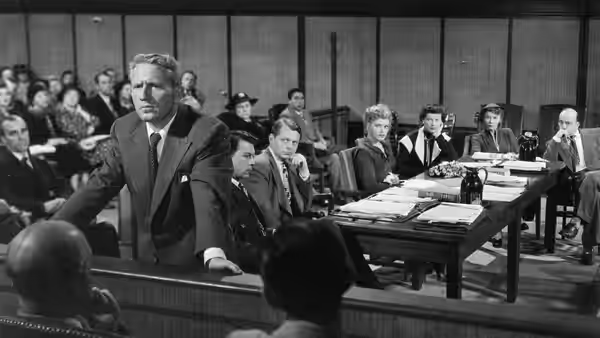
Garson Kanin and Ruth Gordon have an effective comic problem: how do two people argue for a living and then stop doing it when they get home? Making the Bonners opposing lawyers gives each grievance a professional vocabulary, so that even affection can sound like preparation for a rebuttal. The dialogue is quick, pointed and confident that we can follow it without an explanation afterwards. Cukor understands that a marriage is funny partly because both people have heard the other person’s favourite reasoning before.
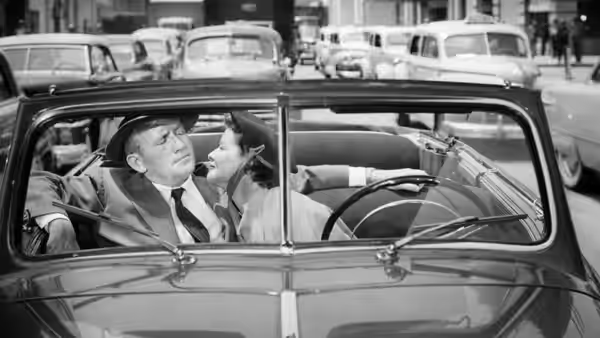
Hepburn makes Amanda’s enjoyment of an argument almost as important as the argument itself. There is energy in the way she presses a point, and enough pleasure in her own intelligence to make her formidable company without asking us to find her saintly. We laughed at how much she seems to relish having Tracy to argue with. Her eagerness makes their marital sparring feel like something these people choose, even when they are plainly getting on each other’s nerves.
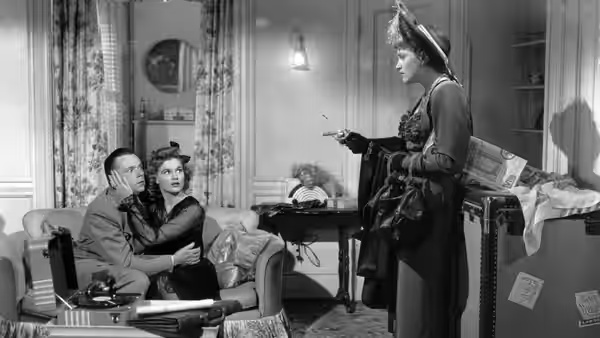
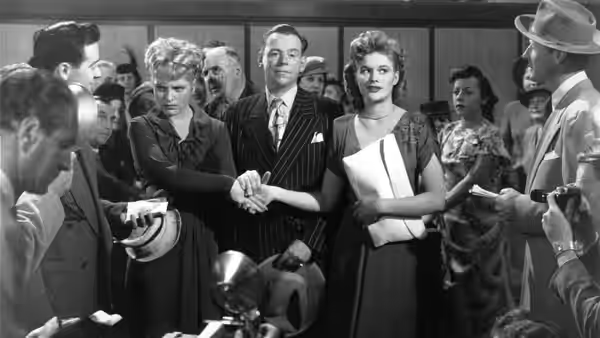
Tracy’s Adam gives that energy useful resistance. His appeal lies in the suggestion that a reasonable man might remain reasonable indefinitely, provided nobody continues to disagree with him. That makes him a good partner for Hepburn, though it can also make Adam’s position seem sounder simply because he occupies it so comfortably. Judy Holliday, as Doris Attinger, supplies another reason to pay attention beyond the central pairing. Her comic presence is strong enough to keep a film so devoted to its married couple from feeling closed to everybody else.
George J. Folsey’s cinematography keeps the performances legible without competing with them, which is the right priority for this material. George Boemler’s editing is most effective when it lets us register the effect of a remark as well as the remark itself. The pace stays lively, but the actors still seem to have time to think. Miklós Rózsa’s music provides capable support, without displacing the pleasure of listening to these two people talk.
The reservation concerns how readily an argument about women’s equality becomes a question of whether Amanda is being fair to Adam. Kanin and Gordon are alert to the comic possibilities of professional rivalry, but they are less searching about the assumptions that give the husband an advantage. Amanda’s forcefulness can become an irritation to be managed, even when her objections deserve an answer. Cukor’s warmth towards both spouses makes that limitation easy to forgive while we are laughing. It remains a limitation, and the film is sometimes too pleased with a clever reply to ask whether it answers the question.
As a marital comedy, though, it understands how much pleasure two clever people can take in challenging each other. Cukor trusts the appeal of a couple who are not especially easy company, and neither lead tries to win us by becoming harmless. At 101 minutes, their quarrel is a comfortable length for an evening. Choose it for the company, and allow yourself to disagree with the lawyers.