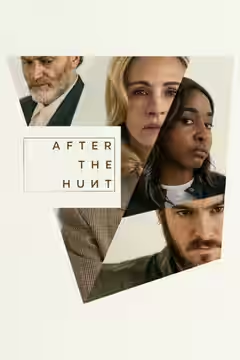
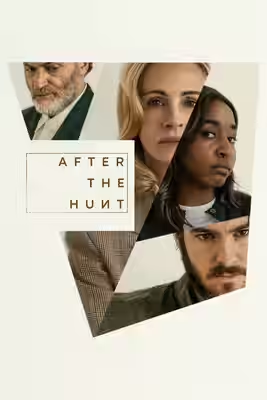
Luca Guadagnino gives Julia Roberts her best role in years, as a philosophy professor who would rather not choose between an accused friend and an accusing student. The film shares her reluctance, and at 139 minutes it has a long time to be undecided in.
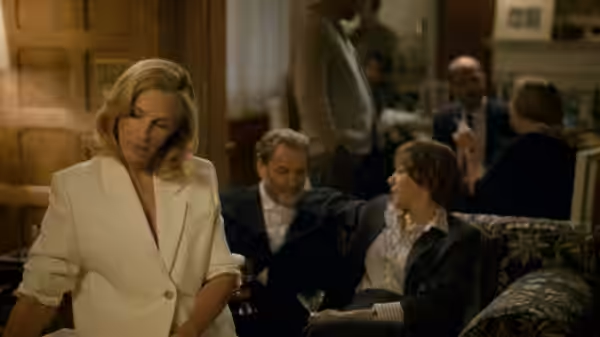
Luca Guadagnino has made a campus drama about an accusation, and about a woman who would rather not have a view on it. Alma Imhoff (Julia Roberts) teaches philosophy at Yale and is weeks from a decision on tenure. At a dinner party in her flat, her favourite student, Maggie Resnick (Ayo Edebiri), and her closest colleague, Hank Gibson (Andrew Garfield), leave together; the next morning Maggie tells Alma what she says he did. After the Hunt is well acted and carefully built, and it runs 139 minutes, most of which it spends refusing to say what it thinks. That is meant to be the point. It is also the problem.
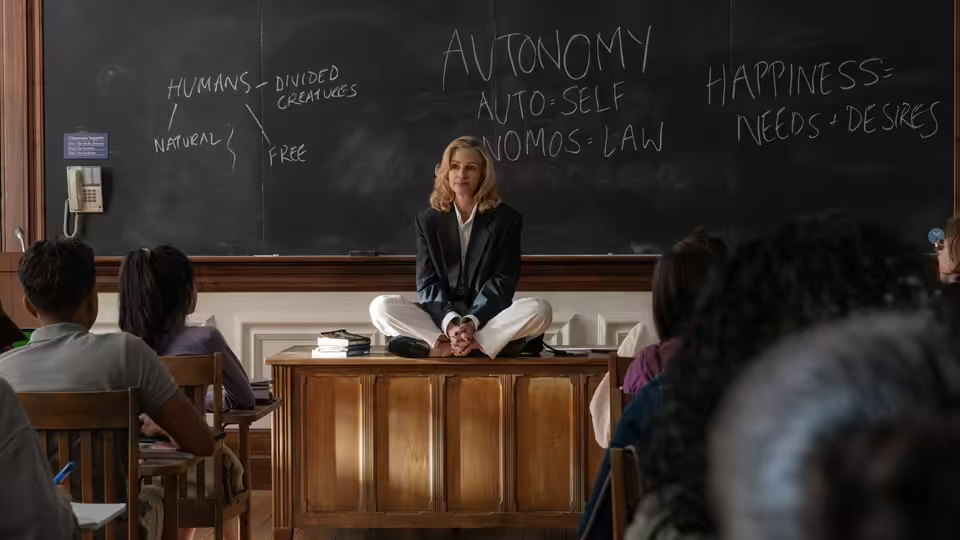
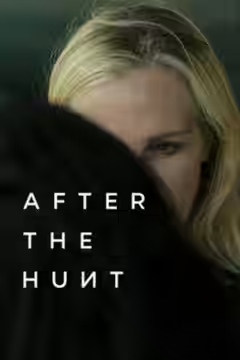
Roberts is the reason to see it. She plays Alma as a woman who has built her whole manner out of not reacting: the cigarette, the slow blink, the answer that turns out to be another question. When Maggie comes to her office with the accusation, Roberts lets something cross her face for about a second and then shuts it, and for the next hour the film is about waiting to see what will get through. Edebiri, cast against the warmth she is known for, makes Maggie watchful and hard to like. Garfield plays Hank as a man whose charm has never once been questioned. Michael Stuhlbarg, as Alma’s husband Frederik, a psychoanalyst who cooks and listens, has the film’s funniest scenes and its saddest.
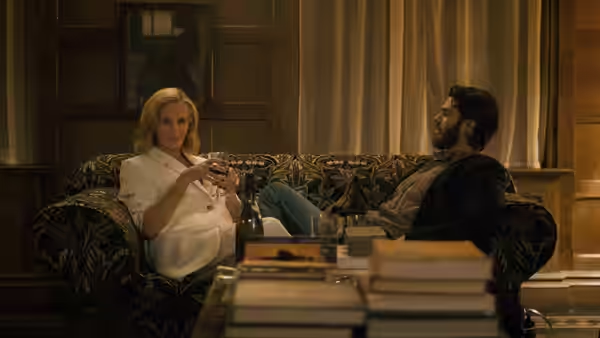
Malik Hassan Sayeed shoots the campus in browns and low golds, grainy and lamplit, so that every room looks as if it has been smoked in for thirty years. Stefano Baisi’s flat is dark wood and full shelves; Giulia Piersanti dresses Alma in men’s tailoring and a camel coat. The opening credits come up in the typeface Woody Allen has used for decades, which is a joke about the film’s subject and a risky one. Trent Reznor and Atticus Ross score it with a ticking clock and low, dry percussion, mixed high and often running under ordinary conversation, so that the film sounds like a thriller even when two people are discussing a committee.
We should say what we felt. The scene in the office held us completely: two faces, a door that stays closed, Roberts choosing every word as if it might be quoted back to her, and Edebiri watching her choose. A later dinner, at which Hank arrives drunk and Frederik keeps serving food, is nearly as good. Then the second hour began, and we noticed we were counting Alma’s cigarettes, and then that we were annoyed with ourselves for counting them. The trouble is the pattern: Nora Garrett’s script sets up a confrontation, lets it run until somebody is about to say something that cannot be taken back, and then cuts to the next morning.
That script, Garrett’s first, is the trouble. The students talk like the comments under an article and the professors talk like the article, and nobody is given a line the other side could not have predicted. Alma has a secret, signalled from the start with pills and a bad stomach, and when it is finally spoken the film deals with it in a couple of minutes and moves on. Marco Costa cuts every dinner and every walk across the quad at full length. Twenty-five minutes could go and no argument would be lost, because the arguments are the same one, restated.
Against Guadagnino’s recent work it is a step back. Challengers (2024) was about three people who wanted things and moved like it; Call Me by Your Name (2017) knew what it felt and let us feel it. The comparison everyone reaches for is Tár (2022), which took a difficult woman and stayed with her to the end. Alma is not difficult in that way, and the film will not stay with anyone.
The tagline says not everything is supposed to make you comfortable. We were not, but it was the discomfort of a dinner where the host keeps changing the subject. See it for Roberts and for Stuhlbarg at the stove, at home, where you can pause it and finish the argument yourselves.