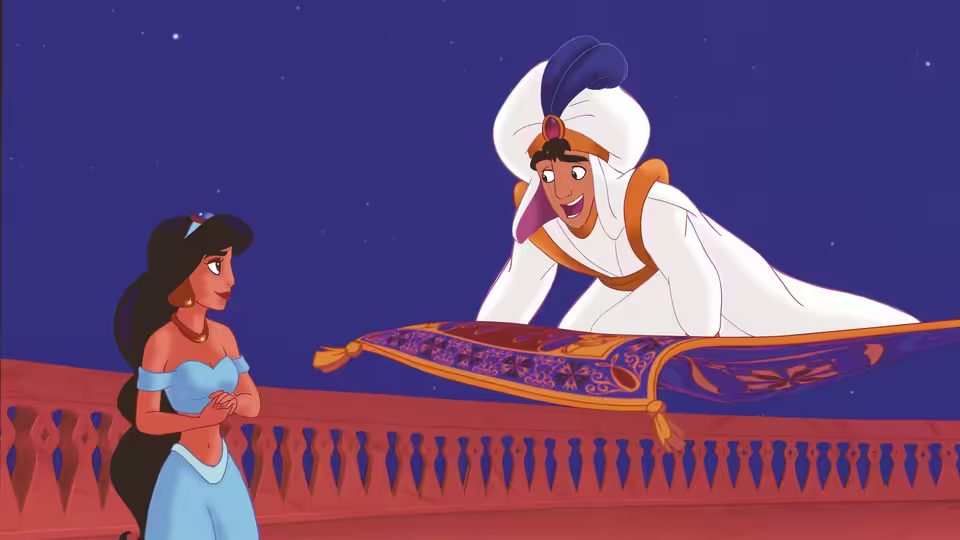
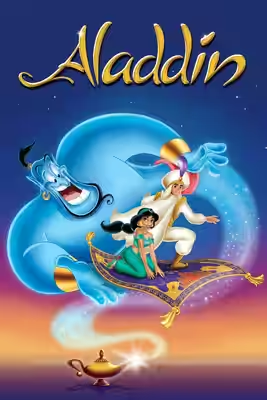
Robin Williams’s Genie makes Aladdin a funny, fast-moving family musical. The romance is thin beside him, but the songs and elastic animation make that a forgivable weakness.
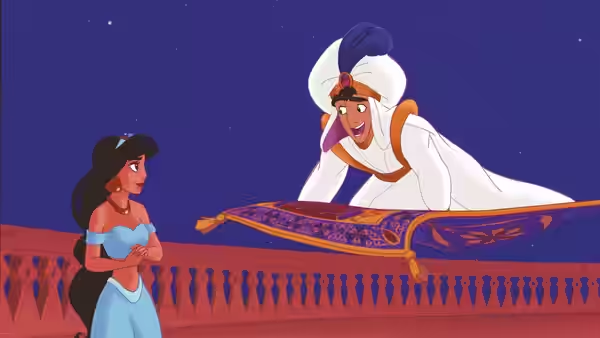
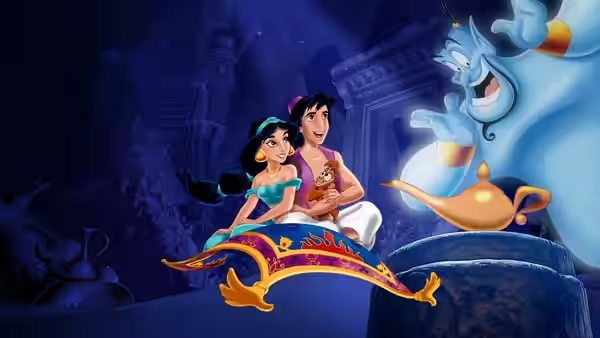
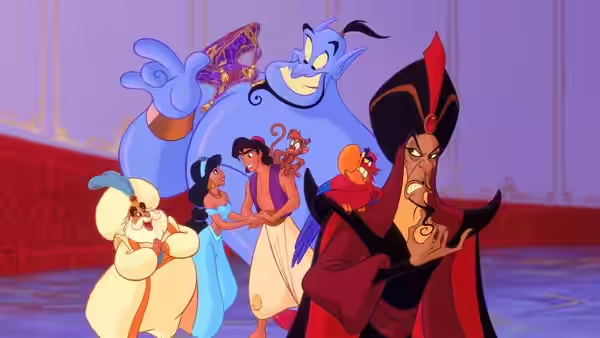
Ron Clements and John Musker make Aladdin move with the confidence of a family musical that expects everyone to keep up. The story of a street urchin, a princess and a wish-granting genie is straightforward enough to survive the interruptions, which is fortunate because Robin Williams supplies a considerable number. We recommend it for the comedy, the songs and the pleasure of watching animation keep pace with that voice. The central romance needs more attention than it gets.
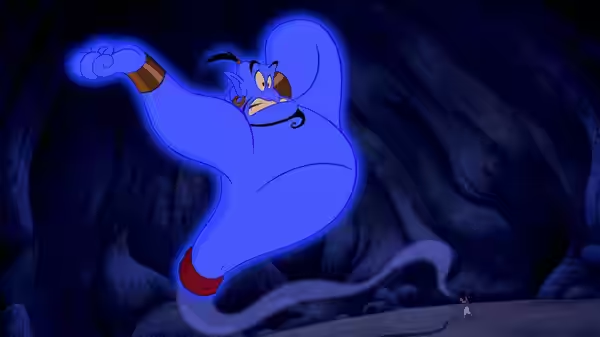
Williams’s Genie is funny partly because the performance never sounds as though it has settled on a final version. A voice changes, the character changes shape, and the next idea arrives before the previous joke has been tidied away. We laughed aloud at those changes of voice and body; the animation gives his rapid impersonations something visible to do. The pleasure is in how closely the drawings follow his comic thinking, rather than simply providing a face that can move its mouth.
That freedom also depends on disciplined work around him. H. Lee Peterson’s editing leaves enough space for a joke to register and keeps the action readable when the pace quickens. R.S. vander Wende’s production design is ornate, occasionally fussy, yet the decoration does not crowd the characters out of their own film. For all the visual activity, it is easy to keep track of what deserves our attention.
Alan Menken’s music is particularly valuable when the film needs to settle down and let the lovers be heard. The songs have clear, appealing melodies that can hold our attention without a joke arriving every few seconds. Brad Caleb Kane and Lea Salonga supply Aladdin and Jasmine’s singing voices, with an openness that gives the courtship some needed warmth. These passages allow the two characters time to hold our attention without having to compete with Williams for the next laugh.
Scott Weinger and Linda Larkin give the speaking roles a likeable directness, although the writing makes Aladdin and Jasmine work too hard at explaining themselves. The screenplay, credited to Clements, Musker, Ted Elliott and Terry Rossio, keeps stressing what the pair need to learn about themselves. We understand what they want without feeling much urgency about their getting it. The songs bring warmth, but the spoken exchanges need more ease and less self-examination.
The supporting voices make good use of simpler material. Jonathan Freeman gives Jafar a controlled nastiness that is welcome amid so much cheerful commotion, while Gilbert Gottfried’s Iago provides a harsher comic sound. They establish themselves quickly, which matters in a film with so much competing for attention. Williams has the biggest part in the comedy, but the supporting voices prevent it from becoming a solo performance.
The knowing humour will suit adults who enjoy a family musical that makes fun of its own conventions. Children need not recognise every reference to enjoy the Genie’s physical comedy. At 91 minutes, it also keeps the demands on a family evening reasonable. Choose it when laughter matters most, with modest expectations for the love story.