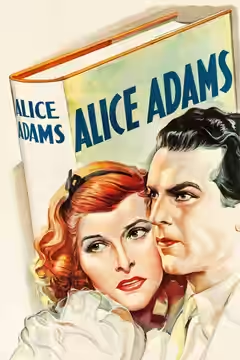
Katharine Hepburn gives one of her most exact performances as a girl who cannot stop pretending, and George Stevens builds two set pieces around her that still hurt. The adaptation loses its nerve in the last reel, but see it anyway.
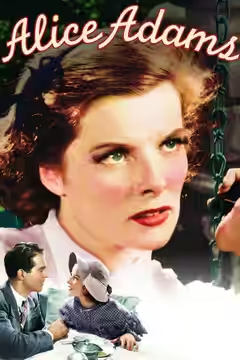
Alice Adams is a film about a lie that gets bigger every time somebody is kind to it. Alice is not a schemer. She is a clever girl in a poor family who has worked out exactly what the rich girls have, and she copies it without the money. Booth Tarkington’s novel is hard on her and harder on the town. George Stevens’ film, from a screenplay by Jane Murfin, Mortimer Offner and Dorothy Yost, is gentler, and we will come to what that costs. Most of it is excellent.
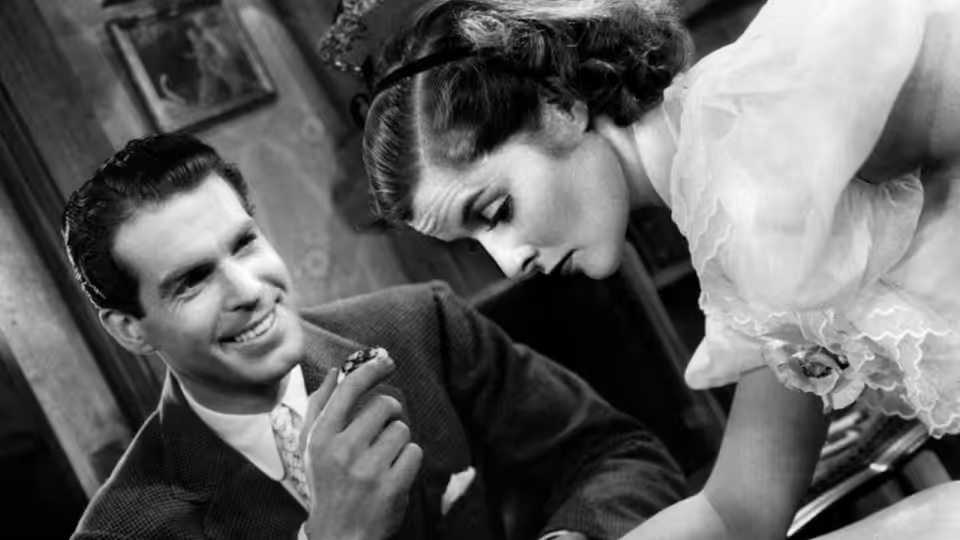
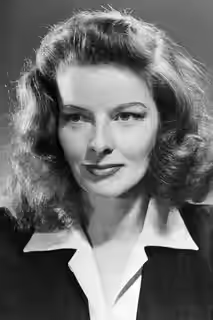
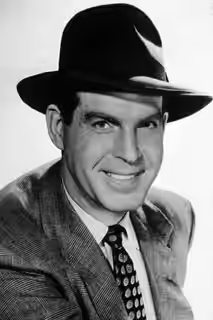
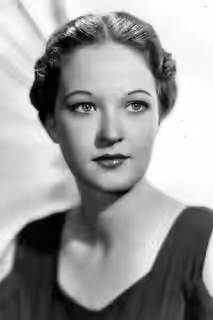
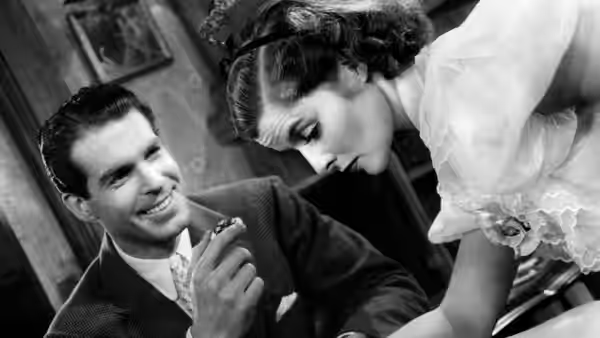
Katharine Hepburn is the film. She was already famous for playing women who took up space, and here she plays one who is trying to take up less and cannot manage it. Watch her at the Palmers’ dance, parked against a wall with her wilting violets, laughing at nothing so that anyone glancing over will think she has just been told a joke. She adjusts her face between glances. She keeps it up for what feels like ten minutes, and we sat there wanting somebody, anybody, to cross the floor to her. When Fred MacMurray’s Arthur Russell finally does, our relief was out of proportion to anything a film should be able to do to grown adults.
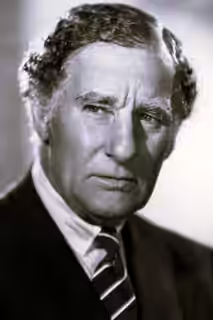
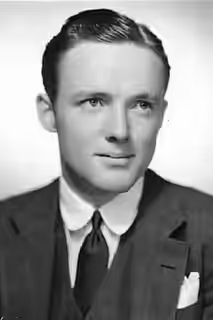
MacMurray is pleasant and a little blank, which suits Arthur. He is a man to whom nothing has ever been difficult, and the point is that he cannot see the effort in front of him. Fred Stone’s Virgil is the better performance: a tired, decent man nagged into ambition by a wife who wants more for her daughter. Ann Shoemaker plays that wife without asking to be liked, and the family rows are the truest scenes in the film. Frank Albertson’s Walter, sneaking off from the dance to gamble with the help, is the one Adams who has stopped pretending, and the film is not sure whether to admire him for it.
Stevens stages two set pieces and both land. The dance is one. The other is the dinner Alice gives for Arthur on the hottest night of the year, with a hired maid, Malena (Hattie McDaniel), a menu far too heavy for the weather, and a father who has been told to keep his jacket on. Everything that can go wrong goes wrong slowly, and Jane Loring’s editing lets it: the cuts come late, so we watch each disaster arrive rather than hearing about it afterwards. It is funny and it is awful, and it is awful because Alice keeps talking.
Robert De Grasse shoots the Adams house as a small, cluttered, ordinary place, and the Palmers’ as a set of large bright rooms with nothing in them, which says everything about class without a word. His best moment is quieter. After the dance, Alice stands at her bedroom window with rain running down the glass, and he lights her so that the rain seems to be on her face before her tears are. Walter Plunkett’s home-made dress for Alice is not ugly; it is nearly right, and nearly right is the cruellest thing a dress can be in that room. Roy Webb and Max Steiner’s music is the one department that overplays; it swells at the window when Hepburn had already done the job.
The film has a problem with Malena, and it is worth saying plainly. McDaniel is asked to chew gum, drop things and let her cap slip, and the joke is at her expense from start to finish. The dinner scene would be better if the failures belonged to the Adamses alone. That is the period, and it is also a choice.
The larger softening is the ending. Tarkington wrote a book about a girl who learns what her town is; the film, in its final minutes, decides that it would rather comfort her, and it does so in a way we will not describe. Most critics have noticed and forgiven it, and so, mostly, do we. The last reel is a lapse, not a collapse, and it comes after ninety minutes that do not flinch.
At 99 minutes it wastes nothing. Watch it with someone who has ever worn the wrong thing to a party and remembered it for thirty years; that is most of us.