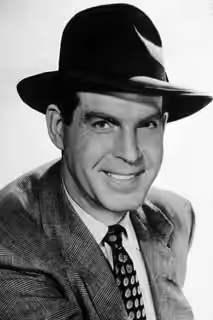
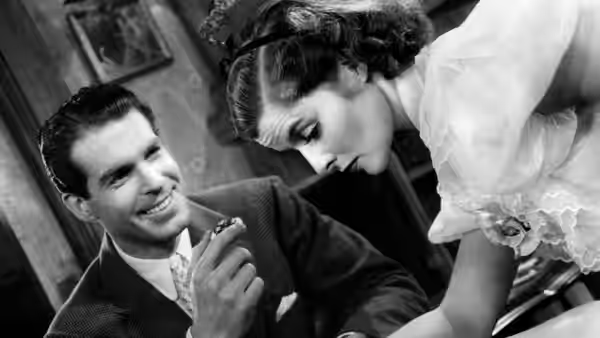
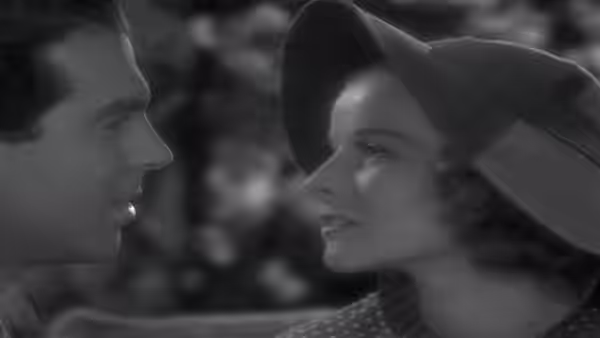
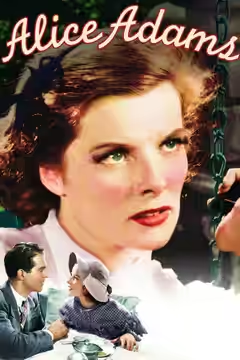
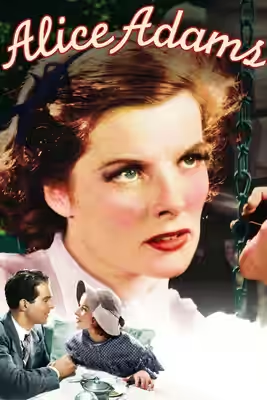
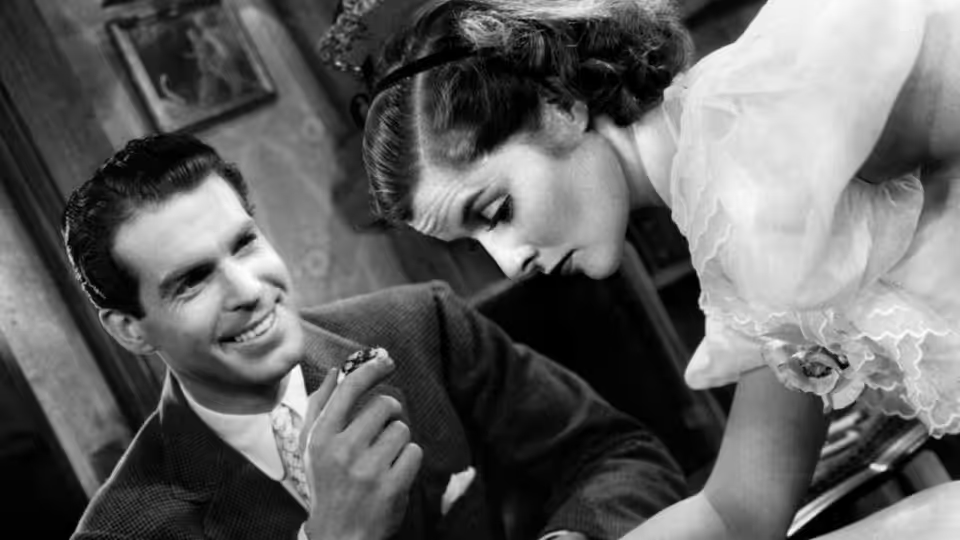
Alice Adams (Katharine Hepburn) leans close to Arthur Russell (Fred MacMurray) as he smiles holding a ring
Film review

Alice Adams

1935 · Directed by George Stevens · 1h 39m

In a sentenceHand-picked violets, a made-over dress, and a dinner party so hot the pretending melts before the soup does

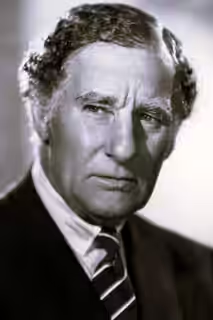
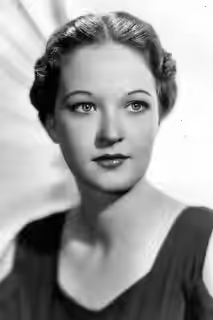
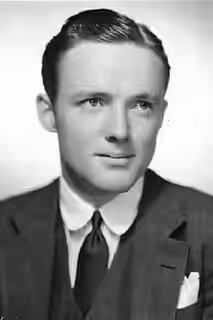
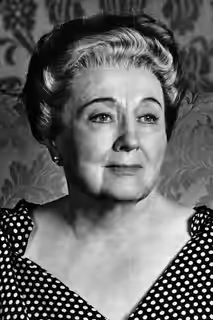
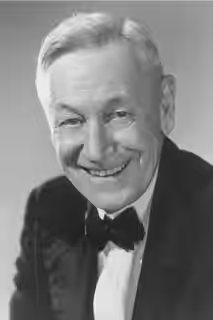
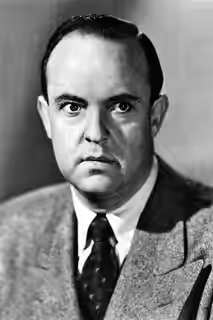
Alice Adams (Katharine Hepburn) is twenty-two and lives with her family in a small American town, on the wrong side of a social line she can see perfectly clearly. Her father, Virgil (Fred Stone), is a clerk at the firm of J. A. Lamb (Charley Grapewin), ill at home and content to stay small; her mother (Ann Shoemaker) wants him to leave and go into business with a glue formula of his own. Alice wants to belong at the Palmers’ dance. She wears a dress made over at home, picks her own violets in a public park, and is walked there by her brother Walter (Frank Albertson), who would rather be anywhere else. At the party she meets Arthur Russell (Fred MacMurray), rich and expected to marry Mildred Palmer (Evelyn Venable), and begins a long performance of being somebody she is not.

Fi1m review

Katharine Hepburn gives one of her most exact performances as a girl who cannot stop pretending, and George Stevens builds two set pieces around her that still hurt. The adaptation loses its nerve in the last reel, but see it anyway.

Alice Adams is a film about a lie that gets bigger every time somebody is kind to it. Alice is not a schemer. She is a clever girl in a poor family who has worked out exactly what the rich girls have, and she copies it without the money. Booth Tarkington’s novel is hard on her and harder on the town. George Stevens’ film, from a screenplay by Jane Murfin, Mortimer Offner and Dorothy Yost, is gentler, and we will come to what that costs. Most of it is excellent.

Katharine Hepburn is the film. She was already famous for playing women who took up space, and here she plays one who is trying to take up less and cannot manage it. Watch her at the Palmers’ dance, parked against a wall with her wilting violets, laughing at nothing so that anyone glancing over will think she has just been told a joke. She adjusts her face between glances. She keeps it up for what feels like ten minutes, and we sat there wanting somebody, anybody, to cross the floor to her. When Fred MacMurray’s Arthur Russell finally does, our relief was out of proportion to anything a film should be able to do to grown adults.

MacMurray is pleasant and a little blank, which suits Arthur. He is a man to whom nothing has ever been difficult, and the point is that he cannot see the effort in front of him. Fred Stone’s Virgil is the better performance: a tired, decent man nagged into ambition by a wife who wants more for her daughter. Ann Shoemaker plays that wife without asking to be liked, and the family rows are the truest scenes in the film. Frank Albertson’s Walter, sneaking off from the dance to gamble with the help, is the one Adams who has stopped pretending, and the film is not sure whether to admire him for it.

Stevens stages two set pieces and both land. The dance is one. The other is the dinner Alice gives for Arthur on the hottest night of the year, with a hired maid, Malena (Hattie McDaniel), a menu far too heavy for the weather, and a father who has been told to keep his jacket on. Everything that can go wrong goes wrong slowly, and Jane Loring’s editing lets it: the cuts come late, so we watch each disaster arrive rather than hearing about it afterwards. It is funny and it is awful, and it is awful because Alice keeps talking.

Robert De Grasse shoots the Adams house as a small, cluttered, ordinary place, and the Palmers’ as a set of large bright rooms with nothing in them, which says everything about class without a word. His best moment is quieter. After the dance, Alice stands at her bedroom window with rain running down the glass, and he lights her so that the rain seems to be on her face before her tears are. Walter Plunkett’s home-made dress for Alice is not ugly; it is nearly right, and nearly right is the cruellest thing a dress can be in that room. Roy Webb and Max Steiner’s music is the one department that overplays; it swells at the window when Hepburn had already done the job.

The film has a problem with Malena, and it is worth saying plainly. McDaniel is asked to chew gum, drop things and let her cap slip, and the joke is at her expense from start to finish. The dinner scene would be better if the failures belonged to the Adamses alone. That is the period, and it is also a choice.

The larger softening is the ending. Tarkington wrote a book about a girl who learns what her town is; the film, in its final minutes, decides that it would rather comfort her, and it does so in a way we will not describe. Most critics have noticed and forgiven it, and so, mostly, do we. The last reel is a lapse, not a collapse, and it comes after ninety minutes that do not flinch.

At 99 minutes it wastes nothing. Watch it with someone who has ever worn the wrong thing to a party and remembered it for thirty years; that is most of us.
Critical consensus AI synthesised

75
Positive
4
Mixed
0
Negative
0
The New York Times
16 August 1935 · Andre Sennwald
90*

The critic calls the film an able screen version of the novel and a triumph for director George Stevens in his first talking picture. Hepburn delivers one of her finest performances, and the family dinner scene is both riotously funny and tragically real.

Read the full review →
The New Yorker
17 August 1935 · Russell Maloney
70*

The review finds the picture milder than expected from Hepburn, with no surprises but also no disappointments, and praises the expert handling of the dance and dinner sequences. Hepburn's mannerisms suit the role well under Stevens' direction, though the adaptation takes the easiest path from the novel.

Read the full review →
Time Out
10 September 2012 · TM
70*

The critic finds Katharine Hepburn magnificent as the social climber but notes the script softens the source novel's satire into a nostalgic slice of Americana. George Stevens compensates with brilliant set pieces, especially the ball and the disastrous dinner party.

Read the full review →
Variety
31 December 1934
70*

The critic praises Stevens' direction for capturing the wistfulness of Hepburn's superb performance while maintaining audience appeal without excessive drabness. Hepburn's acting is uncompromising, and supporting players like Ann Shoemaker and Fred Stone are effective.

Read the full review →

Straight answers AI written, from our review

Is Alice Adams worth watching?
Alice Adams is worth watching for anyone who has ever worn the wrong thing to a party, and we scored it 79. Katharine Hepburn gives one of her most exact performances as a girl who cannot stop pretending, and the dance and the dinner party still hurt. The ending softens Tarkington's novel, and Hattie McDaniel's maid is a joke at her expense throughout.
How long is Alice Adams, and what is it rated?
Alice Adams runs 1h 39m. It is a romance and drama film.
Where can I watch Alice Adams in Chile?
Alice Adams is not on any streaming or rental service in Chile at the moment. It is available in 7 other countries; change your country at the top of the page to see where. Availability is checked daily.
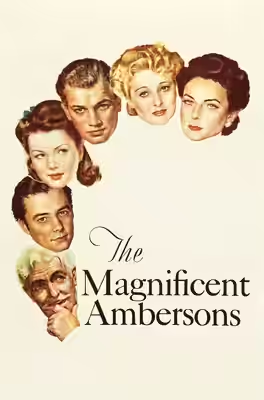
How does Alice Adams compare to The Magnificent Ambersons?
Alice Adams and The Magnificent Ambersons are both taken from Booth Tarkington novels about small-town money, and the Welles film is the finer and far less merciful of the two. Stevens is kinder to his heroine and to her town, and his ending comforts where Tarkington did not. Both films lose their last reel, one to nerves and one to the studio; Alice Adams is the gentler evening, Ambersons the greater film.
Is Alice Adams based on a true story or a book?
Alice Adams is based on the novel by Booth Tarkington, not on a true story. The film is gentler than the book, which is hard on Alice and harder on her town, and its final minutes comfort her in a way Tarkington did not. You need not know the novel to follow it, though readers will notice the softening.
What should I watch after Alice Adams?
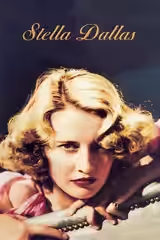
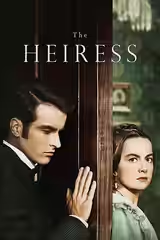
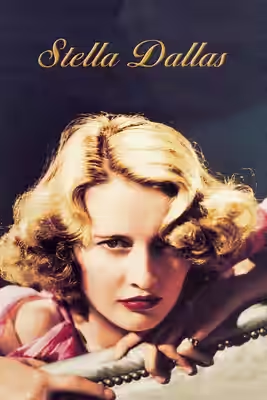
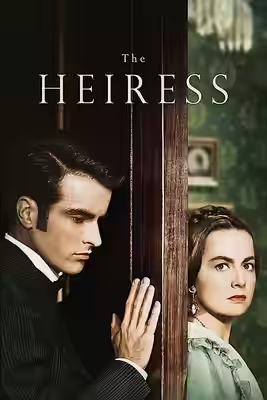
After Alice Adams, try The Magnificent Ambersons (1942, Fi1m 89): Welles takes on Tarkington and the same small-town money with far less mercy. Then Stella Dallas (1937, Fi1m 80): Barbara Stanwyck in the wrong dress at the wrong party, and it still stings; and The Heiress (1949, Fi1m 90): Olivia de Havilland as the plain rich girl; the other side of Alice’s window.

Cast

Awards

Academy Awards, 1936

Nominated
Best Actress
Nominated
Best Picture

If you liked this, try…

  1. The Magnificent Ambersons (1942, Fi1m 89)Welles takes on Tarkington and the same small-town money with far less mercy.

  2. Stella Dallas (1937, Fi1m 80)Barbara Stanwyck in the wrong dress at the wrong party, and it still stings.

  3. The Heiress (1949, Fi1m 90)Olivia de Havilland as the plain rich girl; the other side of Alice’s window.

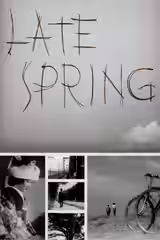
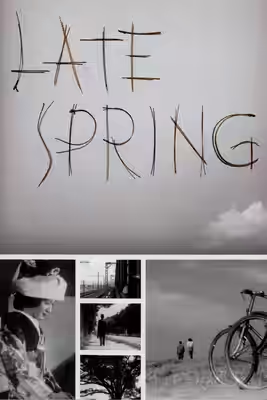
  4. Late Spring (1949, Fi1m 92)Ozu on a daughter, a father and a house too small for both their wishes.

  5. Lady Bird (2017, Fi1m 86)A clever girl lies about where she lives; Gerwig forgives her less than Stevens does.

Free account

Know what to watch tonight

Two lists that know where things are streaming, collections you can share, your own score beside ours, and Discover that remembers what you have seen.

  • Want to see, sorted by what is streaming now
  • Seen, with your score out of ten
  • No adverts, ever