Tim Burton’s Alice in Wonderland has an entertaining Red Queen and plenty of strange faces, but its dutiful quest leaves little room for curiosity. The visual invention cannot make Alice’s journey engaging.
Tim Burton’s Alice in Wonderland has some inventive creatures and a disappointingly routine story. It attempts to give Alice a sustained adventure through the characters and creatures of Lewis Carroll, with a quest to keep the encounters moving. There is room for a good family adventure in that approach. Too often, though, an encounter promises something peculiar and then gets hurried along before it becomes interesting, leaving us with another elaborate figure to inspect and little reason to care about it.
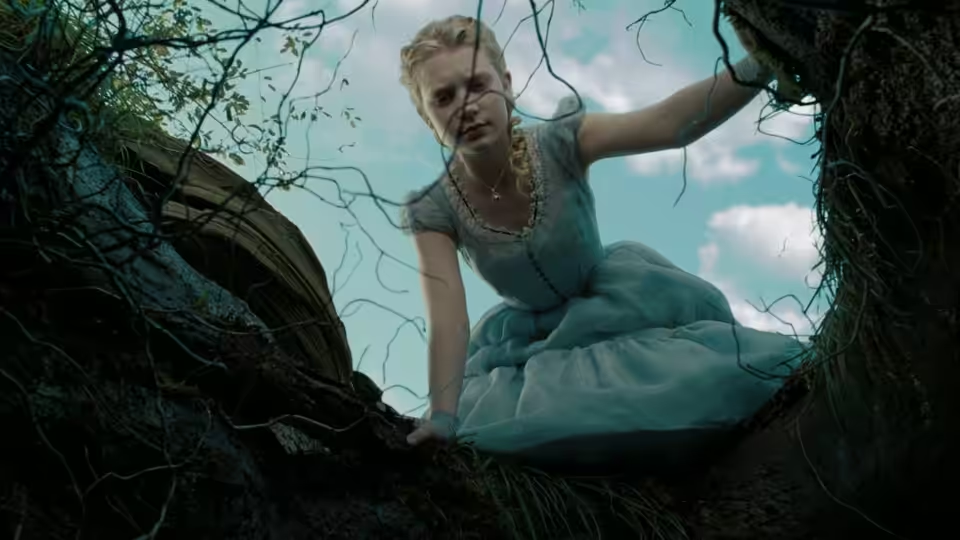
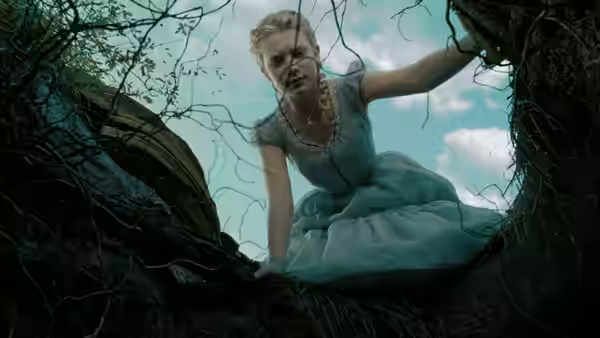
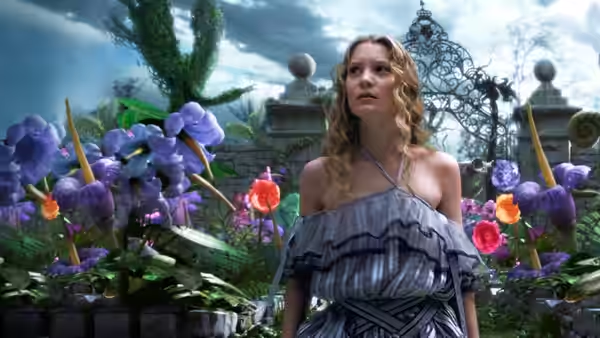
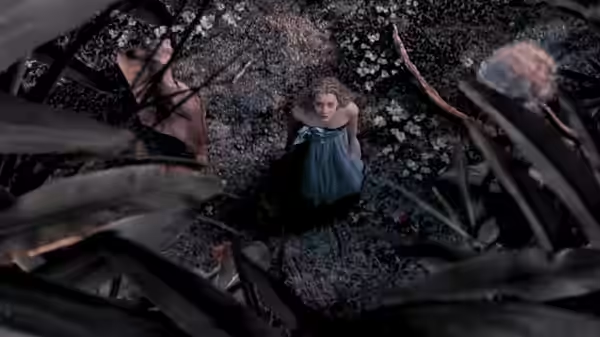
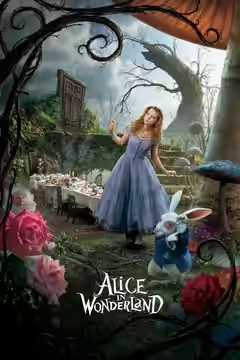
Linda Woolverton’s screenplay gives Alice a journey without making her curiosity especially compelling. The opening is stiff, and the film never quite shakes the feeling that its characters have been gathered to explain what needs doing. Mia Wasikowska brings a welcome seriousness to Alice Kingsleigh, but there is too little in the writing for that seriousness to develop into a person we want to follow. We can understand the need for a clear story in a family adventure; we would still like Alice to have more interesting things to discover about herself.
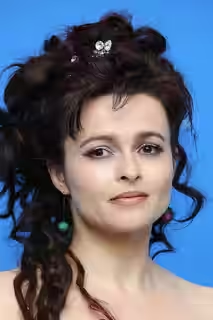
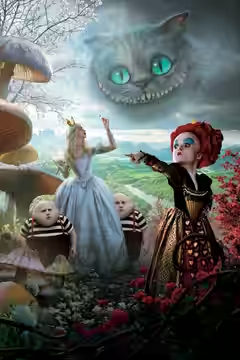
The welcome exception is Helena Bonham Carter as the Red Queen. Her distorted appearance is funny before she speaks, and she gives the character’s anger a precision that keeps it from becoming merely noisy. We laughed at her impatience, because Helena Bonham Carter makes royal fury seem like a perfectly reasonable response to having to deal with other people. For a few moments, the film allows an unpleasant person to be amusing without asking that amusement to advance the quest.
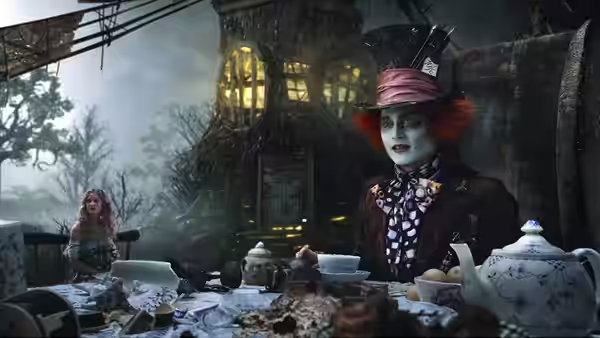
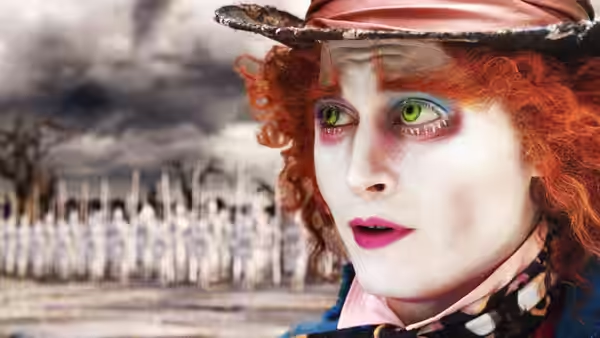
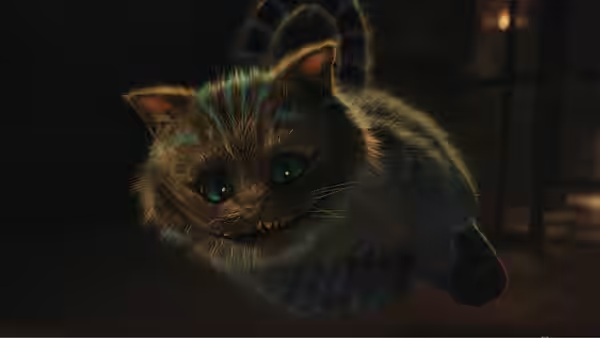
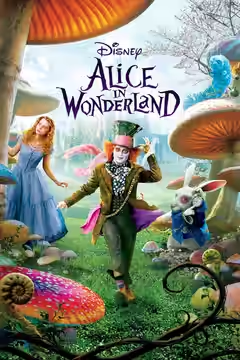
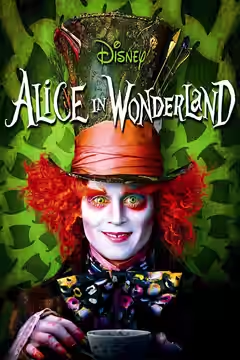
Johnny Depp’s Mad Hatter is less successful, despite the effort that goes into making him distinctive. The performance keeps asking for our attention, while the script offers too little reason to remain interested once we have inspected him. Anne Hathaway’s White Queen has a more promising suggestion of something disconcerting beneath the goodness, though the film does not linger over it. The Cheshire Cat is another pleasure: the creature’s appearance has a playfulness that the surrounding narrative often lacks.
Robert Stromberg’s production design gives the White Queen a palace whose conventional prettiness seems out of place among the stranger inhabitants. Dariusz Wolski’s cinematography makes those distorted figures more interesting to examine than their surroundings, which seldom feel like places worth exploring. Colleen Atwood’s costumes help distinguish the characters at a glance, though clothes can do only so much for people who have been thinly written.
Chris Lebenzon’s editing keeps moving past ideas that need a little more time, particularly the White Queen’s unsettling air of goodness. Danny Elfman’s music adds to the film’s insistence that this is an adventure worth taking seriously, without supplying the emotional involvement the scenes themselves lack. The result can feel tiring even when little of interest is happening. At 108 minutes, this is hardly an excessive length for a fantasy, which makes its heaviness all the more frustrating.
A family fantasy can have a clear destination and still leave space for curiosity. Here, the quest squeezes out the unpredictable encounters and verbal play that might have made the journey worthwhile. Viewers content to examine the creatures and costumes will get more from it than those hoping to be drawn into Alice’s experience. Come for Helena Bonham Carter if her presence is enough, but be prepared for the stretches without her.