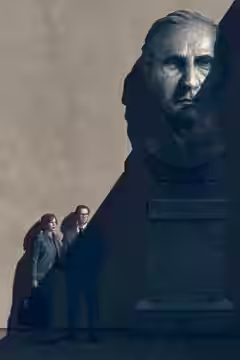
Ridley Scott’s Getty kidnapping thriller is handsomely made and has one great thing in it: Christopher Plummer, drafted in late and better than the film around him. The rest is well played, slack in the middle and unsure whose story it is.
Ridley Scott has made a film about a man who could afford anything and would not pay for his grandson. In 1973 the sixteen-year-old John Paul Getty III (Charlie Plummer) is taken off a Rome street by men who want 17 million dollars, and his grandfather, Jean Paul Getty (Christopher Plummer), announces that he will give them nothing. David Scarpa’s script follows three people who cannot agree on what the boy is worth. It is a good subject and a handsome, airless film with one performance we would send anyone to see.
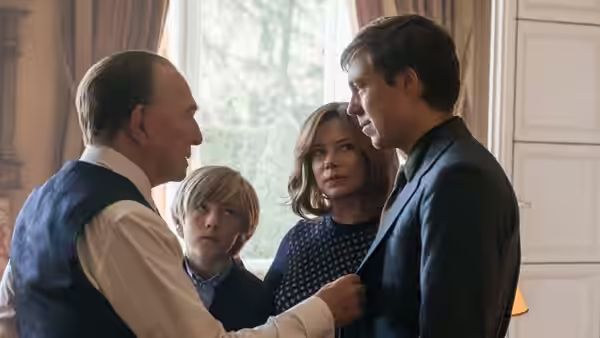
That performance was shot in a hurry after Scott recast the part weeks before release, and you would not know it. Christopher Plummer plays Getty as a man who has mistaken his money for a philosophy. He tells a journalist he trusts objects because they do not change, and he has a payphone installed at Sutton Place so his guests will not run up his bill. Plummer does not play him as a monster. He plays him as reasonable, with a twinkle, and that is far worse. When he explained why paying would put a price on his other grandchildren, we followed the logic for a second before we caught up with ourselves, and it chilled us. The film knows what it has and cuts back to him whenever the Italian scenes flag.
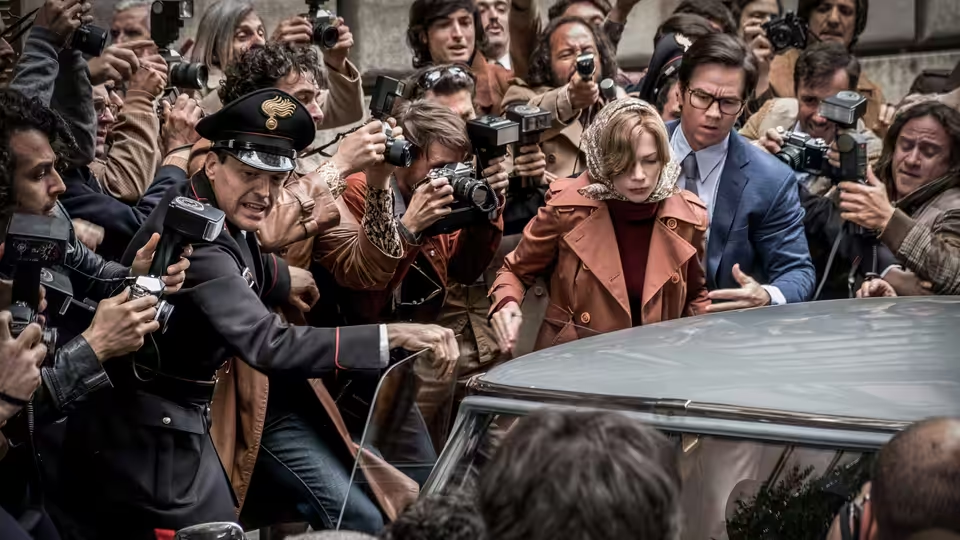
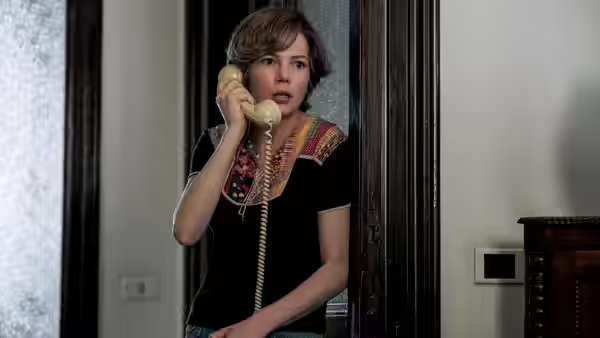
Michelle Williams gives Gail a clipped, old-money voice and a face that has decided not to crack in public. Her best scenes are with the press, who want a weeping mother and get a woman reading a statement, and with Getty, who treats her as a servant asking for a raise. The script keeps pulling her off the board. She spends long stretches on the telephone or waiting while the film goes to Calabria or into the past, and it is weaker every time it leaves her.
Mark Wahlberg’s Fletcher Chase is the trouble. He is a former CIA man turned Getty fixer, and the script gives him the film’s change of heart, from the old man’s errand boy to his accuser, when the mother has far more right to it. Wahlberg plays it in sideburns and a drawl and never convinces as a man who reads people for a living. Timothy Hutton, as Getty’s adviser Oswald Hinge, does more with less. The flashbacks explaining how Getty got rich and how his son (Andrew Buchan) fell apart land in the first act in a lump, and Claire Simpson’s cutting, quick elsewhere, cannot hide that the film has stopped to read us the family history.
Dariusz Wolski shoots Rome at night in smoky amber and Sutton Place in flat grey daylight, so the boy’s world is warm and the old man’s is cold. Arthur Max fills Getty’s rooms with marble and canvases and leaves the kidnappers’ farmhouse as bare stone and one chain. Janty Yates puts Gail in dark, sharp-shouldered coats and Getty in suits he has owned for decades. Daniel Pemberton’s score keeps a low, nagging pulse of strings under the ransom calls and drops out when Plummer is talking. None of this is the problem.
Charlie Plummer spends most of the film chained to a wall, and he is good at the slow business of a boy working out that nobody is coming. Romain Duris, as the kidnapper Cinquanta, offers him the only tenderness in the picture, and their scenes are the quietest and best after the old man’s. Then the negotiations drag, the second half takes a turn we will not describe, and the film works itself up to a chase through a hill town that belongs to a sillier picture. By then we had started checking the time, which we did not expect.
Scott’s best thrillers keep several places alive at once. Here Rome, Sutton Place and Calabria take turns, each waiting politely for the others to finish. At 132 minutes, with a 15 certificate, it has the shape of a thriller and the pace of a deposition. See it for Christopher Plummer and for Williams, at home, where you can get up during the flashbacks and nobody will mind.