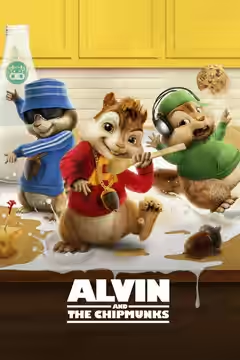
Tim Hill’s family comedy has agreeable physical mischief and persuasive computer animation, but its squeaky voices and thin story soon wear it out. A few laughs are a poor return for 92 minutes.
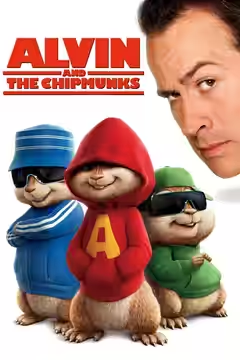
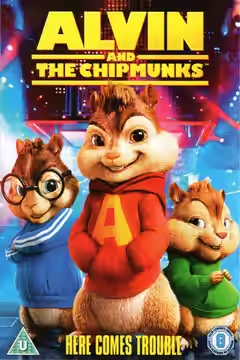
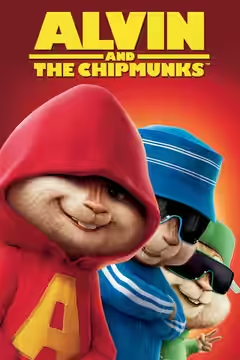
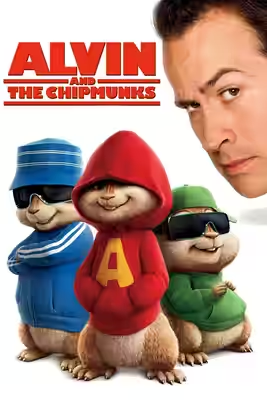
Alvin and the Chipmunks is a thin, tiring family comedy whose occasional charm does not justify 92 minutes. Tim Hill has three mischievous singing animals and a cast of human beings to put up with them, which ought to be enough for some decent knockabout. There are brief pleasures in the physical comedy. But the screenplay by Jon Vitti, Chris Viscardi and Will McRobb never gives the antics enough shape to sustain a feature.
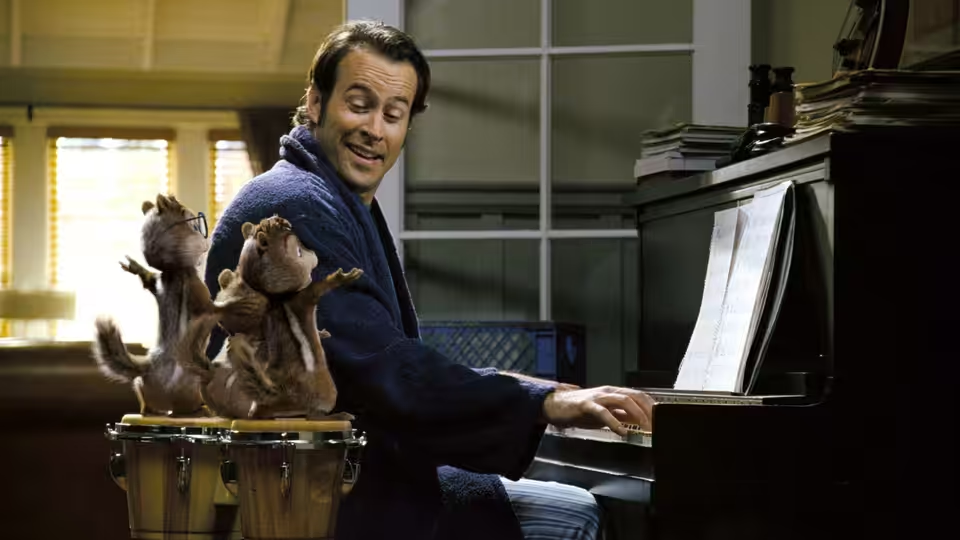
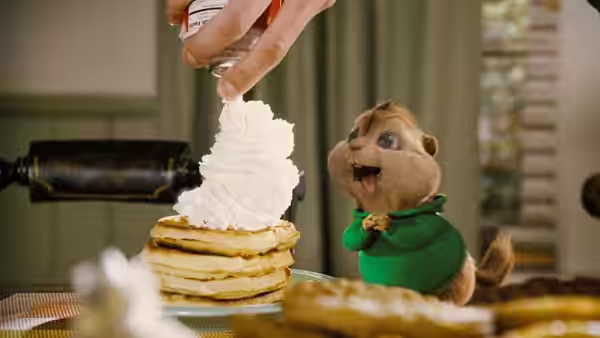
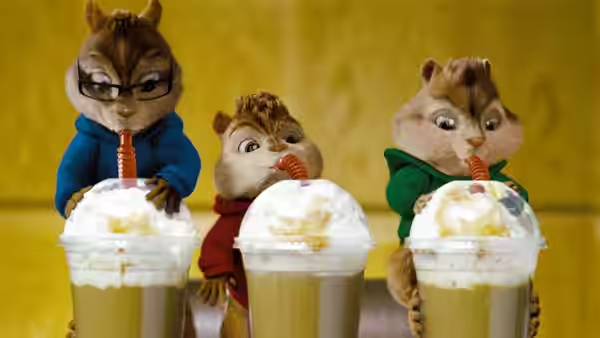
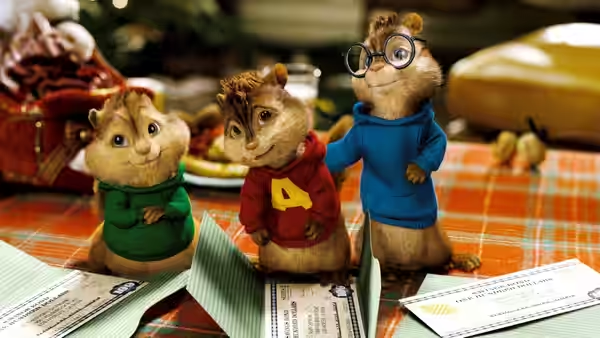
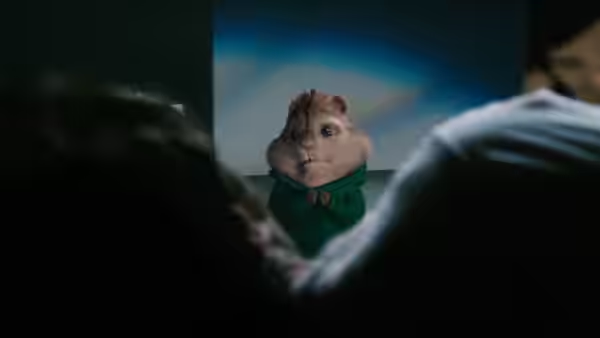
The computer-generated animals sit convincingly beside the live-action cast, and their physical clowning supplies most of the amusement. Some of it is simply cute, which is a perfectly respectable achievement in a family film. The director also resists the urge to keep reassuring adults that he knows how silly this is. That lack of knowing irony is welcome, though it puts more pressure on the jokes to work without an accompanying wink.
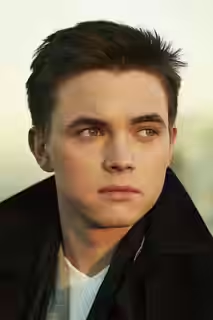
The sound is harder to forgive. Justin Long voices Alvin, Matthew Gray Gubler voices Simon and Jesse McCartney voices Theodore, but the electronic processing makes their singing wearyingly shrill. We were worn out by the high-pitched harmonies; even when the voices blend neatly, the squeak remains the main thing we hear. Christopher Lennertz’s score struggles to make much of an impression around them. The musical numbers have some bounce, but the songs are forgettable, and their energy does not make up for the shortage of good dialogue.
Peter Lyons Collister’s static compositions give the actors little help, leaving them to share frames with animated performers who command attention by making more noise. Tim Hill rarely turns that awkward arrangement into a visual joke. Richard Holland’s production design is serviceable, but there is little pleasure in studying the surroundings while the chipmunks perform. The physical effects are persuasive enough that the lack of invention in the staging becomes more noticeable.
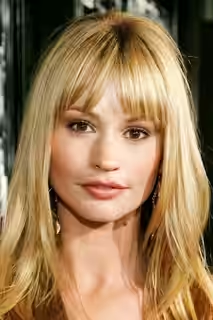
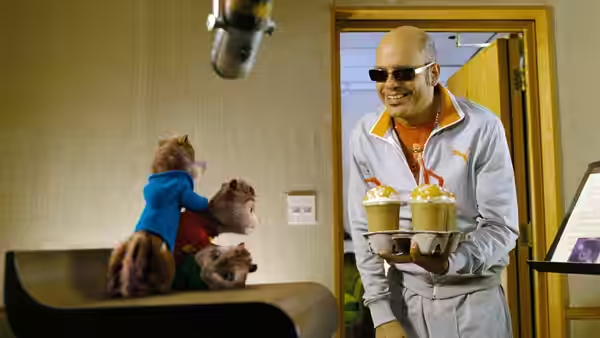
Jason Lee plays Dave, David Cross plays Ian and Cameron Richardson plays Claire, and none is given enough rewarding comic business. The human scenes feel dutiful, with performers required to keep the comedy going when the writing has offered them little to play. The romantic subplot is especially thin. It occupies time without giving us much reason to care about the relationship, and makes the already slight story feel more stretched.
Peter E. Berger’s editing cannot solve the basic problem that there is too little story between the comic business and the songs. The screenplay’s lesson about commercialism adds another familiar obligation without giving the characters much to discuss. It is all easy to follow, but that is a modest return for such mechanical plotting. The film keeps moving through its allotted 92 minutes, and still manages to feel long.
A family comedy need not be sophisticated, and there is nothing wrong with finding small, mischievous animals funny. We do expect it to find fresh ways for them to cause trouble, and to remember that adults are watching too. Younger viewers may be satisfied by the singing alone. For a shared evening, we would choose something with more jokes.