Elia Kazan’s account of his uncle’s journey from Anatolia to New York is long, plain and hard, and Haskell Wexler shoots it as reportage rather than staging. One of the peaks of Kazan’s career, and it would be better twenty minutes shorter.
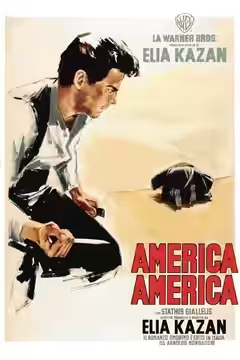
Elia Kazan opens the film in his own voice, telling us he is Greek by blood, Turkish by birth and an American because his uncle made a journey. The film is that journey, adapted by Kazan from his own novel, and he wrote, produced and directed it himself. It runs 174 minutes. For most of them a young man called Stavros wants to get to America, and everyone he meets wants the thing that would get him there.
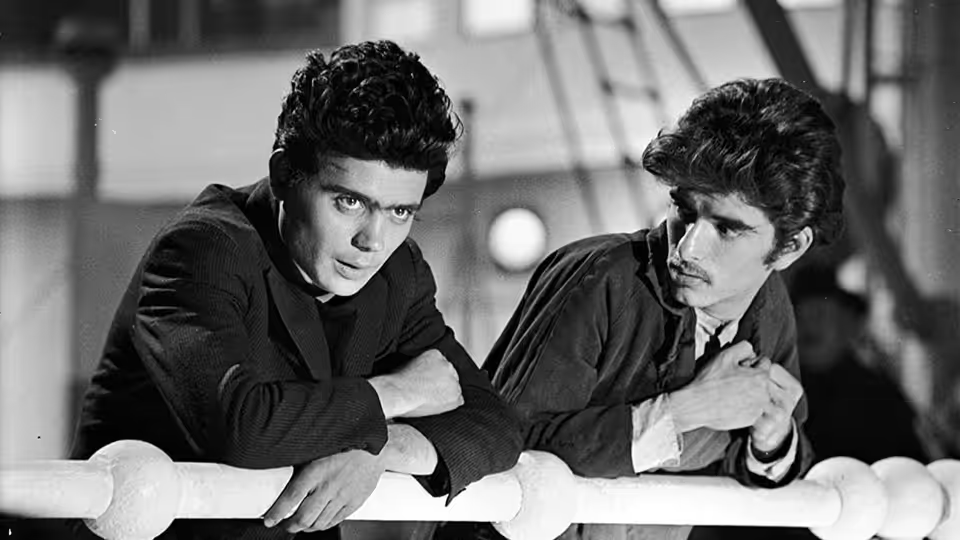
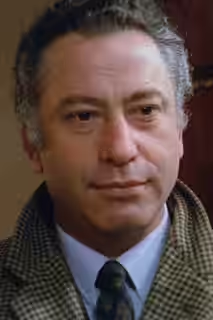
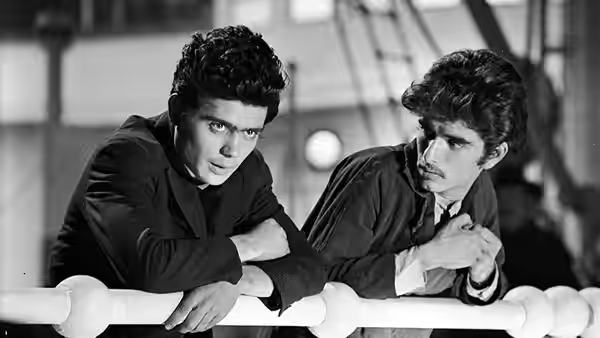
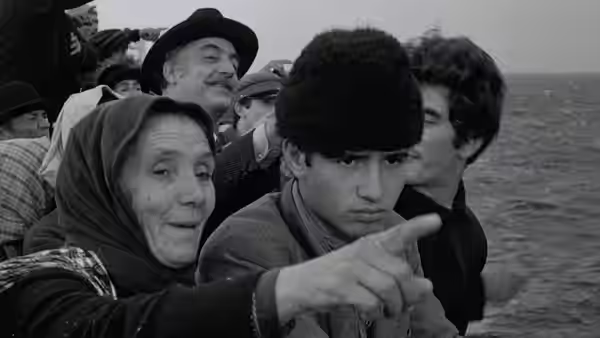
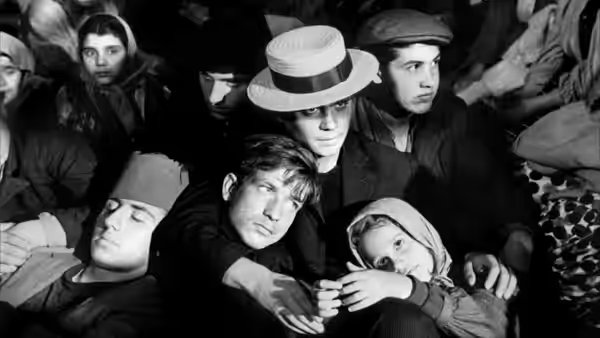
Haskell Wexler shoots it in black and white with no softening anywhere, and the faces look as though they have been found rather than cast. The town at the start is dust, whitewash and shadow. When the Turkish soldiers herd the Armenians into the church and set light to it, Wexler stays outside with the crowd, on the doors and on the people watching, and we were horrified in a way that most films about atrocity do not manage. Nothing is shown that could be called a spectacle. We hear it, we see the smoke, and we see Stavros’s face deciding something. Frank Wolff, as Vartan, has perhaps a quarter of an hour on screen and leaves a hole the rest of the film keeps stepping round.
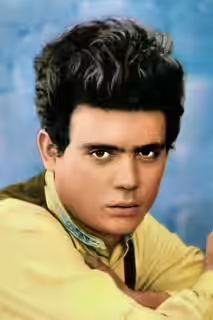
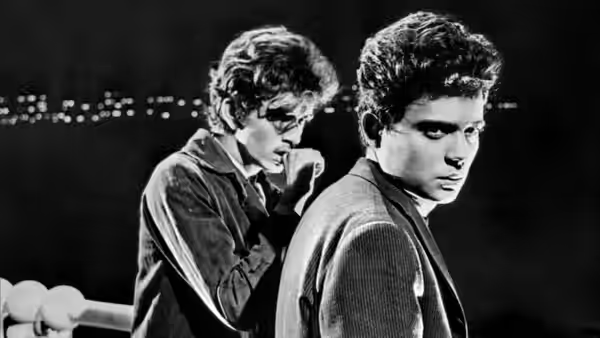
Stathis Giallelis was unknown when Kazan cast him, and it shows, and it works. He is stiff in places, his mouth set, his eyes fixed a little past the person talking to him, and there are scenes where a trained actor would have given us more. But a trained actor would have let us like Stavros, and Kazan does not want that. The long stretch on the road with Lou Antonio’s Osman, a Turk who adopts him, eats his food, prays beside him and lifts his belongings one piece at a time while smiling, is the best-sustained thing in the film. We watched it with our jaw clenched, waiting for Stavros to notice, and when he does notice the film refuses to let him be the hero of the moment.
Constantinople is Gene Callahan’s, and he builds it as quays, warehouses, stairwells and a rug merchant’s cool dark shop where money is counted twice. Anna Hill Johnstone’s costumes tell the story on their own: the good coat Stavros leaves home in comes apart by degrees until he is dressed like the hamals he ends up working beside, men who carry other men’s goods on their backs for coins. John Marley plays Garabet, the porter who tries to make an anarchist of him, and Joanna Frank’s Vartuhi gives the film its one flash of tenderness in that part of town. Dede Allen cuts the labour into short, repeated blows, the same stairs, the same load, so that the work gets into the body of the film. Manos Hatzidakis scores it with Greek melodies played sparely and mostly held back for the road.
The middle section moves into the household of Aleko Sinnikoglou (Paul Mann), a rug merchant with a daughter to marry off. Mann plays him as a man who has been generous so long he has forgotten it is a tactic. Linda Marsh, as Thomna, is the best thing in this stretch. She is the one person in the film who asks Stavros what he is thinking about, and his answer is a country, and she does not pretend to be surprised. We will not describe what follows, except to say it is where Kazan is most honest about the price of wanting one thing.
It is too long. Bosley Crowther said so on release and he was right; the second hour repeats its lesson, that the road robs you and you rob back, three times where twice would have done. Kazan also cannot resist having people say the theme aloud, and a film this good at showing does not need the telling. Most critics have come round to the view that this is one of his best, and we agree, but the faults are real and they are all faults of length.
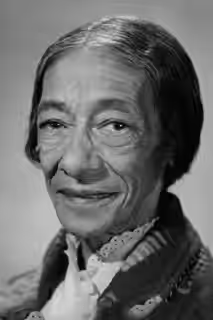
What stays with us is a farewell at the start, Elena Karam as the mother and Estelle Hemsley as the grandmother sending a boy off with everything they own sewn into his clothes, and the knowledge that the family is betting on him. It moved us more than we expected because nobody weeps. They count the money again. Watch it in one sitting, in the evening, and do not expect to feel proud of anyone by the end.