Francis Ford Coppola’s Corleone family history deserves a whole evening and close attention. Al Pacino and Robert De Niro make its account of criminal power deeply upsetting, despite a few cumbersome stretches of political intrigue.
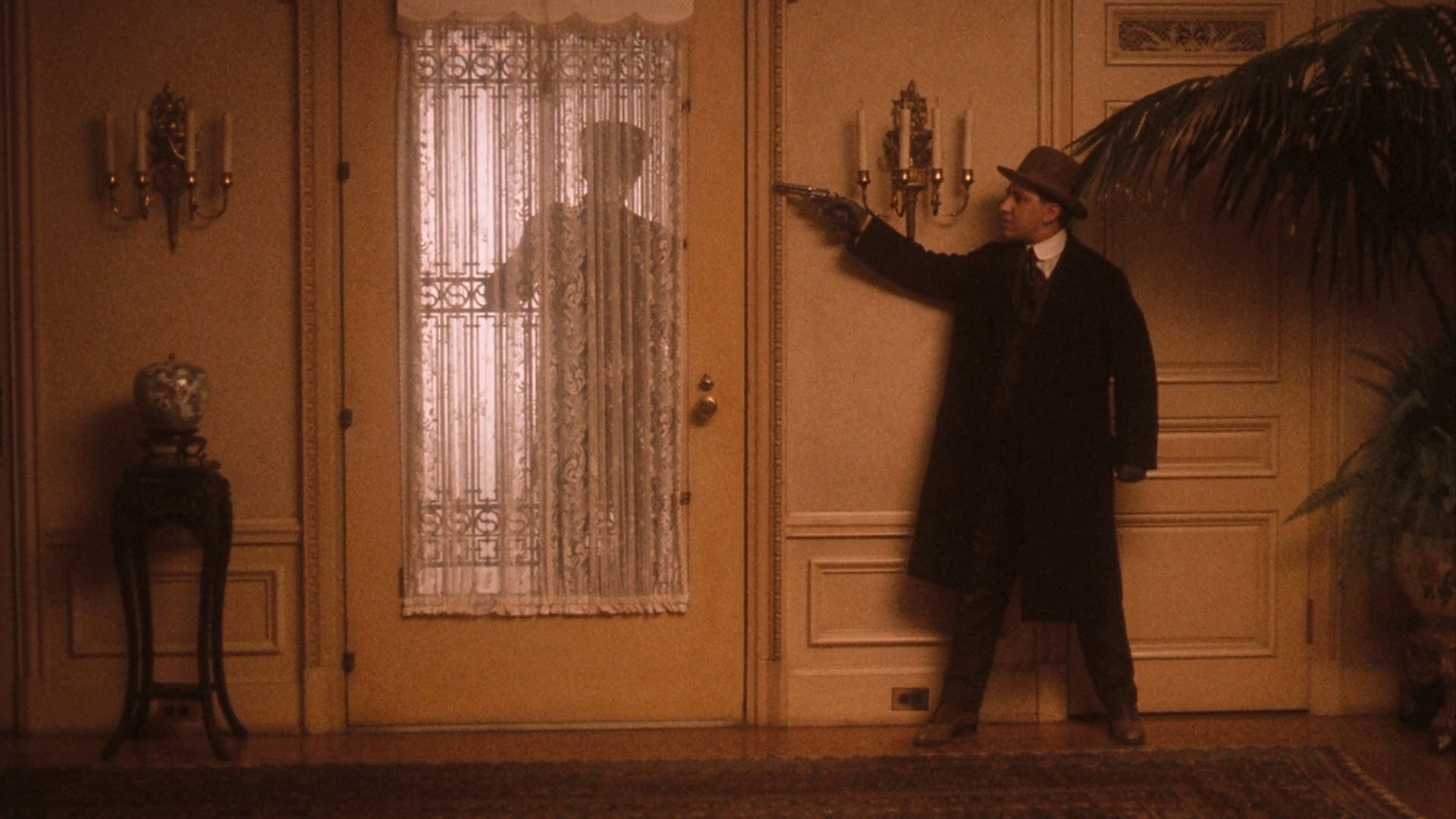
The Godfather Part II takes 202 minutes, and we would give it the evening again without much persuasion. Francis Ford Coppola follows Michael Corleone forward while returning to the younger Vito Corleone, asking how this family acquired its power and what living with it requires. It is a remarkable family drama, worth recommending well beyond an audience for crime films. Much of its force comes from watching someone wait for another person to finish speaking. Coppola makes the wait uncomfortable.
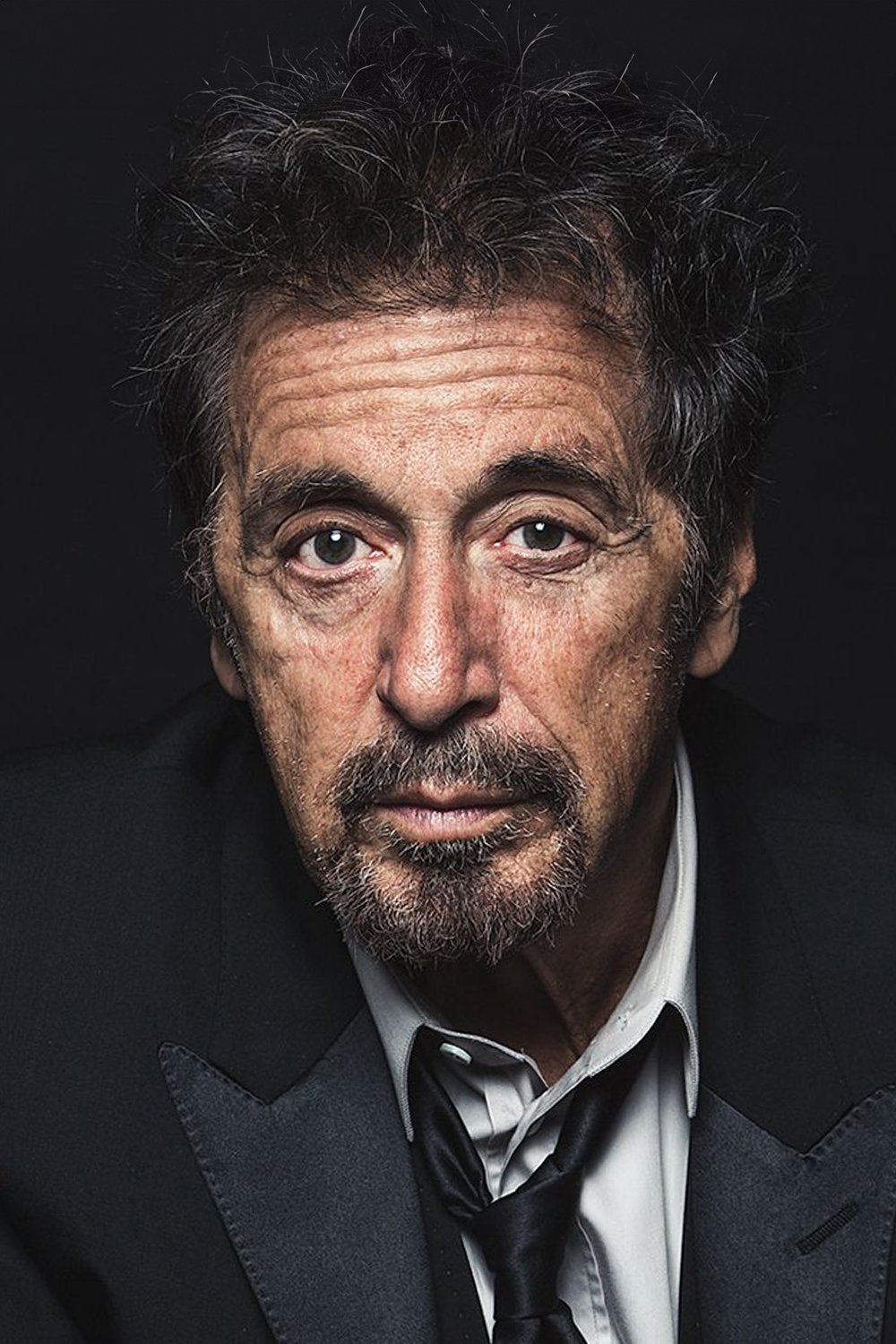
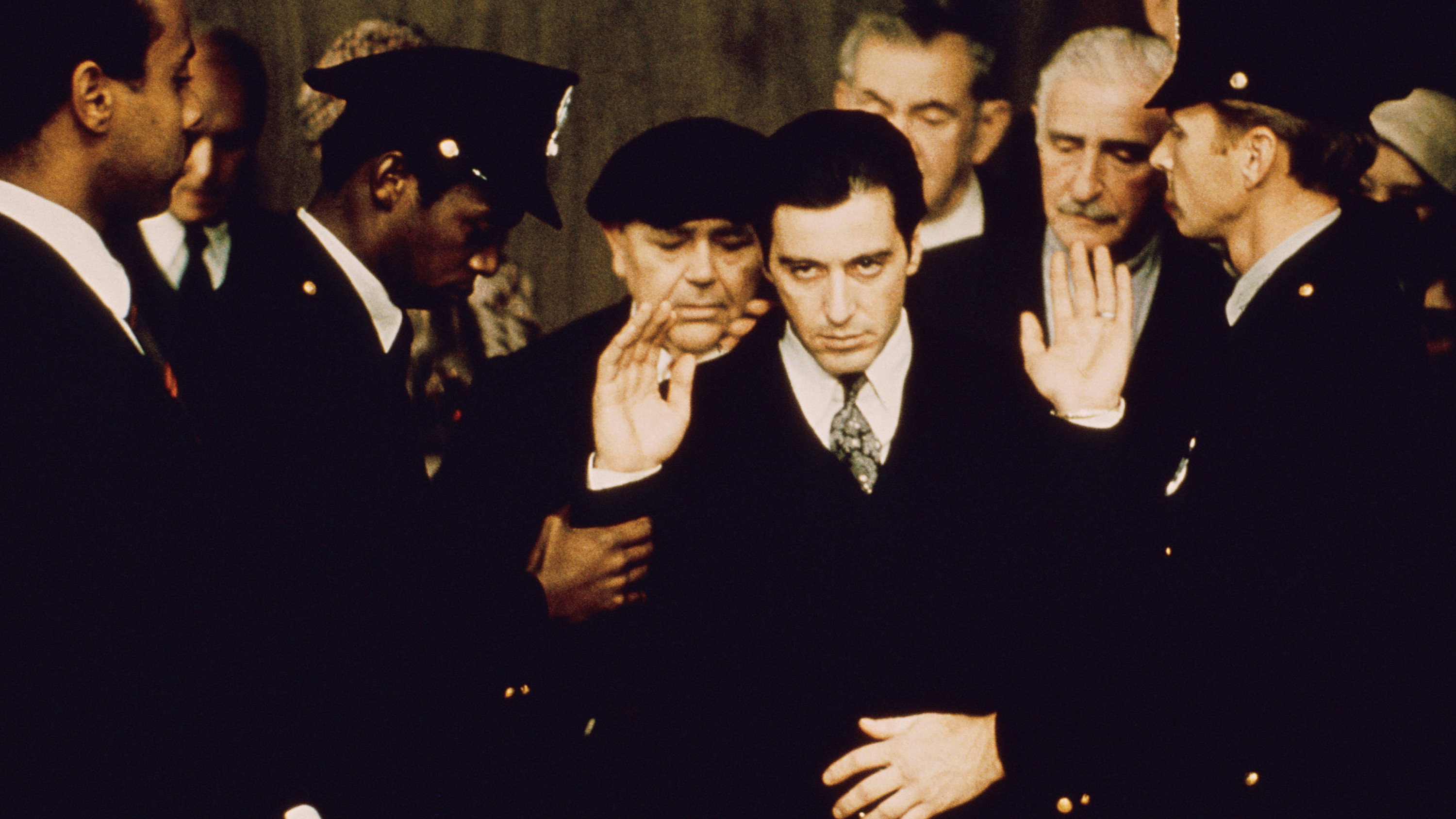
Al Pacino’s Michael gives other people almost nothing to work with. He makes us search his face for an answer while the person speaking seems to be doing the same. We felt shut out, then frightened by how little he offered. Pacino suggests that Michael is assessing every conversation for possible danger, including those that ought to allow him to relax. His reserve makes the other actors’ efforts to reach him painful to watch, because there is so little encouragement for them to continue.
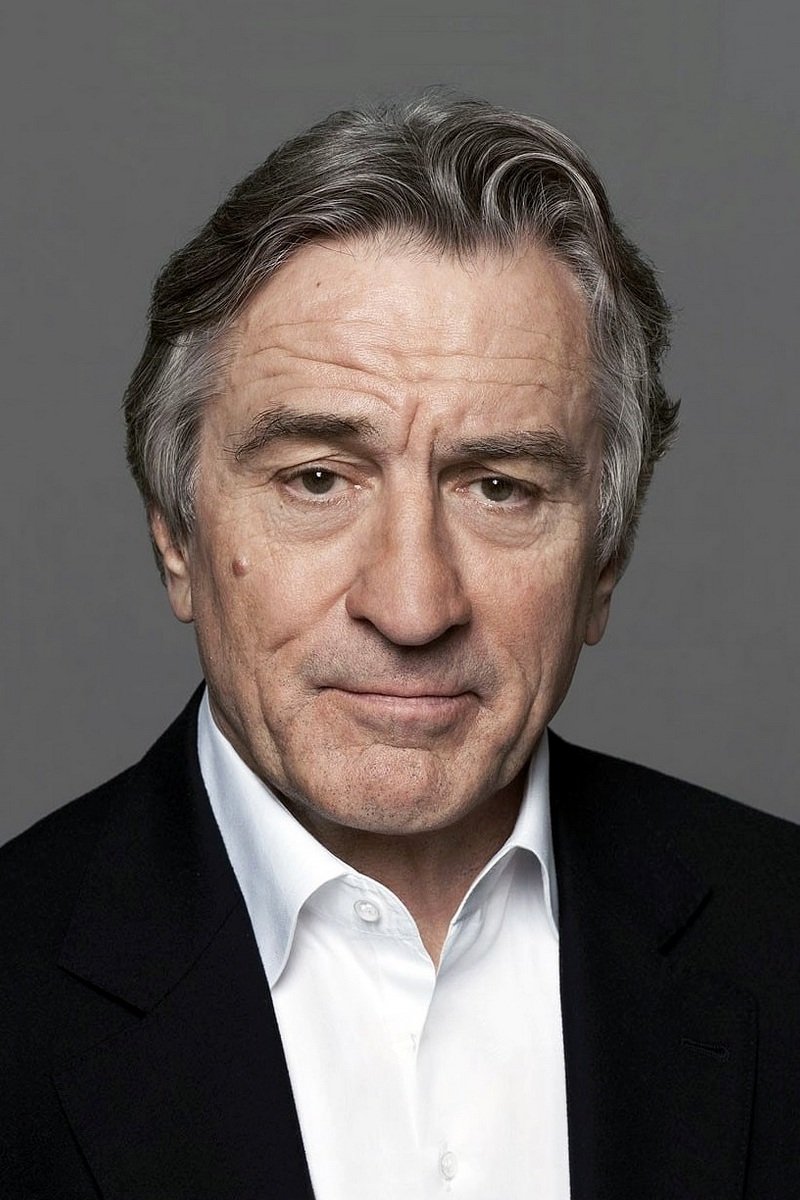
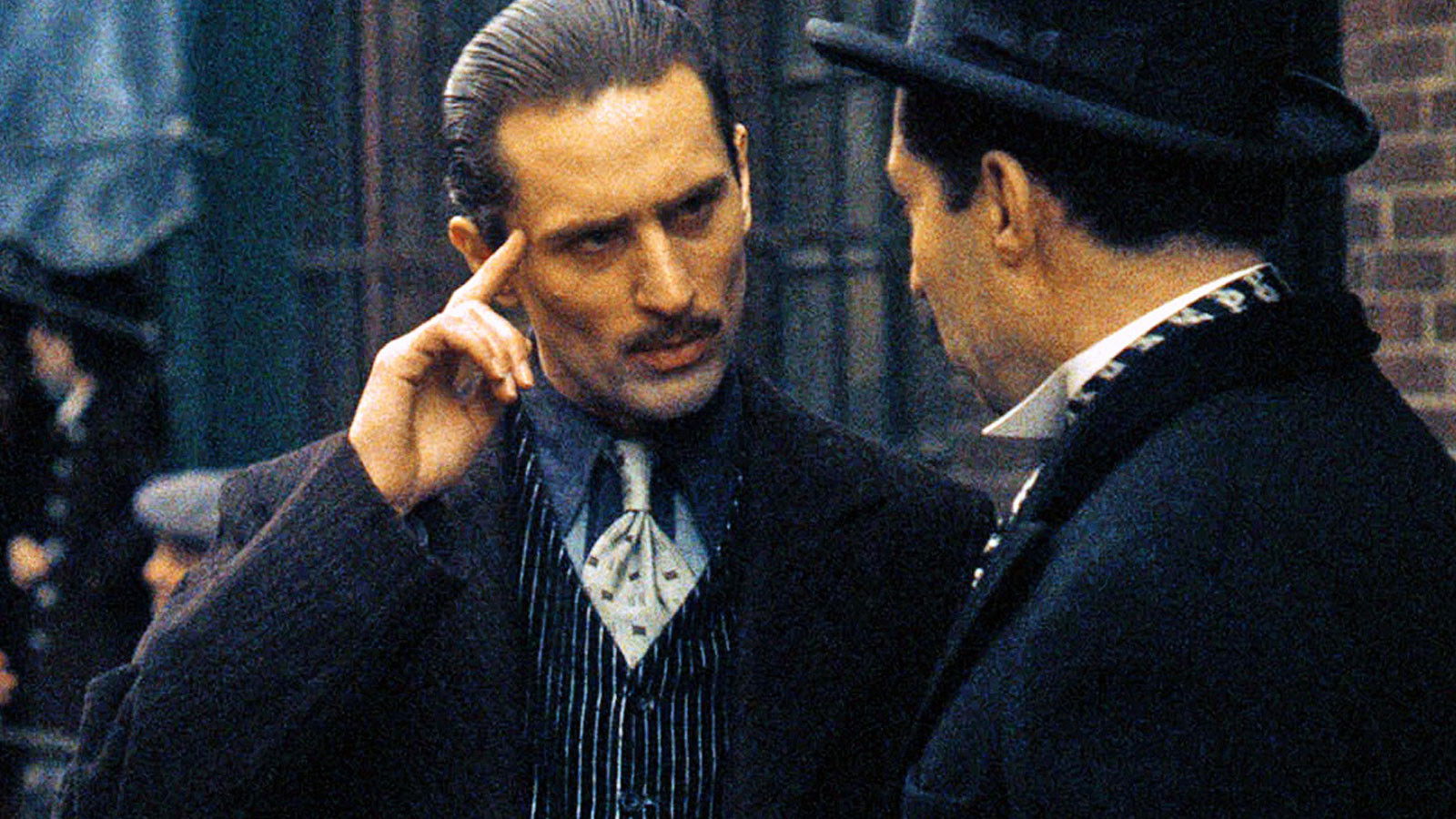
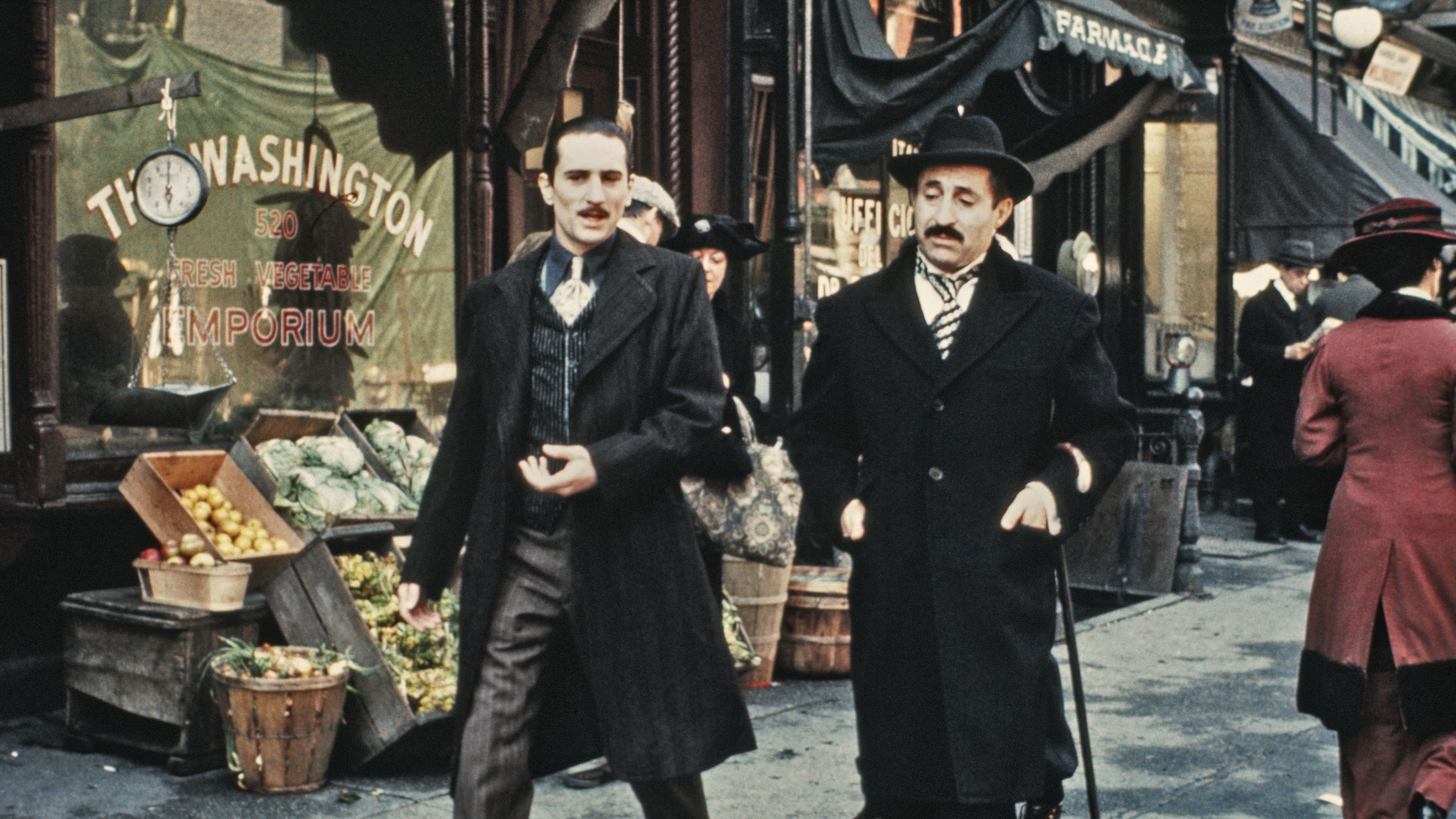
Robert De Niro makes the younger Vito easier company. His attention to others seems less defensive, and we can understand why people might trust him. Coppola and Mario Puzo’s screenplay gives the immigrant story enough feeling for family protection to sound like a promise somebody would welcome. De Niro makes that promise persuasive without making the criminality harmless. Putting him beside Pacino gives us ample reason to care about the shifts in time, even once we have understood the comparison between the two men.
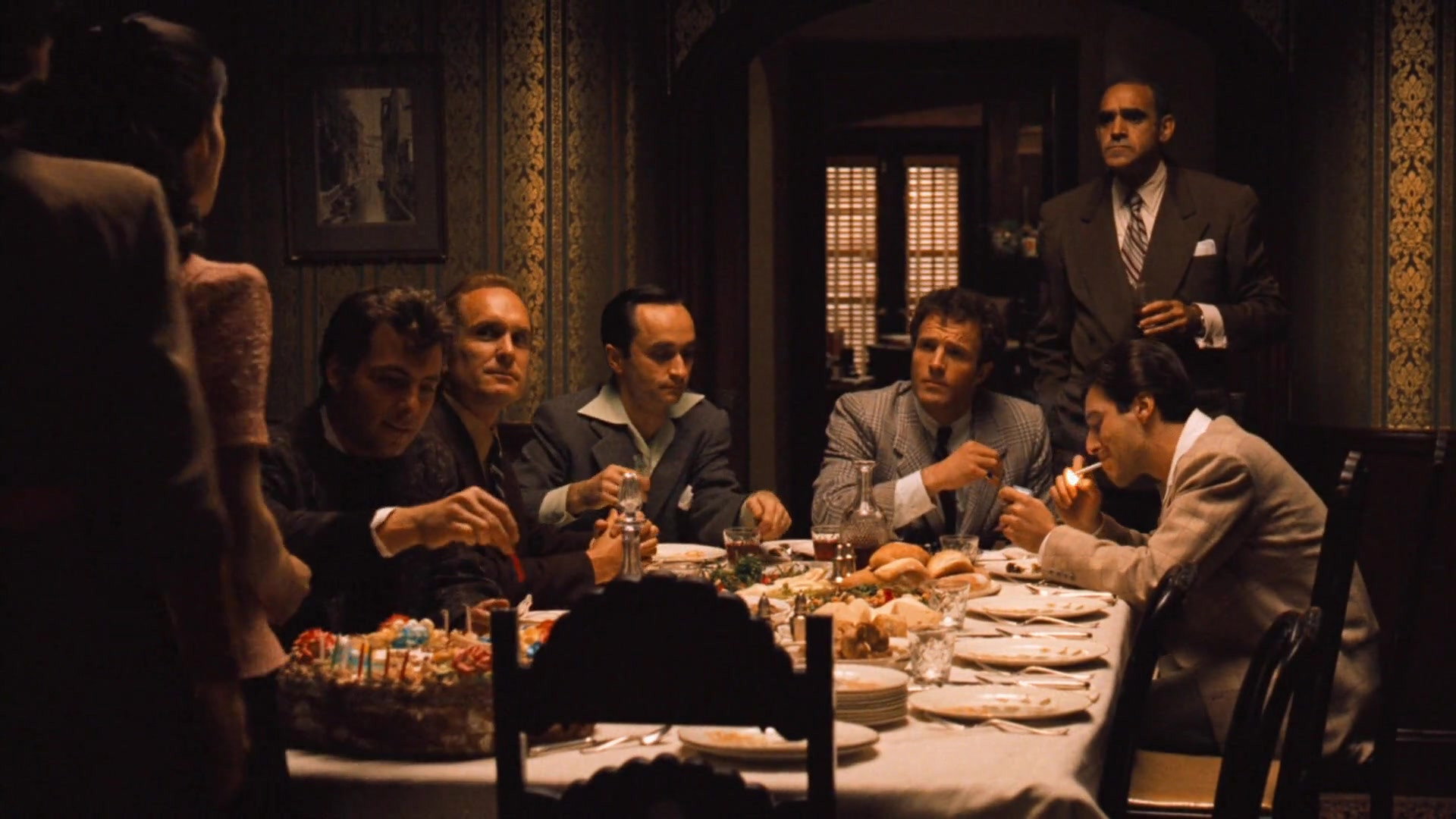
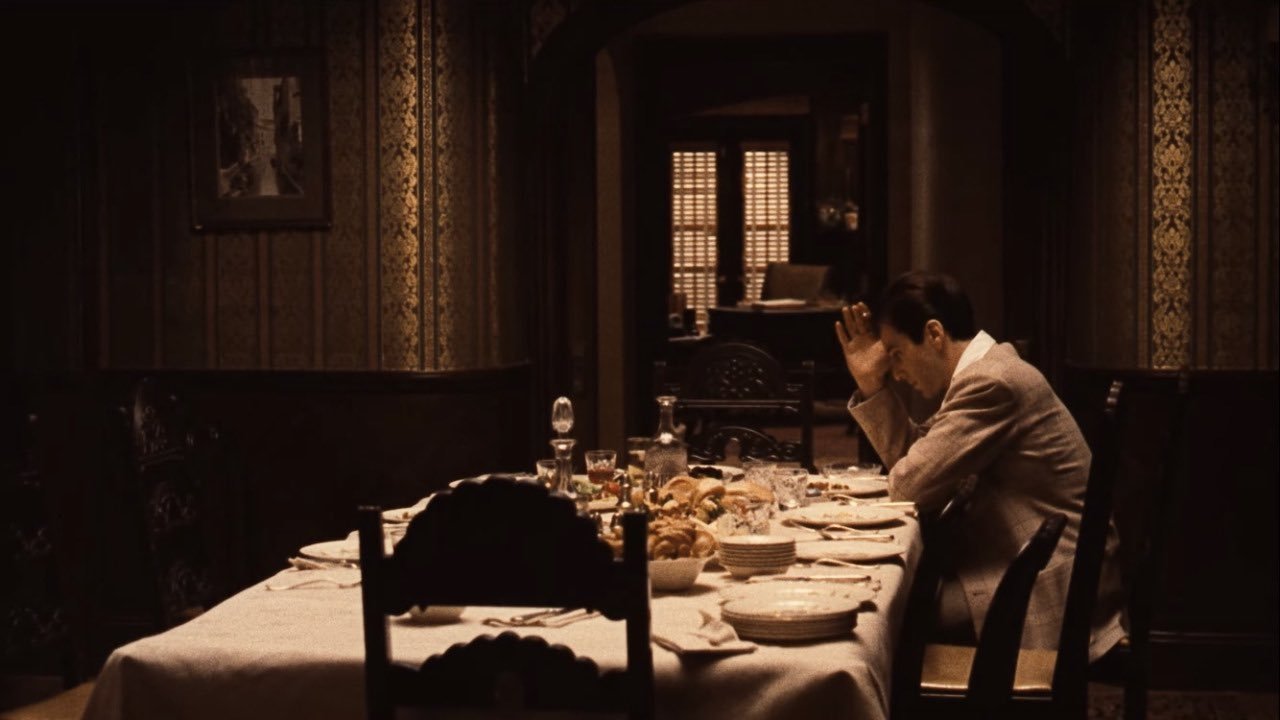
Gordon Willis’s cinematography keeps us studying faces without making them easy to read. Around Pacino, the sense of distance is especially useful: we can look hard at Michael and still feel no closer to him. Dean Tavoularis’s production design helps the two periods register clearly, so that we can follow a change of time without spending the next scene getting our bearings. We can enjoy the assurance of these surroundings and still find the people occupying them difficult company.
The editing by Barry Malkin, Richard Marks and Peter Zinner repeatedly interrupts one story to return us to the other. At its strongest, a switch changes how we feel about the man we have just left, because the next stretch puts his behaviour in a longer family history. Some returns to Michael take too long to recover their urgency, especially when the political intrigue needs attention. We can follow the negotiations and still wish they would get on with them. Nino Rota’s music gives the family a tenderness that Michael’s watchfulness seldom permits.
A crime film can get a long way simply by making powerful people pleasant company, and Coppola allows us some of that pleasure. We have time to appreciate the intelligence and patience with which these people conduct their business. The performances also make it difficult to ignore how much care goes into deciding what it is safe to say. A conversation can leave us more uneasy than a threat, because we have to work out for ourselves how frightened somebody is. Give it an uninterrupted evening, and expect the company to become harder to bear.