Film review

The Godfather Part III

1990 · Directed by Francis Ford Coppola · 2h 42m · MPA R

In a sentenceTwo and a half hours of exquisite lighting and a plot that reads like a bank’s annual report

CrimeDramaThriller

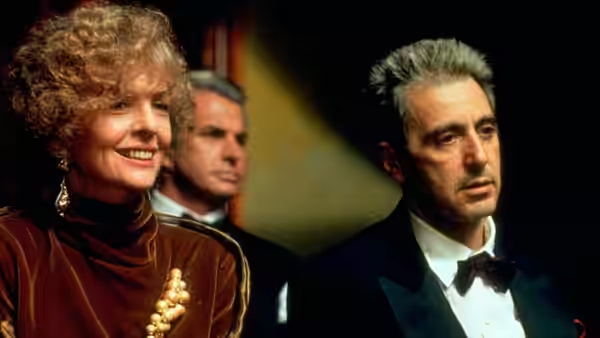
New York, 1979. Michael Corleone (Al Pacino), grey and nearing sixty, receives a papal honour in church and throws a party at his flat afterwards. His former wife Kay Adams (Diane Keaton) arrives with their children: Anthony (Franc D’Ambrosio), who wants to leave law school to sing opera, and Mary (Sofia Coppola), who fronts the family’s charitable foundation. Michael is negotiating to take control of Immobiliare, a European property company, through the Vatican’s bank and Archbishop Gilday (Donal Donnelly), and to leave crime behind for good. Into the party walks Vincent Mancini (Andy Garcia), his brother Sonny’s illegitimate son, feuding with the flashy street boss Joey Zasa (Joe Mantegna) and asking Michael for a place at his side. Connie (Talia Shire) presses her brother to give it to him.

Plays from YouTube when you press play; nothing loads from them until then.

Fi1m review

Coppola’s last visit to the Corleones is handsomely built and often moving, with Pacino tired and grey and Andy Garcia hungry beside him. But the Vatican plot never comes clear, the daughter is miscast, and at 162 minutes it feels every one of them.

Sixteen years after The Godfather Part II, Francis Ford Coppola and Mario Puzo go back to Michael Corleone and find him old. It is 1979, his hair is grey and cropped, and he wants the one thing money in his trade has never bought him, which is a clean name. The plan is to take control of Immobiliare, a European property company, with the Vatican’s bank as partner and Archbishop Gilday (Donal Donnelly) as the man with his hand out. The Godfather Part III is beautifully made, honestly felt and, for long stretches, a muddle.

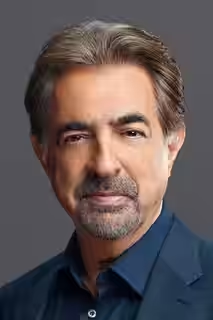
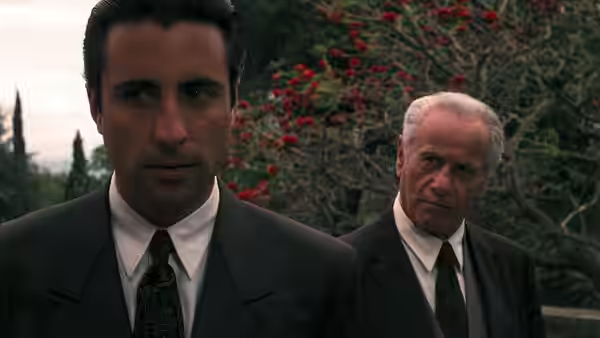
Pacino plays Michael as a man who has spent twenty years indoors. The voice has dropped to a rasp, he moves as if his joints hurt, and when he loses his temper it comes out as a cough. This Michael wants approval, and Pacino lets us see what it costs him. Andy Garcia’s Vincent Mancini gives the film its pulse. He walks into the opening party in a leather jacket among the dinner suits, and every scene he enters gets faster. Joe Mantegna makes Joey Zasa a vain street boss in beautiful tailoring, and Eli Wallach’s Don Altobello is an old man made of sugar and kisses.

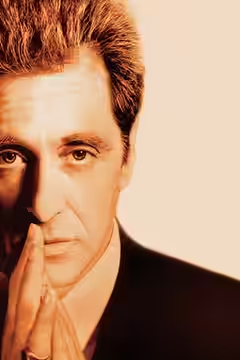
We were moved, more than we expected, and early. At the party, Michael’s son Anthony (Franc D’Ambrosio) tells him he is leaving law school to sing, and later that evening sings him an old Sicilian song. Pacino sits with his hands folded and listens, Gordon Willis holds the shot, and the face gives way in a manner we had not seen in two films. We came braced for a sequel made for the money and found a film about a man who wants to be forgiven and has left it late.

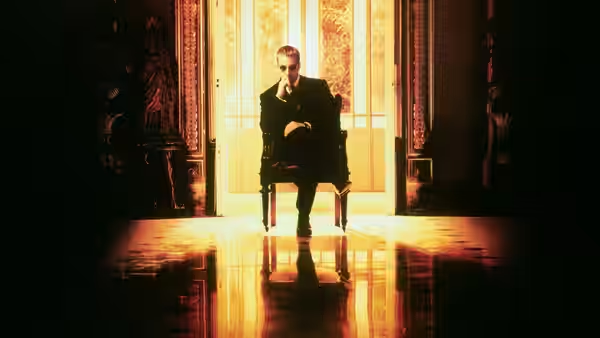
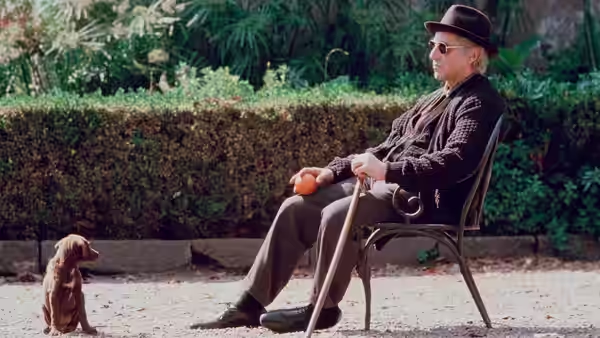
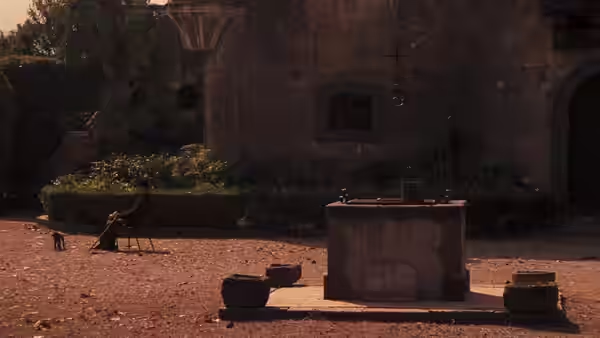
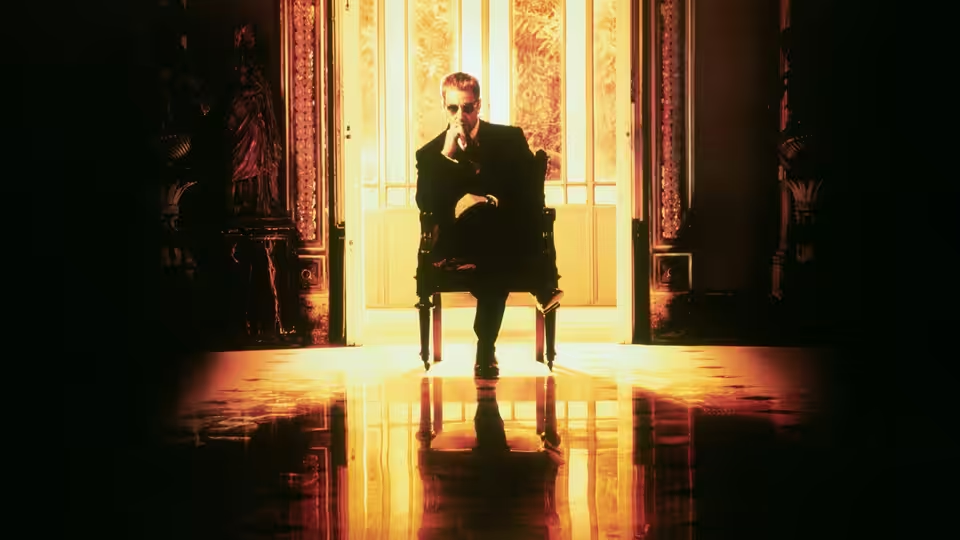
The craft is as good as the series ever had. Willis shoots the New York rooms in the dark ambers he used in 1972, faces lit from one side and the rest left to go black, and when the film reaches Sicily he opens the windows and the stone goes the colour of bread. Dean Tavoularis dresses the Corleone flat in dark wood, old paintings and heavy curtains. Milena Canonero puts Michael in charcoal and Vincent in black leather, then moves Vincent into suits as he climbs. Carmine Coppola’s score leans on the waltz and the love theme from the earlier films and adds heavier brass under the Vatican scenes.

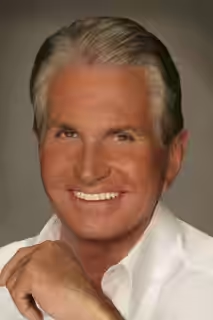
The trouble is the business. The first two films made Michael’s deals as clear as his killings; here the deal is a share purchase involving a lawyer, B.J. Harrison (George Hamilton), an archbishop, a bank and a board in Rome, and we sat through several meetings about it without being able to say afterwards who owed whom what. Walter Murch, Lisa Fruchtman and Barry Malkin cut each scene cleanly; what they cannot do is make us care which cassock is which. Somewhere in the second hour, during another conversation about percentages, we were bored, and then cross about being bored by something this beautifully lit.

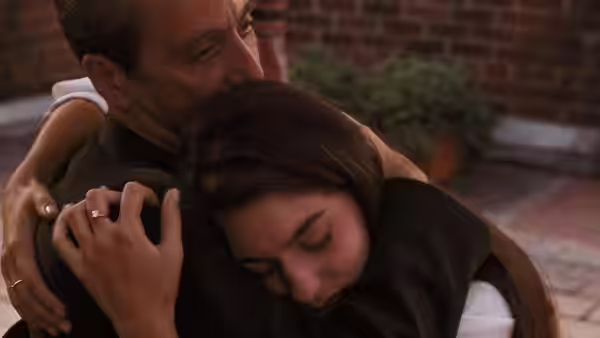
Then there is Mary. Sofia Coppola plays Michael’s daughter, and she is plainly not a trained actor; the lines come out flat, and her scenes with Garcia, which need heat, have none. The fault is not hers. It belongs to a production that asked a beginner to carry the feeling of a 162-minute film and then stood her next to Pacino. Diane Keaton’s Kay gets two scenes in which to be sad and right, and Talia Shire’s Connie, who has hardened into something like a consigliere in black, is the more interesting woman and gets less time.

Raf Vallone’s Cardinal Lamberto has one long scene with Michael in a courtyard, and it is the best-written thing in the film. The last movement, built around Anthony’s operatic debut in Palermo, cuts between the stage and the family’s business in the manner of the baptism in the first film, and for twenty minutes the old confidence is back. It is a long wait for it.

See it after the other two, and not too soon after, when you are ready to spend an evening with a tired man rather than a dangerous one. As an epilogue it has real feeling in it, and Pacino and Garcia are reason enough to stay to the end. It carries a 15.
Critical consensus AI synthesised

68
Positive
14
Mixed
3
Negative
3

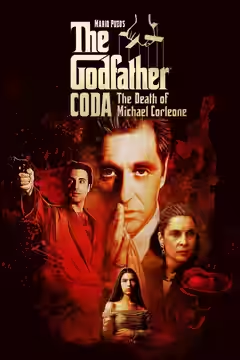
Most critics land somewhere between respect and relief. The reviews agree the film falls short of its two predecessors, but a clear majority still find it worth the evening, and many of those verdicts follow the 2020 recut, which is widely credited with a clearer first hour and a stronger ending. Praise clusters on Al Pacino, weary and remorseful as Michael, and on the craft: Gordon Willis’s photography, the scale of the Vatican set pieces, its operatic mournfulness.

The reservations are consistent. Review after review, favourable or not, names Sofia Coppola’s casting as Mary as the flaw no edit can fix, and most find the Vatican conspiracy plot convoluted. The spread is wide, from raves to dismissal. The New Yorker, in 1991, finds the film lumbering and incoherent; Sight and Sound argues in 2020 that the recut adds confusion rather than clarity; Empire finds it a dreadful disappointment as a Godfather film, if fine as a gangster picture.

The Hollywood Reporter
17 December 1990 · Duane Byrge
90*

The review calls the film a full-bodied though somber dramatic orchestration and a brilliant character study of Michael Corleone’s attempts at atonement and legitimacy. It singles out Al Pacino’s Oscar-caliber lead performance for particular praise while noting some confusion in the cross-cut finale.

Read the full review →
Variety
31 December 1989 · Variety Staff
90*

The film matches its predecessors in narrative intensity, epic scope, socio-political analysis, physical beauty, and feeling for its characters and milieu, and is the most personal of the three for the director. Sofia Coppola’s casting in a key role is the main flaw.

Read the full review →
The Telegraph
4 December 2020 · ★★★★ · Robbie Collin
80

The recut clarifies motives and improves pacing in the first hour, vindicating the film and Sofia Coppola's performance after years of overstated scorn.

Read the full review →
Time Out
5 December 2020 · ★★★★ · Dave Calhoun
80

The re-cut of The Godfather Part III offers redemption especially for Sofia Coppola's performance and makes the sprawling Mafia opus more invigorating overall. While it does not fully match the earlier films, the changes to beginning and end, along with strong turns from Pacino, make it worth revisiting.

Read the full review →
Financial Times
3 December 2020 · ★★★★☆ · Danny Leigh
70*

The restoration and discreet re-edit heighten the corporate Vatican deal and bring Darwinian self-knowledge to the fore in this recut of the finale.

Read the full review →
Los Angeles Times
23 December 1990
70*

The film does not achieve its towering goals and is a disappointment relative to the first two, yet it remains one of the year’s best American movies thanks to its high ensemble talent, gorgeous craft, and artistic ambition.

Read the full review →

Cast

Awards

Academy Awards, 1991

Nominated
Best Cinematography
Nominated
Best Film Editing
Nominated
Best Picture
Nominated
Best Production Design
Nominated
Best Supporting Actor

Golden Raspberry Award for Worst New Star, 1991

Won
Golden Raspberry Award for Worst New Star

Golden Raspberry Award for Worst Supporting Actress, 1991

Won
Golden Raspberry Award for Worst Supporting Actress

If you liked this, try…